Top Solutions for Small Business Growth in 2026
Discover proven solutions for small business success in 2026, from technology and financing to marketing and operations strategies.

Running a small business in 2026 requires more than hard work and passion. Entrepreneurs face mounting challenges from economic uncertainty to talent shortages, technology demands, and fierce competition. The good news? A wealth of practical solutions for small business owners exists today, spanning finance, operations, marketing, and technology. The key is identifying which solutions align with your specific challenges and growth objectives, then implementing them systematically to build a resilient, scalable operation.
Financial Solutions That Fuel Growth
Access to capital remains the foundation of small business success. Without adequate funding, even the most promising ventures struggle to purchase inventory, hire staff, invest in marketing, or weather unexpected downturns.
Traditional and Alternative Financing Options
Small businesses today have unprecedented access to diverse funding sources. The SBA offers multiple loan programs including 7(a) loans for general working capital, 504 loans for real estate and equipment, and microloans for startups and smaller capital needs. These government-backed options typically offer favorable terms and lower interest rates than conventional loans.
Beyond traditional loans, alternative financing has emerged as vital solutions for small business owners who need fast, flexible capital. Revenue-based financing allows businesses to repay funding as a percentage of monthly sales, aligning repayment with actual cash flow. Working Capital Financing provides businesses with quick access to funds for inventory, payroll, expansion, equipment, and other operating expenses based on revenue performance and qualifications.
Key financing solutions include:
- Term loans for specific projects or equipment purchases
- Lines of credit for ongoing cash-flow management
- Invoice factoring to unlock capital tied up in receivables
- Equipment financing to spread the cost of machinery and vehicles
- Merchant cash advances for businesses with strong credit card sales
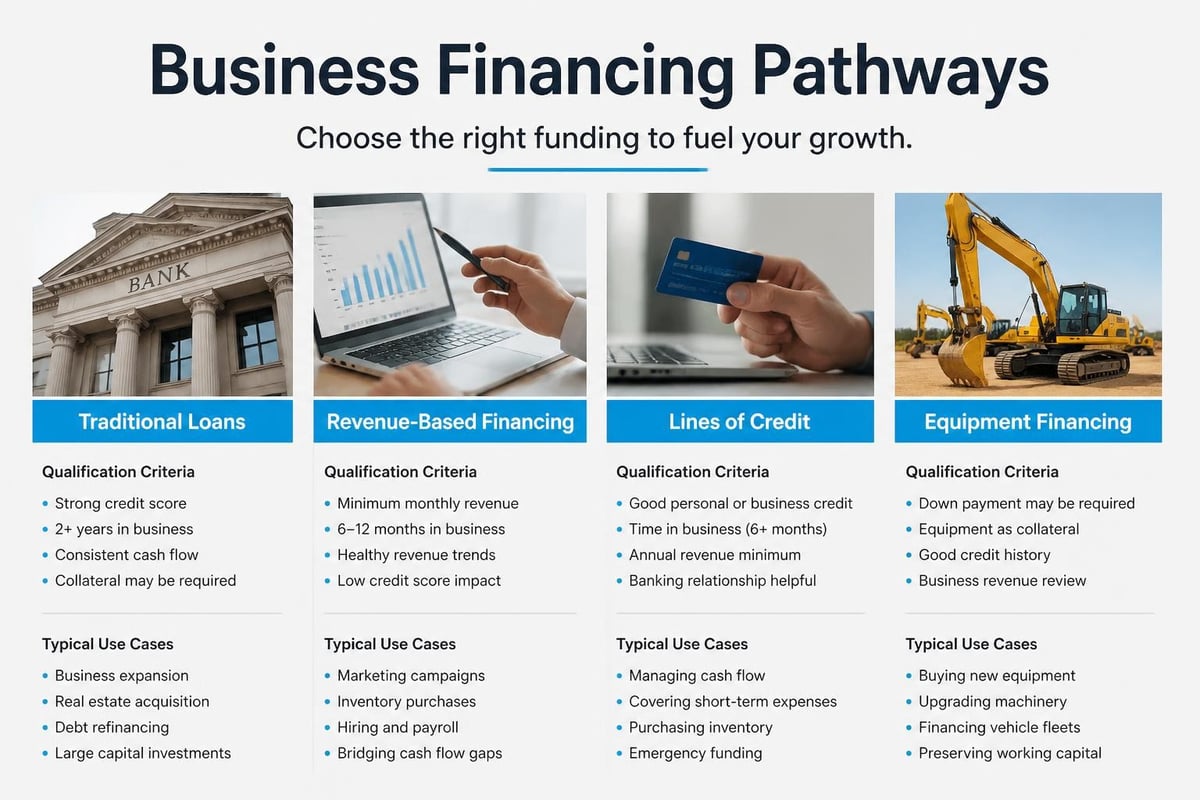
The SBA also highlights alternative funding opportunities such as Small Business Investment Companies (SBICs), grants for specific industries or purposes, and surety bonds for contractors. Diversifying your capital strategy reduces dependence on any single funding source and builds financial resilience.
Cash-Flow Management Systems
Even profitable businesses fail when they cannot manage cash flow effectively. Solutions for small business cash-flow challenges start with basic accounting hygiene: separating business and personal finances, tracking every expense, and maintaining accurate books.
| Cash-Flow Tool | Primary Benefit | Best For |
|---|---|---|
| Accounting software (QuickBooks, Xero) | Automated tracking and reporting | All businesses |
| Cash-flow forecasting templates | 13-week visibility into future needs | Seasonal businesses |
| Payment processing optimization | Faster customer payments | Service providers |
| Expense management platforms | Controlled spending and approvals | Multi-employee teams |
Modern accounting software automates much of the bookkeeping burden while providing real-time visibility into financial health. These platforms integrate with bank accounts, credit cards, and payment processors to categorize transactions automatically, generate financial statements, and simplify tax preparation.
Technology Solutions That Drive Efficiency
Technology has become the great equalizer, allowing small businesses to compete with larger competitors through automation, data insights, and customer reach. The challenge lies in selecting the right tools without overspending or creating unnecessary complexity.
Essential Business Software
Cloud-based solutions for small business operations have transformed from luxury to necessity. Customer relationship management (CRM) systems organize prospect and customer data, track sales pipelines, and automate follow-up communications. Project management platforms keep teams aligned and deadlines visible. Communication tools enable remote collaboration and reduce email clutter.
Priority software categories:
- Accounting and finance: QuickBooks, Xero, FreshBooks
- CRM and sales: HubSpot, Salesforce Essentials, Zoho CRM
- Project management: Asana, Monday.com, Trello
- Communication: Slack, Microsoft Teams, Zoom
- E-commerce: Shopify, WooCommerce, BigCommerce
The key is integrating these tools so data flows seamlessly between systems. Most modern platforms offer native integrations or connect through middleware like Zapier, eliminating duplicate data entry and reducing errors.
Cybersecurity Fundamentals
Small businesses increasingly face cyber threats, from ransomware to phishing attacks and data breaches. Many owners assume they are too small to target, but attackers specifically prey on businesses with weak security and valuable customer data.
The NIST Cybersecurity Framework provides a practical roadmap for small businesses to begin managing cybersecurity risk systematically. Start with fundamental protections: strong passwords and multi-factor authentication, regular software updates and patches, encrypted data transmission, secure Wi-Fi networks, and employee security training.
The FTC offers clear cybersecurity guidance specifically tailored to small business needs, covering password policies, encryption, vendor risk management, and protecting customer information. These federal resources provide actionable steps without requiring deep technical expertise.
Marketing Solutions That Attract Customers
Even exceptional products and services require effective marketing to reach potential customers. Solutions for small business marketing have evolved dramatically, with digital channels often delivering better ROI than traditional advertising for budget-conscious owners.
Digital Marketing Fundamentals
A strong online presence begins with a professional website that clearly communicates what you offer, who you serve, and how customers can take action. Your site must load quickly, display properly on mobile devices, and guide visitors toward conversion through clear calls-to-action.
HubSpot's comprehensive marketing guides walk small businesses through building effective digital marketing strategies, from content creation to search engine optimization, social media marketing, and email campaigns. These practical resources help owners develop tactical execution plans without requiring agency-level budgets.
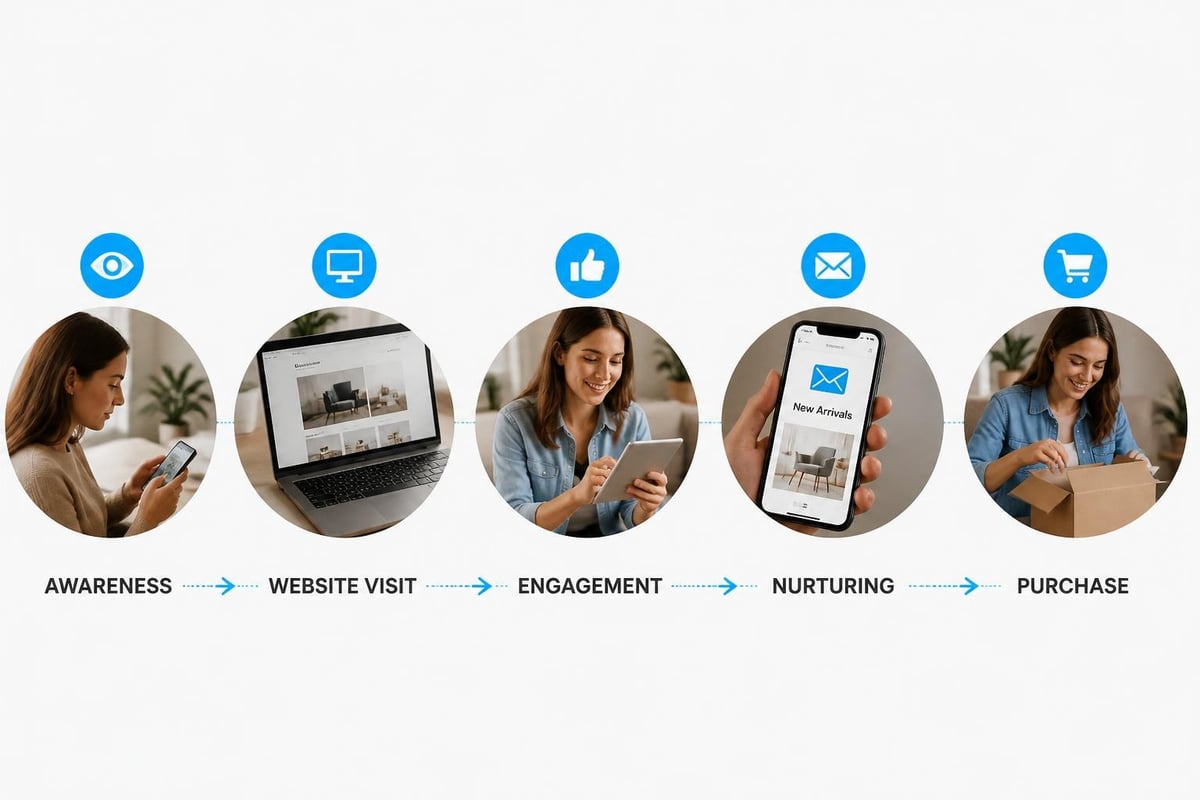
Essential digital marketing channels:
- Search engine optimization (SEO) to rank for terms potential customers search
- Google Business Profile to appear in local search results and maps
- Social media presence on platforms where your customers spend time
- Email marketing to nurture leads and retain existing customers
- Content marketing to demonstrate expertise and attract organic traffic
The most successful solutions for small business marketing focus resources on channels that deliver measurable results for your specific audience. A B2B professional services firm may prioritize LinkedIn and thought leadership content, while a local restaurant focuses on Google Maps optimization and Instagram visual storytelling.
Customer Retention Strategies
Acquiring new customers costs five to seven times more than retaining existing ones, yet many businesses invest disproportionately in acquisition while neglecting retention. Simple solutions include loyalty programs that reward repeat purchases, regular communication through email newsletters or SMS, exceptional customer service that exceeds expectations, and personalized experiences based on purchase history.
| Retention Strategy | Implementation Effort | Typical Impact |
|---|---|---|
| Email loyalty program | Low | 15-25% repeat purchase lift |
| Personalized birthday/anniversary offers | Medium | 10-15% engagement increase |
| Customer feedback surveys | Low | Reduces churn 5-10% |
| VIP tiers with exclusive benefits | High | 30-40% spend increase from top tier |
Automated email marketing platforms enable small businesses to deliver sophisticated retention campaigns without manual effort. Welcome series for new customers, abandoned cart reminders for e-commerce, re-engagement campaigns for inactive customers, and post-purchase follow-ups all run automatically once configured.
Operational Solutions That Scale
As businesses grow, informal processes that worked with three employees break down at ten or twenty. Solutions for small business operations focus on creating systems, documenting processes, and building infrastructure that supports sustainable growth.
Process Documentation and Standard Operating Procedures
Every recurring task in your business should have a documented process explaining exactly how to complete it. This documentation enables consistent quality, faster training for new employees, easier delegation, and smoother operations when key people are unavailable.
Start by identifying your most critical or frequently performed tasks: customer onboarding, order fulfillment, quality control, customer service responses, and financial close procedures. Document each step, required tools or resources, quality standards, and common troubleshooting scenarios.
Process documentation best practices:
- Use simple language and visual aids like screenshots or flowcharts
- Store procedures in a centralized, searchable knowledge base
- Assign an owner responsible for keeping each procedure current
- Review and update quarterly or when processes change
- Incorporate procedures into employee training and onboarding
Cloud-based knowledge management tools make documentation accessible from anywhere and enable team members to suggest improvements based on real-world experience.
Talent and Human Resources
Finding and retaining skilled employees ranks among the top challenges small business owners face. Solutions for small business hiring challenges start with competitive compensation, but extend to workplace culture, growth opportunities, flexibility, and benefits.
Understanding payroll obligations is fundamental. The IRS Employer's Tax Guide details tax withholding requirements, reporting obligations for Forms 941, 944, and 1099, and deposit schedules that small business employers must follow to remain compliant.
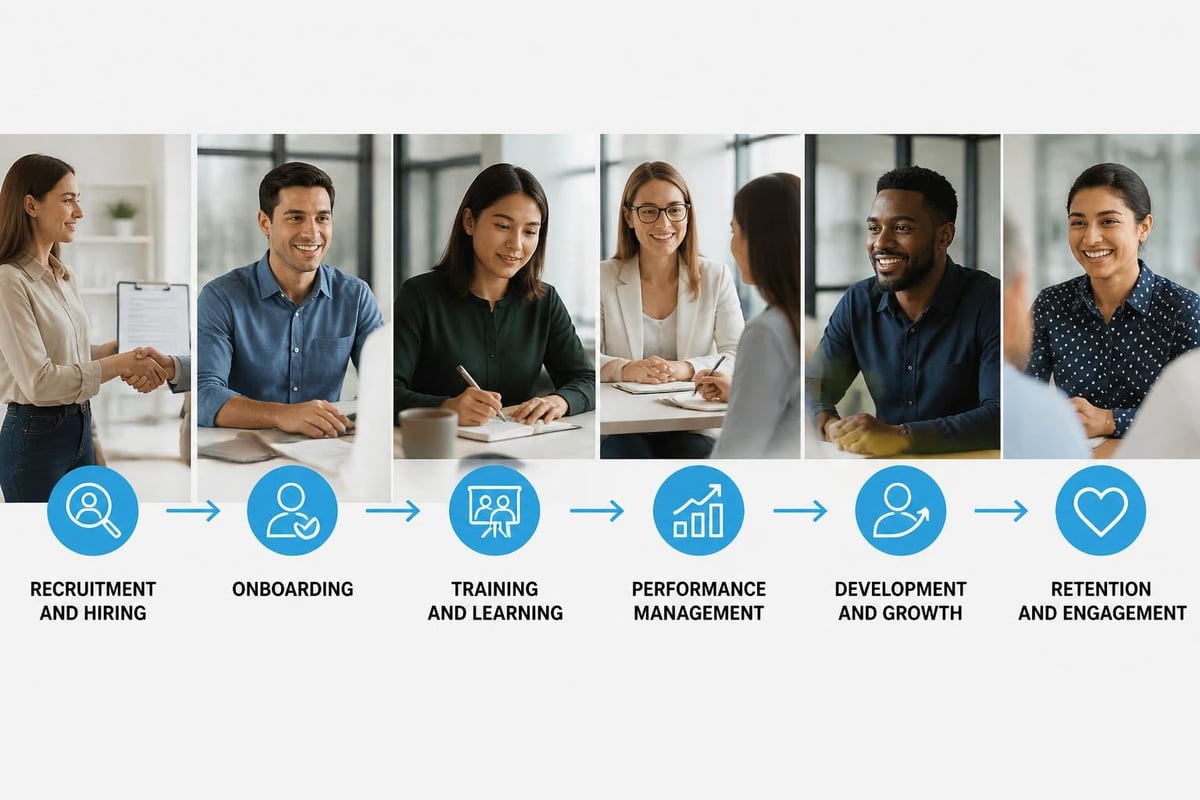
Beyond compliance, smart HR solutions include clear job descriptions and expectations, structured onboarding programs for new hires, regular performance feedback (not just annual reviews), professional development opportunities and training, and recognition programs that celebrate achievements.
Strategic Planning and Advisory Solutions
Many small business owners excel at their craft but lack formal business training. Access to experienced advisors and structured planning processes represents crucial solutions for small business growth and sustainability.
Advisory and Mentorship Resources
SCORE, the SBA's nonprofit mentoring partner, connects business owners with volunteer mentors who provide free, confidential advice based on decades of business experience. Industry associations offer networking opportunities, educational resources, and connections with peers facing similar challenges.
Advisory boards, even informal ones, give owners access to diverse perspectives and expertise. Consider recruiting advisors with complementary skills: a financial expert, marketing professional, operations specialist, and industry veteran create a balanced advisory group.
Professional advisors including accountants, attorneys, and business consultants provide specialized expertise for complex decisions. While these services carry costs, they prevent expensive mistakes and identify opportunities owners might otherwise miss.
Data-Driven Decision Making
Gut instinct built your business, but data should drive its growth. Solutions for small business analytics have become remarkably accessible, with most modern software platforms including built-in reporting and dashboards.
Key metrics to track:
- Financial: Revenue, profit margin, cash-flow runway, customer acquisition cost
- Sales: Conversion rates, average deal size, sales cycle length, pipeline velocity
- Marketing: Website traffic, lead generation, cost per lead, return on ad spend
- Operations: Customer satisfaction, employee productivity, order fulfillment time
- Customer: Lifetime value, churn rate, repeat purchase rate, Net Promoter Score
Establishing baseline metrics, setting improvement targets, reviewing performance monthly or quarterly, and adjusting strategies based on results creates a continuous improvement cycle. Small businesses that embrace data-driven decision making consistently outperform those relying solely on intuition.
Industry-Specific Solutions
While many challenges are universal, each industry presents unique obstacles requiring specialized solutions for small business owners in specific sectors.
Retail and E-Commerce
Inventory management software prevents stockouts and overstocking. Point-of-sale systems integrate online and offline sales channels. Product information management tools maintain consistent descriptions and specifications across multiple sales platforms. Shipping and fulfillment solutions compare carrier rates and automate label creation.
Professional Services
Time tracking and billing software ensures accurate client invoicing and project profitability visibility. Proposal and contract management tools streamline sales processes and standardize agreements. Knowledge management systems capture institutional expertise and accelerate new employee productivity.
Restaurants and Hospitality
Reservation and table management systems optimize seating and reduce wait times. Kitchen display systems eliminate order errors and improve ticket times. Inventory and recipe costing tools control food costs and identify unprofitable menu items. Employee scheduling platforms reduce labor costs while ensuring adequate coverage.
Healthcare and Medical
Practice management software handles scheduling, billing, and insurance verification. Electronic health records (EHR) systems maintain compliant patient documentation. Telehealth platforms expand service delivery beyond physical office visits. Patient engagement tools send appointment reminders and collect feedback.
Building Your Solution Roadmap
With countless solutions for small business available, the challenge shifts from finding options to selecting the right ones for your specific situation. Start by identifying your most pressing challenges and opportunities, then prioritize based on potential impact and implementation difficulty.
Implementation framework:
- Assess: Audit current state and identify gaps
- Prioritize: Rank opportunities by impact and feasibility
- Plan: Create implementation timeline with milestones
- Execute: Roll out solutions systematically, not all at once
- Measure: Track results and adjust based on performance
- Iterate: Continuously refine and optimize over time
Quick wins that deliver immediate value build momentum and credibility for larger initiatives. A new CRM system might deliver results within weeks, while a complete process documentation project could take months. Balance short-term victories with long-term strategic investments.
Remember that implementing solutions for small business success is iterative, not one-time. Market conditions change, new technologies emerge, and your business evolves. Regular reassessment ensures your solutions remain aligned with current needs and competitive demands. The businesses that thrive are those that view improvement as an ongoing commitment rather than a destination.
Implementing the right mix of financial, operational, marketing, and technology solutions positions small businesses for sustainable growth regardless of economic conditions or competitive pressures. Enterprise Finest Solutions helps small and medium-sized businesses access the flexible funding they need to invest in these critical solutions, connecting owners with financing options aligned to their revenue, performance, and capital needs. Whether you need working capital for a marketing initiative, equipment financing for operational upgrades, or cash-flow support during expansion, exploring your funding options is the first step toward implementing the solutions that will drive your business forward.
Written by
Enterprise Finest Solutions
Content creator and writer sharing insights and stories.