Small Retailers: Funding and Growth Strategies for 2026
Small retailers face unique financial challenges. Learn how working capital, smart funding, and digital tools help independent stores compete and grow.

The retail landscape continues to evolve at a relentless pace, and small retailers find themselves at a critical juncture. Independent stores, boutique shops, and family-owned retail businesses face mounting pressures from e-commerce giants, shifting consumer expectations, and rising operational costs. Yet these same businesses remain the backbone of local economies, offering personalized service, curated selections, and community connections that larger chains cannot replicate. Success in 2026 requires small retailers to balance traditional retail strengths with modern financial strategies, digital tools, and flexible funding approaches that support sustainable growth.
Understanding the Financial Landscape for Independent Retail
Small retailers operate in an environment where margins are tight and cash flow volatility is the norm. Unlike larger retail chains with deep pockets and established credit lines, independent store owners often struggle to access the capital needed for inventory purchases, seasonal stock, marketing campaigns, or unexpected repairs.
The financial challenges facing small retailers have intensified in recent years. According to the Bank of America Institute's Small Business Checkpoint, retail sector expenses have risen across multiple categories, with payroll and inventory costs putting particular pressure on smaller operations. These financial realities make strategic capital management essential rather than optional.
Common Capital Needs in Retail Operations
Small retailers require funding for various operational and growth purposes:
- Inventory purchases for new seasons, holidays, and trending products
- Store renovations and improvements to enhance customer experience
- Marketing and advertising campaigns to compete with online retailers
- Technology upgrades including point-of-sale systems and e-commerce platforms
- Seasonal cash flow gaps between purchasing inventory and generating sales
- Emergency repairs for HVAC, plumbing, electrical systems, or storefronts
- Expansion opportunities such as additional locations or expanded product lines
Traditional bank loans often fall short for small retailers due to lengthy approval processes, rigid qualification requirements, and inflexible repayment structures that don't account for seasonal revenue fluctuations.

Working Capital Solutions for Retail Businesses
Access to flexible working capital can make the difference between seizing opportunities and watching them pass by. Small retailers increasingly turn to alternative financing options that consider business performance and revenue rather than solely relying on credit scores and collateral.
Working Capital Financing provides small retailers with the flexibility to address immediate needs while maintaining operational momentum. These solutions evaluate a business based on its sales performance, allowing store owners to access funds when traditional lending falls short.
Revenue-based financing options have gained traction among small retailers because repayment structures often align with actual sales performance. During slower months, payment obligations adjust accordingly, providing breathing room that fixed loan payments cannot offer.
Evaluating Funding Options for Your Retail Business
| Funding Type | Best For | Typical Timeline | Key Advantage |
|---|---|---|---|
| Traditional Bank Loan | Established businesses with strong credit | 30-90 days | Lower interest rates |
| Business Line of Credit | Ongoing, fluctuating expenses | 1-3 weeks | Flexible draw and repayment |
| Revenue-Based Financing | Businesses with consistent sales | 1-5 days | Performance-based repayment |
| Equipment Financing | Specific equipment purchases | 1-2 weeks | Equipment serves as collateral |
The right funding approach depends on your specific situation, revenue patterns, and growth objectives. Small retailers should evaluate total cost, repayment flexibility, and alignment with cash flow cycles when comparing options.
Digital Transformation and Technology Investment
The retail sector has witnessed dramatic technological shifts, and small retailers must adapt to remain competitive. Consumer expectations for seamless online-offline experiences, mobile payments, and personalized shopping have become standard rather than exceptional.
According to Deloitte's retail and consumer trends report, omnichannel strategies and social commerce continue to reshape how consumers discover and purchase products. Small retailers who embrace these channels gain competitive advantages over those who resist digital integration.
Technology Priorities for Small Retailers
Point-of-sale systems form the foundation of modern retail operations. Today's POS platforms go beyond simple transaction processing to offer inventory management, customer relationship tools, sales analytics, and integration with e-commerce platforms.
E-commerce capabilities are no longer optional for most retail categories. Small retailers can leverage platforms that integrate with existing inventory systems, reducing the complexity of managing multiple sales channels.
Social media and digital marketing provide cost-effective ways to reach target customers. Many small retailers find success through Instagram shopping features, Facebook marketplace integration, and influencer partnerships that drive traffic both online and to physical locations.
The challenge lies in funding these technology investments while managing day-to-day operational expenses. Strategic capital allocation becomes critical when every dollar counts.
Inventory Management and Seasonal Planning
Inventory represents both the lifeblood and the biggest financial challenge for small retailers. Poor inventory management ties up capital in slow-moving products while stockouts lose sales and frustrate customers.
Smart small retailers approach inventory with data-driven strategies:
- Analyze historical sales patterns to predict demand by season, month, and week
- Implement inventory management software that tracks stock levels and reorder points
- Negotiate favorable terms with suppliers to reduce upfront capital requirements
- Adopt just-in-time principles where practical to minimize carrying costs
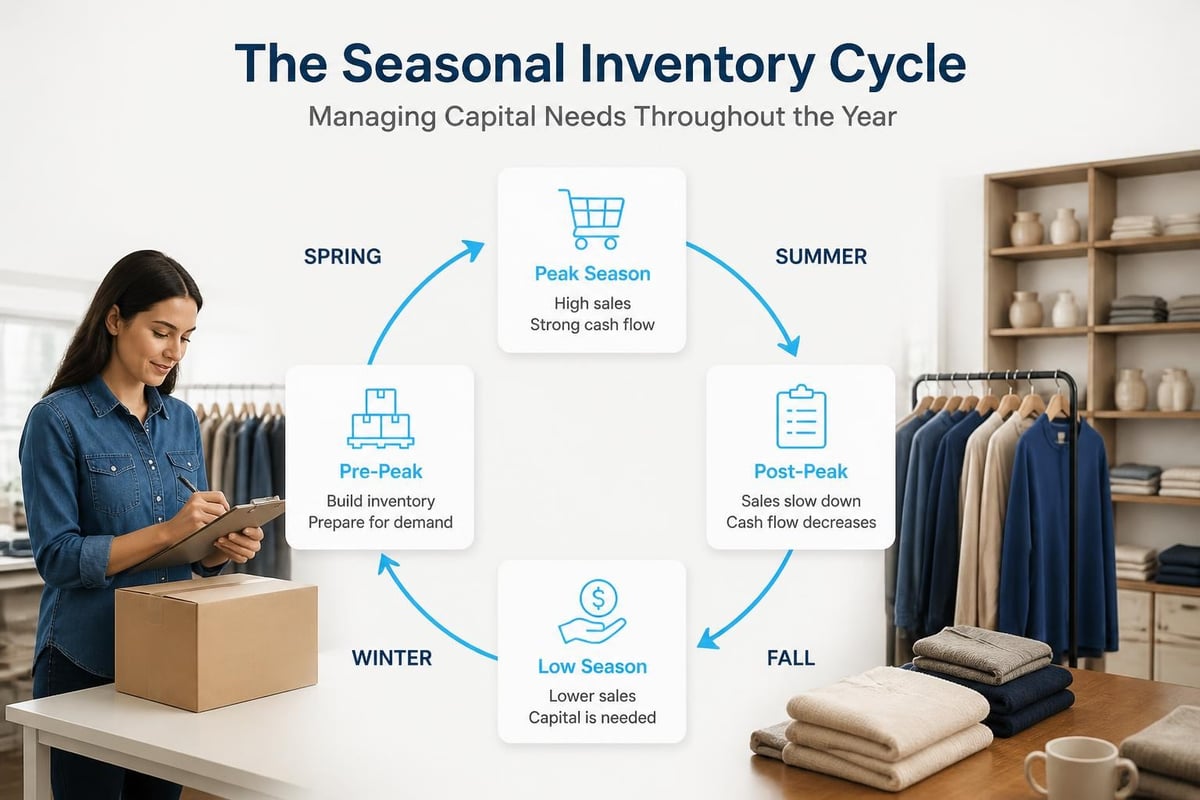
- Plan for seasonal variations with adequate working capital to purchase peak inventory
Seasonal businesses face particularly acute challenges. A retailer preparing for holiday shopping needs substantial capital months before peak sales occur. The lag between inventory investment and revenue generation creates cash flow gaps that can cripple operations without adequate planning.
Competing in the Modern Retail Environment
Small retailers cannot compete on price alone against massive online retailers and big-box stores. Instead, successful independent retailers focus on differentiation strategies that leverage their unique strengths.
Curated product selection allows small retailers to offer items that reflect local tastes, emerging trends, or specialized niches that larger retailers overlook. This approach requires deep knowledge of your customer base and willingness to take calculated risks on new products.
Exceptional customer service remains a powerful competitive advantage. Personal relationships, product expertise, and customized shopping experiences create loyalty that transcends price comparisons. Training staff to deliver consistently excellent service requires investment in hiring, compensation, and ongoing development.
Community engagement builds emotional connections that online retailers cannot replicate. Small retailers who actively participate in local events, support community causes, and create gathering spaces foster customer loyalty that extends beyond transactions.
The National Retail Federation's outlook for 2026 highlights evolving consumer behaviors, with shoppers increasingly valuing authenticity, sustainability, and local connections alongside convenience and price.
Artificial Intelligence and Automation for Small Retail
The gap between large retailers with sophisticated AI capabilities and small retailers with limited technology budgets has sparked important discussions about competitive balance. However, accessible AI tools are increasingly available to small retailers at reasonable price points.
Research from AEOWorks on AI adoption among small businesses reveals a "Main Street Paradox" where small retailers recognize AI's potential but face barriers to implementation. Cost concerns, technical complexity, and uncertainty about return on investment slow adoption.
Practical AI Applications for Small Retailers
Small retailers can leverage AI in focused, manageable ways:
- Demand forecasting tools that predict inventory needs based on historical data and trends
- Dynamic pricing software that optimizes pricing based on competition, demand, and inventory levels
- Customer segmentation that personalizes marketing messages and product recommendations
- Chatbots for basic customer service inquiries on websites and social media
- Visual search capabilities that help customers find products using photos
The key is starting small with specific applications that address clear business needs rather than attempting comprehensive AI transformation all at once.
Financial Resilience and Risk Management
Small retailers face numerous risks that can quickly escalate into existential threats without proper planning. Building financial resilience requires proactive strategies rather than reactive scrambling when problems emerge.
Emergency capital reserves provide cushioning against unexpected events. Whether facing equipment failures, sudden supplier price increases, or temporary drops in foot traffic, having accessible capital prevents small problems from becoming business-threatening crises.
Diversified revenue streams reduce dependence on any single channel or customer segment. Small retailers increasingly combine physical storefronts with e-commerce, wholesale accounts, pop-up shops, and even subscription services to create multiple income sources.
Insurance coverage protects against major losses from theft, natural disasters, liability claims, and business interruption. While insurance represents an ongoing expense, the protection justifies the cost.
Building Financial Flexibility
| Strategy | Benefit | Implementation |
|---|---|---|
| Maintain cash reserves | Weather unexpected expenses | Target 1-3 months operating expenses |
| Establish credit lines before needed | Quick access during emergencies | Apply during strong revenue periods |
| Monitor cash flow weekly | Early warning of problems | Use accounting software dashboards |
| Negotiate payment terms | Extend time to pay suppliers | Build strong vendor relationships |
Research from the Center for Financial Inclusion demonstrates how digitization of financial services and access to appropriate financing tools enhance resilience for small firms globally, including retail businesses.
Staffing and Labor Considerations
Labor costs represent one of the largest expenses for small retailers, and workforce management significantly impacts profitability. The current labor market presents challenges as small retailers compete for quality employees against larger retailers offering higher wages and benefits.
Competitive compensation matters, but small retailers can also emphasize workplace culture, flexibility, growth opportunities, and meaningful work that larger employers cannot match. Many retail employees value being part of a tight-knit team where their contributions directly impact business success.
Cross-training employees creates operational flexibility, allowing staff to handle multiple roles during busy periods or when others are unavailable. This approach maximizes productivity while containing labor costs.
Scheduling optimization balances adequate coverage during peak hours against labor cost control during slower periods. Modern scheduling software helps small retailers align staffing with actual traffic patterns rather than relying on rigid schedules.
Investing in employee development pays dividends through reduced turnover, better customer service, and increased productivity. Small retailers who view staff as long-term assets rather than replaceable expenses build stronger operations.

Location Strategy and Real Estate Decisions
Physical location remains crucial for small retailers despite the growth of e-commerce. The right location drives foot traffic, influences brand perception, and determines operational costs through rent, utilities, and related expenses.
Small retailers evaluating locations should consider:
- Demographics and target customer proximity - Is your ideal customer base nearby?
- Foot traffic patterns - Do people naturally walk past your potential location?
- Accessibility and parking - Can customers easily reach and enter your store?
- Neighboring businesses - Do nearby stores attract complementary shoppers?
- Lease terms and flexibility - Does the agreement provide reasonable terms and exit options?
- Build-out costs and condition - What investment is required to make the space functional?
Prime locations command premium rents that may strain cash flow, while lower-cost spaces might lack the traffic needed to generate adequate revenue. Small retailers must carefully balance location quality against affordability.
Marketing and Customer Acquisition
Small retailers face the challenge of attracting customers in an environment where consumers have endless options. Effective marketing requires creativity, consistency, and strategic allocation of limited budgets.
Local SEO and online visibility ensure that nearby customers can find your store when searching online. Claiming and optimizing your Google Business Profile, maintaining accurate directory listings, and encouraging customer reviews all improve local search performance.
Email marketing provides direct communication with existing customers at minimal cost. Small retailers can build email lists through in-store signups, online purchases, and loyalty programs, then use targeted campaigns to drive repeat visits.
Social media engagement creates ongoing conversations with customers and prospects. Rather than simply broadcasting promotional messages, successful small retailers share behind-the-scenes content, styling tips, product stories, and user-generated content that builds community.
Partnership marketing with complementary businesses extends reach without proportional cost increases. Joint promotions, cross-referrals, and collaborative events benefit all participants.
The most effective marketing strategies for small retailers emphasize authenticity and relationship-building over slick corporate messaging.
Payment Processing and Financial Services
Modern consumers expect multiple payment options including credit cards, debit cards, mobile wallets, buy-now-pay-later services, and sometimes even cryptocurrency. Small retailers must balance customer convenience against processing fees that can significantly impact margins.
Payment processing fees typically range from 1.5% to 3.5% per transaction depending on the card type, processing method, and negotiated rates. These costs add up quickly, making processor selection and fee negotiation important financial decisions.
Digital payment adoption accelerated dramatically in recent years, with many customers preferring contactless payments for speed and hygiene concerns. Small retailers who accommodate these preferences remove friction from the purchase process.
Financial technology integration connects payment processing with inventory management, accounting, customer data, and loyalty programs. Integrated systems reduce manual data entry, minimize errors, and provide comprehensive business intelligence.
Understanding the total cost of payment acceptance - including equipment, monthly fees, transaction costs, and chargeback risks - helps small retailers make informed decisions about payment partners.
Small retailers thrive when they combine operational excellence with strategic financial planning and flexible capital access. The challenges are real, but so are the opportunities for independent stores that deliver value customers cannot find elsewhere. Whether you need working capital for inventory, funds for store improvements, or capital to bridge seasonal gaps, Enterprise Finest Solutions connects small retailers with financing options aligned to your revenue, business performance, and growth objectives.
Written by
Enterprise Finest Solutions
Content creator and writer sharing insights and stories.