Business Funding Solutions: A Complete Guide for 2026
Explore business funding solutions for 2026. Learn about loans, revenue-based financing, credit lines, and alternative capital options for growth.

Securing adequate capital remains one of the most critical challenges for small and medium-sized businesses navigating today's competitive marketplace. Whether you're launching a startup, managing seasonal cash flow fluctuations, or planning a major expansion, understanding the full spectrum of business funding solutions available in 2026 can mean the difference between stagnation and growth. This comprehensive guide explores the diverse financing options, strategic considerations, and practical steps business owners need to evaluate when seeking capital for their operations.
Understanding the Business Funding Landscape
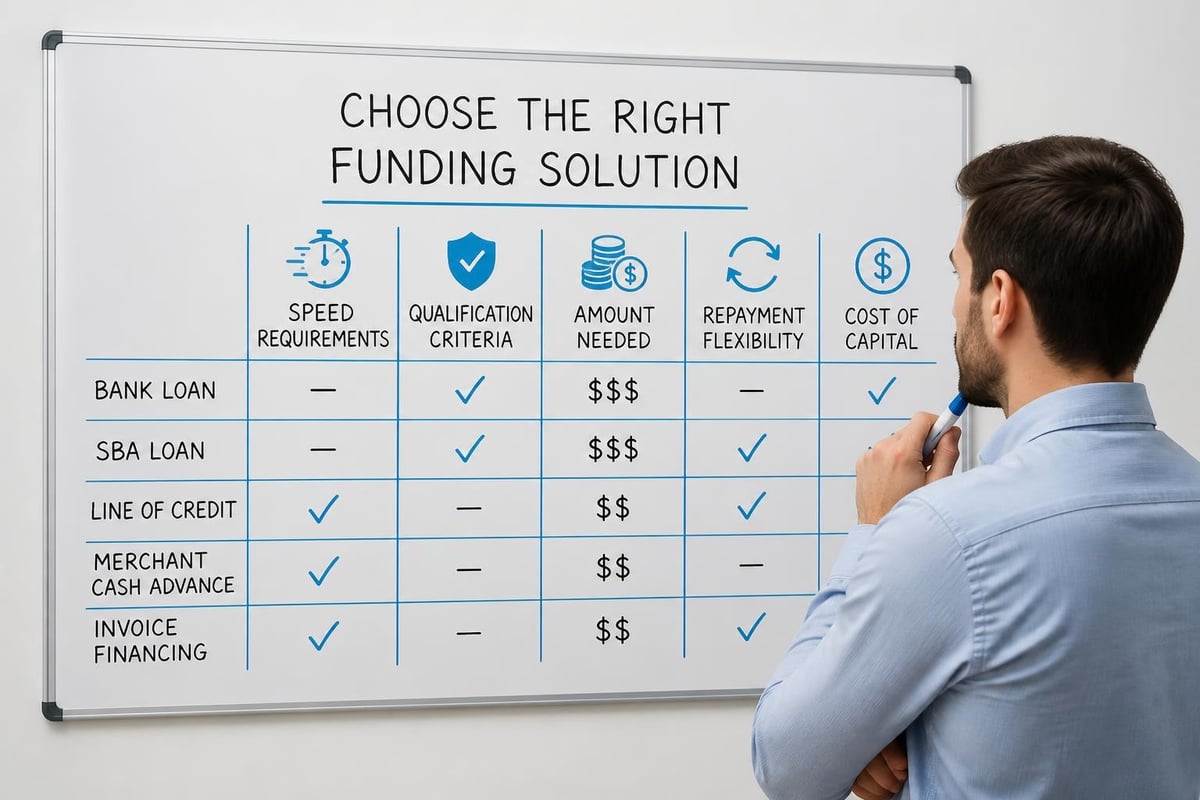
The financing ecosystem for small and medium-sized businesses has evolved dramatically over the past decade. Traditional bank lending remains important, but alternative funding providers now offer diverse options tailored to different business profiles, revenue patterns, and capital requirements.
Traditional vs. Alternative Financing
Banks and credit unions have historically served as primary capital sources for established businesses with strong credit profiles and substantial collateral. These institutions typically offer competitive interest rates and structured repayment terms, but their underwriting processes can be lengthy and approval criteria stringent.
Alternative lenders and financing platforms have emerged to fill gaps left by traditional institutions. These providers often:
- Prioritize business performance and revenue over personal credit scores
- Offer faster approval and funding timelines (sometimes 24-72 hours)
- Provide flexible repayment structures aligned with cash flow
- Serve businesses that may not qualify for conventional bank loans
- Specialize in specific industries or funding types
According to the FDIC's 2024 Small Business Lending Survey, approximately 43% of small businesses now utilize non-bank financing sources for at least part of their capital needs, reflecting the growing diversity of the funding marketplace.
Government-Backed Business Funding Solutions
Federal and state programs provide significant support for small businesses seeking affordable capital with favorable terms. These government-backed options often feature lower interest rates and longer repayment periods than purely commercial alternatives.
SBA Loan Programs
The Small Business Administration offers multiple loan programs designed to increase access to capital for qualifying businesses. The flagship 7(a) loan program provides general-purpose funding up to $5 million for working capital, equipment purchases, real estate acquisition, and refinancing existing debt. The SBA guarantees a portion of these loans, reducing lender risk and enabling more businesses to qualify.
SBA 504 loans specifically target fixed-asset purchases like commercial real estate and major equipment. These loans feature long repayment terms (10-25 years) and competitive fixed rates, making them attractive for businesses making substantial capital investments.
Microloans through SBA-approved intermediaries provide smaller amounts (up to $50,000) to startups and businesses in underserved markets. These programs often include technical assistance and mentoring alongside capital access.
| SBA Program | Maximum Amount | Primary Use Cases | Typical Term |
|---|---|---|---|
| 7(a) Loan | $5,000,000 | Working capital, equipment, real estate, refinancing | Up to 25 years |
| 504 Loan | $5,500,000 | Fixed assets, commercial property, major equipment | 10-25 years |
| Microloan | $50,000 | Startup costs, inventory, supplies, working capital | Up to 6 years |
Grant Opportunities
Unlike loans, grants provide non-dilutive capital that doesn't require repayment. Federal agencies, state economic development departments, and private foundations offer grants for specific purposes, industries, or demographic groups.
Grants.gov provides comprehensive guidance on identifying and applying for federal grant programs. While competition is intense and application requirements detailed, successful grant recipients gain valuable funding without debt obligations or equity dilution.
Revenue-Based and Performance-Driven Options
Modern business funding solutions increasingly emphasize alignment between repayment obligations and actual business performance. These structures provide flexibility that traditional fixed-payment loans cannot match.
Merchant Cash Advances and Revenue-Based Financing
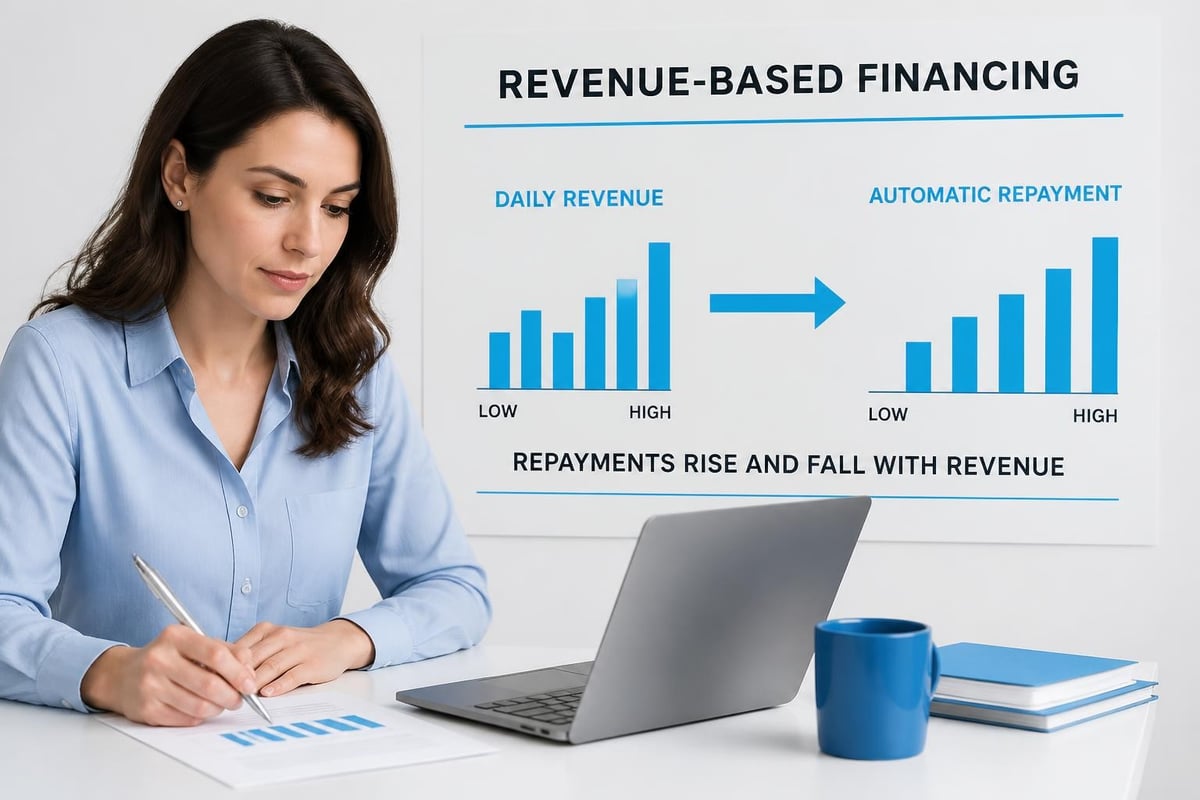
Businesses with consistent credit card sales or predictable revenue streams may benefit from merchant cash advances (MCAs) or revenue-based financing arrangements. Instead of fixed monthly payments, these products typically involve:
- Daily or weekly remittances based on a percentage of sales
- Repayment that automatically adjusts with revenue fluctuations
- Qualification focused on business performance rather than credit scores
- Faster approval and funding compared to traditional loans
The Consumer Financial Protection Bureau's guidance on small-business lending notes important distinctions between various revenue-based products and traditional loans, including different regulatory frameworks and disclosure requirements.
These business funding solutions work particularly well for seasonal businesses, restaurants, retail operations, and service providers with variable monthly revenue. However, business owners should carefully evaluate the total cost of capital, as factor rates and fees can result in higher effective interest rates than conventional loans.
Enterprise Finest Solutions helps established businesses explore merchant cash advance and revenue-based financing options through its network of funding partners, matching business revenue patterns with appropriate capital structures.
Working Capital and Operating Expense Solutions
Maintaining adequate working capital represents a perpetual challenge for growing businesses. Short-term funding options help bridge gaps between payables and receivables while supporting day-to-day operations.
Lines of Credit
A business line of credit functions similarly to a credit card, providing access to capital up to a predetermined limit. Businesses draw funds as needed and pay interest only on outstanding balances. This flexibility makes lines of credit ideal for:
- Managing seasonal inventory purchases
- Covering payroll during slow periods
- Addressing unexpected equipment repairs
- Capitalizing on time-sensitive opportunities
- Smoothing cash flow inconsistencies
Both traditional banks and alternative lenders offer business lines of credit, with qualification criteria, credit limits, and terms varying significantly based on business profile and lender type.
Term Loans for Working Capital
When businesses need a specific lump sum for working capital purposes, term loans provide predictable repayment schedules and known interest costs. Short-term loans (12-18 months) address immediate needs, while medium-term options (2-5 years) support larger investments in inventory, marketing campaigns, or operational expansion.
The SBA's funding guide for entrepreneurs outlines strategic considerations for different funding types, helping business owners match capital sources to specific use cases and time horizons.
Asset-Based and Secured Financing
Businesses with valuable physical assets or reliable receivables can leverage these holdings to access favorable financing terms. Asset-based business funding solutions typically offer larger amounts and lower costs than unsecured alternatives.
Equipment Financing
Purchasing or upgrading equipment often requires substantial capital investment. Equipment financing allows businesses to acquire necessary assets while preserving working capital and spreading costs over the equipment's useful life. Key features include:
- The equipment itself serves as collateral, reducing lender risk
- Approval may be easier than unsecured financing
- Payment terms typically align with equipment depreciation schedules
- Tax advantages through Section 179 deductions or depreciation
Equipment financing works for virtually any industry needing machinery, vehicles, technology, medical devices, construction equipment, or restaurant furnishings.
Invoice Financing and Factoring
Businesses with outstanding invoices from creditworthy customers can access immediate capital through invoice financing or factoring. These arrangements convert future receivables into present working capital:
Invoice financing uses receivables as collateral for a loan or line of credit, with the business retaining collection responsibility and customer relationships.
Factoring involves selling invoices to a third party at a discount, transferring both the receivable value and collection responsibilities.
Both options provide quick access to capital tied up in payment terms, though factoring typically costs more due to the additional services provided.
| Financing Type | Collateral | Approval Speed | Best For |
|---|---|---|---|
| Equipment Loan | Equipment being financed | Moderate (3-10 days) | Specific asset purchases |
| Invoice Financing | Outstanding invoices | Fast (1-5 days) | B2B businesses with payment terms |
| Factoring | Sold invoices | Very fast (1-3 days) | Businesses needing immediate cash, willing to outsource collections |
| Asset-Based Loan | Inventory, equipment, receivables | Moderate (5-15 days) | Businesses with substantial physical assets |
Building Creditworthiness for Better Funding Access
The quality and cost of business funding solutions available to any company directly correlates with its creditworthiness. Strategic credit management improves both approval odds and financing terms.
Business Credit Scores and Reports
Unlike personal credit, business credit profiles incorporate payment history with suppliers and vendors, public records, company size and age, industry risk factors, and credit utilization patterns. Dun & Bradstreet's business credit resources explain how lenders evaluate PAYDEX scores and other metrics when underwriting applications.
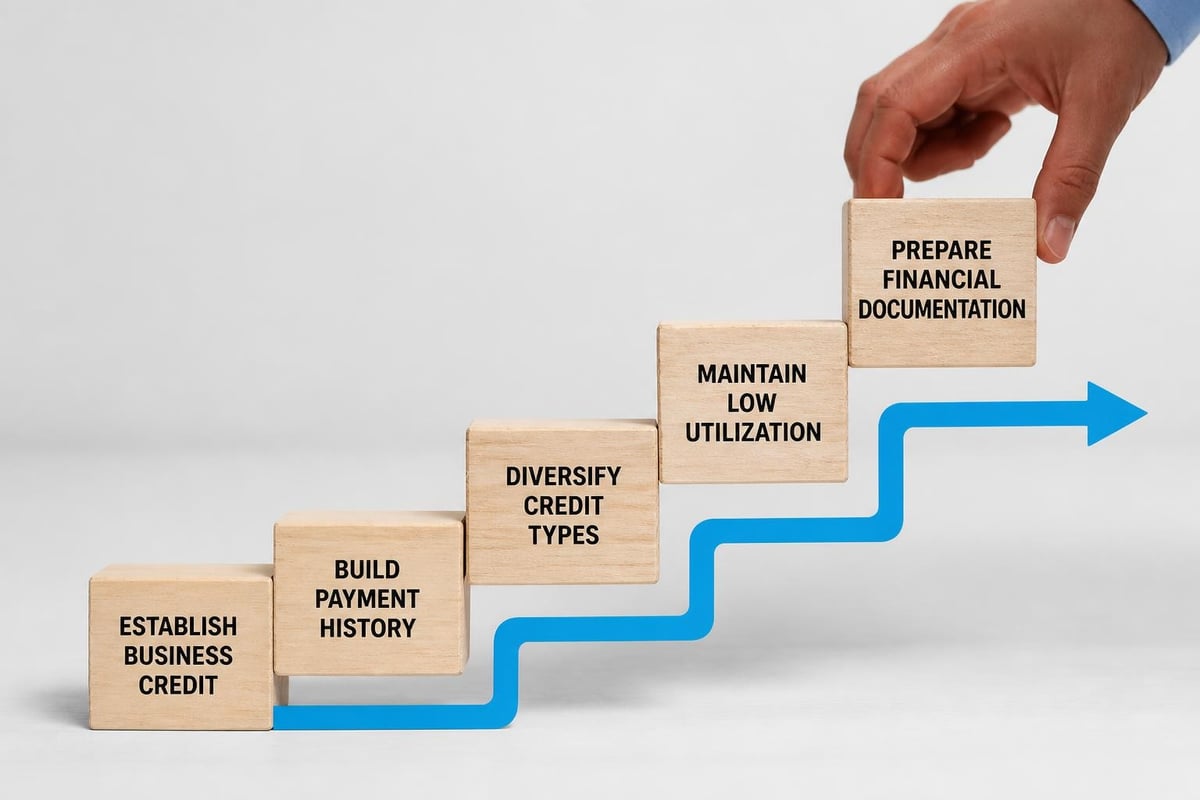
Improving business credit requires consistent attention to several practices:
- Pay all vendor invoices and credit obligations on time
- Establish trade credit relationships with suppliers that report to credit bureaus
- Maintain appropriate credit utilization (below 30% of available limits)
- Correct any inaccuracies in credit reports promptly
- Build a diverse credit profile with multiple tradelines
Financial Documentation and Preparation
Lenders evaluate business performance through financial statements, tax returns, and operational metrics. Maintaining organized, accurate records accelerates the application process and demonstrates management competence. Essential documentation typically includes:
- Two to three years of business tax returns
- Current profit and loss statements
- Balance sheets showing assets, liabilities, and equity
- Cash flow projections for the upcoming 12-24 months
- Bank statements documenting revenue and expense patterns
- Business licenses and ownership documentation
Strategic Considerations for Choosing Funding
Selecting appropriate business funding solutions requires careful analysis of multiple factors beyond simple approval odds or funding speed. Strategic evaluation ensures financing supports rather than hinders long-term business objectives.
Cost of Capital Analysis
The true cost of financing extends beyond stated interest rates. Comprehensive evaluation should include:
- Annual Percentage Rate (APR) or effective interest rate
- Origination fees, processing charges, and closing costs
- Prepayment penalties or early repayment restrictions
- Ongoing maintenance fees or unused line fees
- Factor rates converted to APR equivalents for merchant cash advances
Lower-cost options aren't always optimal if they come with restrictions that limit operational flexibility or require excessive collateral that constrains future borrowing capacity.
Repayment Structure Alignment
Matching repayment obligations to cash flow patterns prevents financial stress and default risk. Businesses with seasonal revenue should seek flexibility in payment timing, while those with steady income might prefer predictable fixed payments that simplify budgeting.
Consider how financing payments interact with existing obligations. Stacking multiple high-frequency payment obligations can create cash flow pressure even when individual financing arrangements seem manageable.
Use of Funds and ROI Expectations
Different business funding solutions suit different purposes. Expansion initiatives with long-term payback periods justify longer repayment terms and potentially higher total interest costs. Short-term working capital needs demand quick access and flexible repayment but shouldn't involve extended obligations.
Calculate expected return on investment for capital deployment. Revenue-generating investments (new equipment increasing capacity, marketing campaigns driving sales, inventory for peak season) should produce returns exceeding financing costs. Defensive uses (covering unexpected expenses, managing cash flow gaps) require different evaluation focused on avoiding worse alternatives like vendor penalties or operational disruption.
Economic Context and Funding Trends
The broader economic environment significantly influences both availability and cost of business funding solutions. Understanding current market conditions helps business owners time financing decisions strategically and set realistic expectations.
Interest Rate Environment in 2026
The Federal Reserve's economic analysis provides context for monetary policy decisions affecting borrowing costs across the economy. While specific rate predictions exceed this guide's scope, business owners should monitor Federal Reserve communications and consult financial advisors about timing major financing decisions relative to expected rate movements.
Rising rate environments favor locking in fixed-rate financing before further increases. Falling rates suggest considering variable-rate options or delaying large borrowing until costs decline.
Access to Capital Disparities
Research from the Kauffman Foundation on access to capital highlights persistent disparities in funding access based on geography, industry, business ownership demographics, and company size. Understanding these patterns helps business owners:
- Identify specialized lenders serving their specific market segment
- Connect with community development financial institutions (CDFIs) focused on underserved markets
- Pursue targeted government programs designed to address capital gaps
- Build relationships with advisors and advocates familiar with relevant resources
Alternative and Emerging Funding Models
Innovation continues reshaping business funding solutions beyond traditional categories. Crowdfunding platforms enable customer-funded product development. Revenue-sharing agreements provide capital without debt or dilution. Cryptocurrency-based lending introduces new risk and opportunity profiles.
While emerging options warrant attention, business owners should prioritize proven funding sources aligned with their risk tolerance, regulatory comfort, and operational requirements. Harvard Business Review's coverage of funding in challenging environments offers strategic perspective on navigating evolving capital markets.
Preparing a Successful Funding Application
Regardless of chosen funding type, thorough preparation significantly improves approval odds and negotiating position. Lenders appreciate professional presentation and complete information.
Business Plan and Financial Projections
A comprehensive business plan demonstrates strategic thinking and market understanding. Even when not explicitly required, having a current plan ready shows professionalism and preparation. Key components include:
- Executive summary explaining business model and funding purpose
- Market analysis showing industry trends and competitive positioning
- Operations overview describing products, services, and delivery
- Management team background highlighting relevant experience
- Financial projections with realistic revenue and expense forecasts
- Specific use of funds with expected outcomes and timeline
Financial projections should extend 12-24 months beyond the loan repayment period, showing sustained viability after debt service obligations end.
Presenting Your Business Story
Numbers tell part of the story, but context matters equally. Effective funding applications explain:
- Why now – What makes this the right time for capital investment
- Why this amount – How you calculated the specific funding request
- Why this use – What business outcomes the capital will achieve
- Why you – What makes your team capable of executing the plan
- Why this will succeed – What competitive advantages and market opportunities support projections
Quantify expected outcomes whenever possible. "Increase inventory to capture 15% more sales during peak season" resonates more than "buy more inventory."
Comparing Multiple Offers
Business owners should seek proposals from multiple lenders before committing. Comparison shopping provides negotiating leverage and ensures competitive terms. When evaluating competing offers, normalize comparison points:
- Convert all pricing to APR or effective annual cost
- Calculate total repayment amount across the full term
- Identify all fees, conditions, and requirements
- Assess prepayment flexibility and refinancing options
- Consider lender reputation, service quality, and ongoing relationship value
The lowest-cost option isn't always best if service quality, flexibility, or relationship factors favor a slightly higher-priced alternative.
Working with Funding Brokers and Advisors
Navigating the complex landscape of business funding solutions can overwhelm busy owners focused on operations. Professional brokers and advisors provide valuable expertise, market access, and time savings.
Benefits of Professional Guidance
Experienced funding professionals offer several advantages:
- Market knowledge – Understanding which lenders serve specific industries, business sizes, and credit profiles
- Application efficiency – Preparing complete, professional submissions that accelerate approval
- Option comparison – Presenting multiple qualified alternatives with objective analysis
- Negotiation support – Advocating for favorable terms based on market knowledge
- Time savings – Handling research, outreach, and coordination while owners focus on operations
Brokers typically work with networks of multiple lenders, providing access to options individual business owners might not discover independently.
Evaluating Broker Relationships
Quality varies significantly among funding brokers and advisors. Business owners should assess potential partners based on:
- Industry experience and track record with similar businesses
- Transparency about fee structures and lender compensation
- Range of lender relationships across funding types
- Client references and testimonials from comparable businesses
- Professional credentials and regulatory compliance
- Communication style and responsiveness
Reputable brokers explain all costs clearly, including any fees paid by lenders that might influence recommendations. The best partnerships involve aligned incentives where broker success depends on client satisfaction and long-term relationship value.
Access to appropriate capital fuels business growth, operational stability, and competitive advantage in every industry. By understanding the full spectrum of business funding solutions available in 2026, evaluating options strategically, and maintaining strong creditworthiness, small and medium-sized businesses position themselves for sustained success. Enterprise Finest Solutions connects business owners with flexible funding options tailored to their revenue patterns, industry requirements, and growth objectives. Explore how Enterprise Finest Solutions can help identify the right capital solution for your business needs.
Written by
Enterprise Finest Solutions
Content creator and writer sharing insights and stories.