Women Owned Small Business Loans: Guide for 2026
Discover women owned small business loans: eligibility, federal programs, alternative funding, and how to navigate lending gaps in 2026.

Women entrepreneurs continue to drive significant economic growth across the United States, yet accessing capital remains a persistent challenge. Women owned small business loans represent a critical tool for founders seeking to launch, sustain, or scale their ventures. Understanding the available funding landscape, eligibility requirements, and strategic approaches to securing financing can make the difference between stagnation and sustainable growth. This comprehensive guide explores federal programs, alternative funding channels, approval trends, and practical steps women business owners can take to improve their odds of success in 2026.
The Financing Gap: Current State of Women-Owned Business Lending
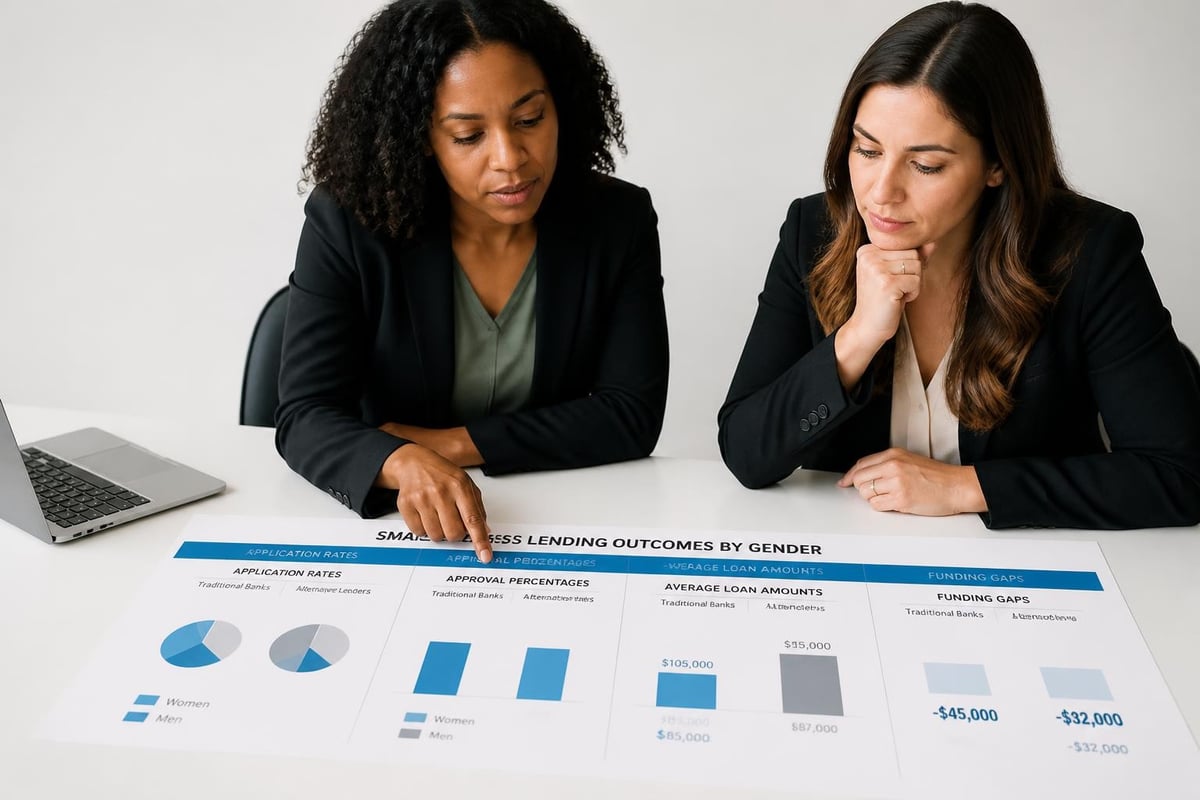
The funding gap for women-owned businesses is well-documented and continues to narrow, though significant disparities remain. According to the Federal Reserve's 2024 Small Business Credit Survey focused on gender, women-owned firms apply for financing at similar rates to male-owned firms but face higher denial rates and receive smaller loan amounts when approved.
Key statistics from recent surveys reveal:
- Women-owned businesses receive approximately 16% of total small-business lending dollars despite representing more than 40% of all U.S. businesses
- Approval rates for women-owned firms lag behind male-owned firms by 8-12 percentage points across most loan categories
- Women entrepreneurs are more likely to rely on personal savings and credit cards to fund operations
These disparities stem from multiple factors, including shorter business track records, lower average revenues, industries with perceived higher risk, and unconscious bias in underwriting. However, targeted federal programs and a growing ecosystem of specialized lenders are working to close this gap.
Understanding the Structural Barriers
Women-owned businesses often operate in service sectors with lower asset bases, making traditional collateral-based lending more difficult. Additionally, many women entrepreneurs start businesses later in their careers or after career interruptions, resulting in shorter business credit histories. Research from Harvard Business Review demonstrates that even when controlling for revenue, industry, and credit scores, women business owners face higher interest rates and stricter terms.
The good news is that awareness of these structural issues has prompted policy responses and market innovations specifically designed to address women owned small business loans.
Federal Programs Dedicated to Women Entrepreneurs
The Small Business Administration offers several pathways specifically supporting women-owned businesses. The SBA's Office of Women's Business Ownership coordinates resources, counseling, and loan programs tailored to women entrepreneurs.
SBA 7(a) Loan Program
The SBA 7(a) program remains the most popular federal loan option for women-owned businesses. These loans offer:
- Loan amounts: Up to $5 million (most common range: $50,000-$500,000)
- Use cases: Working capital, equipment purchases, real estate, refinancing, acquisition
- Terms: Up to 10 years for working capital/equipment, up to 25 years for real estate
- Guarantee: SBA guarantees up to 85% of loans under $150,000 and 75% of larger loans
The guarantee reduces lender risk, making banks more willing to approve women owned small business loans that might otherwise fall outside traditional underwriting boxes. Interest rates typically range from prime plus 2.25% to prime plus 4.75%, depending on loan size and term.
SBA Microloan Program
For newer businesses or those needing smaller amounts, the SBA Microloan Program provides up to $50,000 through community-based intermediary lenders. These loans are particularly valuable for women entrepreneurs because:
- Intermediaries often provide technical assistance and business counseling alongside capital
- Underwriting focuses more on business concept and owner capability than extensive credit history
- Average loan size is approximately $14,000, ideal for inventory, equipment, or initial working capital
- Many intermediaries specialize in serving underrepresented entrepreneurs
Women-Owned Small Business Federal Contracting Certification
While not a loan program directly, the WOSB Federal Contracting Program opens access to set-aside contracts that can significantly boost revenue, making businesses more attractive to lenders. The certification process requires majority ownership (51% or more) and control by one or more women who are U.S. citizens.
Alternative Funding Solutions for Women-Owned Businesses
Traditional bank lending represents only one channel for capital. A robust alternative funding ecosystem has emerged, often with more flexible underwriting and faster approval timelines.
| Funding Type | Typical Amount | Speed to Funding | Best For |
|---|---|---|---|
| Revenue-Based Financing | $10,000-$500,000 | 3-7 days | Established businesses with consistent sales |
| Business Line of Credit | $5,000-$250,000 | 2-5 days | Recurring expenses, cash-flow gaps |
| Equipment Financing | Equipment value | 3-10 days | Machinery, vehicles, technology purchases |
| Invoice Factoring | 80-90% of receivables | 1-3 days | B2B businesses with outstanding invoices |
| Crowdfunding | $5,000-$100,000+ | 30-90 days | Product launches, community-supported ventures |
Revenue-Based and Merchant Cash Advance Options
For women-owned businesses with established revenue streams, revenue-based financing evaluates funding eligibility primarily on monthly sales rather than credit scores or collateral. These products advance capital in exchange for a percentage of future receivables. While pricing tends to be higher than traditional term loans, approval rates are significantly better for businesses with shorter operating histories.
Some businesses explore options like a business line of credit, which provides flexible access to capital for recurring expenses including inventory, payroll, and marketing needs. Lines of credit allow businesses to draw funds as needed and pay interest only on amounts used, making them particularly useful for managing seasonal fluctuations or unexpected opportunities.

Community Development Financial Institutions
CDFIs represent mission-driven lenders focused on underserved markets, including women- and minority-owned businesses. According to analysis by the Chicago Fed on small-business recovery, CDFIs often fill gaps left by traditional banks, particularly in lower-income communities and for businesses lacking conventional collateral.
Advantages of CDFI partnerships include:
- More flexible underwriting criteria
- Patient capital with reasonable terms
- Business development services bundled with financing
- Deep understanding of local market challenges
- Willingness to finance businesses traditional banks decline
The WBENC LIFT Capital Journey Guide provides detailed directories of CDFIs, women-focused funds, and corporate supplier diversity programs that include financing components.
Eligibility Requirements and Qualification Factors
Understanding what lenders evaluate helps women business owners prepare stronger applications for women owned small business loans.
Core Underwriting Criteria
Personal credit score: Most lenders require a minimum score of 650 for term loans, though some alternative lenders accept scores as low as 550. Higher scores (720+) unlock better rates and terms.
Time in business: Traditional banks typically require at least two years of operating history. Alternative lenders may accept businesses with as little as six months, though pricing reflects the additional risk.
Annual revenue: Minimum revenue thresholds vary widely. Term loans often require $100,000+ in annual sales, while microloans and revenue-based products may work with $50,000 or less.
Debt service coverage ratio: Lenders want to see that business cash flow can cover existing debt obligations plus the proposed loan payment, typically at a ratio of 1.25:1 or better.
Collateral: While SBA guarantees reduce collateral requirements, most term loans still require business or personal assets to secure the financing. Alternative products may rely more heavily on personal guarantees.
Documentation Typically Required
Preparation is crucial. Gathering these documents before applying accelerates the process:
- Financial statements: Profit and loss statements, balance sheets, cash-flow statements (typically last two years)
- Tax returns: Business and personal returns for the past two to three years
- Bank statements: Three to twelve months of business bank account activity
- Business plan: Narrative describing operations, market, competitive positioning, and growth strategy
- Use of funds: Detailed explanation of how loan proceeds will be deployed
- Legal documents: Business licenses, articles of incorporation, operating agreements, leases
Recent Trends in Women-Owned Business Lending
The lending landscape for women entrepreneurs showed notable improvements through 2024, though challenges persist. According to AP News coverage of SBA fiscal-year 2024 data, loans to majority women-owned businesses increased by 11% year-over-year, with total dollar volume approaching $12 billion across all SBA programs.
Shifting Lender Priorities
Banks continue to tighten standards in response to broader economic conditions. The FDIC's 2024 Small Business Lending Survey notes that approximately 42% of surveyed banks reported tightening credit standards for small-business loans, driven by inflation concerns, rising interest rates, and increased charge-off rates in certain sectors.
This tightening disproportionately affects newer businesses and those without substantial collateral, categories where women-owned businesses are overrepresented. However, the same survey indicates growing bank interest in SBA-guaranteed products as a way to serve these markets while managing risk.
The Rise of Fintech Lenders
Technology-enabled lenders have dramatically expanded access to women owned small business loans. These platforms use alternative data sources (bank account activity, online sales data, customer reviews) to supplement traditional credit analysis. The result is faster decisions, often within 24-48 hours, and approval rates 15-20 percentage points higher than traditional banks for similar applicant profiles.
Trade-offs include:
- Higher interest rates (annualized rates of 15-40% are common)
- Shorter repayment terms (three months to three years)
- Daily or weekly payment structures
- Less relationship-banking support
For businesses needing capital quickly or those with credit blemishes, fintech lenders provide valuable options, though borrowers should carefully model the total cost of capital.
Strategic Steps to Improve Approval Odds
Women entrepreneurs can take proactive measures to strengthen their position when seeking business financing.
Build Strong Business Credit
Establishing credit in the business name, separate from personal credit, demonstrates organizational maturity and protects personal assets. Steps include:
- Obtain a DUNS number and build a profile with business credit bureaus (Dun & Bradstreet, Experian Business, Equifax Business)
- Open trade credit accounts with suppliers who report to business bureaus
- Maintain timely payment on all business obligations
- Keep credit utilization below 30% on business credit lines
- Monitor business credit reports for errors and address discrepancies promptly
Develop Relationships Before Needing Capital
The best time to approach lenders is before you need money. Building relationships with local banks, credit unions, and community lenders creates familiarity and trust. When financing needs arise, you're not a stranger submitting a cold application.
Consider opening business accounts, attending lender-sponsored networking events, and seeking informational conversations about their lending criteria. Many banks offer "pre-qualification" processes that provide feedback on eligibility without hard credit inquiries.

Prepare a Compelling Narrative
Numbers tell part of the story, but the narrative around your business matters. Lenders want to understand:
- Market opportunity: Why does your product or service have sustainable demand?
- Competitive advantage: What differentiates your business from alternatives?
- Management capability: What experience and skills equip you to execute the plan?
- Use of funds: Exactly how will the capital drive growth or efficiency?
- Repayment source: What specific cash flows will service the debt?
Women entrepreneurs sometimes undersell their accomplishments. Clearly articulate your track record, industry expertise, and strategic vision. Data from the Federal Reserve's Main Street Metrics report shows that businesses presenting comprehensive business plans receive approval at rates 18% higher than those submitting minimal documentation.
Sector-Specific Considerations
Certain industries present unique opportunities and challenges for women owned small business loans.
Service-Based Businesses
Consulting, marketing agencies, professional services, and similar businesses often lack hard assets for collateral. Strategies include:
- Emphasizing recurring revenue from retainer clients
- Demonstrating strong profit margins
- Highlighting client diversification to reduce concentration risk
- Considering invoice factoring to unlock working capital from receivables
Retail and E-Commerce
Inventory-intensive businesses can use inventory financing or purchase-order financing. These products advance capital against inventory or confirmed orders, with the inventory itself serving as collateral. Approval often depends more on inventory turnover rates and sell-through history than traditional credit metrics.
Healthcare and Personal Care
Medical, dental, beauty, and wellness businesses benefit from specialized lenders who understand industry economics, licensing requirements, and reimbursement cycles. Equipment financing works particularly well in these sectors given the significant capital expenditures for medical devices, chairs, lasers, and technology systems.
Grant Programs and Non-Dilutive Funding
While not loans, grants represent capital that doesn't require repayment or equity dilution. Women entrepreneurs should explore:
- Amber Grant: Monthly $10,000 grants for women-owned businesses, plus one annual $25,000 grant
- Cartier Women's Initiative: Awards up to $100,000 for early-stage women-led businesses with social or environmental impact
- IFundWomen: Crowdfunding platform with grant-matching programs for women entrepreneurs
- Visa She's Next Grant Program: $10,000 grants plus business coaching for women-owned small businesses
- Eileen Fisher Women-Owned Business Grant: Awards for women-owned businesses aligned with environmental and social change
State and local governments also sponsor grants, often tied to specific industries, geographic areas, or business development zones. Competition is intense, but unlike loans, grants don't create debt obligations.
Navigating Application Rejection
Denial doesn't mean the end of the road. Understanding why applications fail and addressing those issues improves future outcomes.
Common Rejection Reasons
- Insufficient cash flow: Projected revenues don't support debt service
- High debt-to-income ratio: Existing obligations leave insufficient capacity
- Limited operating history: Business hasn't established track record
- Credit issues: Personal or business credit events (late payments, collections, bankruptcies)
- Incomplete documentation: Application lacks required financial statements or supporting materials
- Weak business plan: Narrative fails to demonstrate viability or growth potential
Steps After Denial
Request detailed feedback from the lender about specific deficiencies. Most lenders will provide at least general guidance. Use that feedback to create an improvement plan:
- Address credit issues: Dispute errors, negotiate settlements, establish payment plans for past-due obligations
- Build operating history: If time in business is the issue, focus on growing revenue and profitability for 6-12 months before reapplying
- Strengthen financials: Improve profit margins, reduce expenses, build cash reserves
- Seek advisory support: SCORE mentors, Small Business Development Centers, and Women's Business Centers offer free counseling to strengthen business fundamentals
- Explore alternative lenders: Different lenders weigh factors differently; what's a dealbreaker for one may be acceptable to another
The Role of Certification and Networking
Strategic certifications and professional networks can accelerate access to both customers and capital.
Women's Business Enterprise National Council (WBENC)
WBENC certification verifies that a business is at least 51% owned, controlled, operated, and managed by a woman or women. Certification unlocks:
- Access to corporate supplier diversity programs
- Networking events connecting certified businesses with corporate buyers
- Educational resources on scaling and financing
- Increased visibility to procurement officers actively seeking diverse suppliers
Growing revenue through these channels makes businesses more attractive to lenders. Many corporations also sponsor financing programs or connect certified suppliers with preferred lenders.
Industry Associations and Chambers
Industry-specific associations often maintain relationships with lenders who understand sector dynamics. Local chambers of commerce similarly connect members with financing resources and can provide introductions to community banks focused on local business development.
Active participation builds the social proof and referral networks that facilitate lending relationships, particularly in communities where relationship banking still matters.
Key Takeaways for Women Business Owners Seeking Financing
Successfully securing women owned small business loans requires understanding the full landscape of options, preparing meticulously, and approaching the process strategically. Federal programs through the SBA offer favorable terms and lender guarantees that improve approval odds. Alternative lenders provide speed and flexibility, often with higher costs but broader acceptance criteria. Building business credit, maintaining strong financials, and developing lender relationships before capital needs arise position businesses for success when funding becomes necessary.
The financing gap for women entrepreneurs is real but narrowing. Targeted programs, specialized lenders, and growing awareness of structural barriers are expanding access. By combining thorough preparation, strategic positioning, and persistence, women business owners can secure the capital needed to launch, sustain, and scale successful enterprises in 2026 and beyond.
Access to growth capital shouldn't depend on gender, yet navigating the complex landscape of women owned small business loans requires expertise, preparation, and the right partnerships. Whether you're seeking working capital, equipment financing, or revenue-based solutions, connecting with advisors who understand your business fundamentals and can match you with appropriate lenders makes the difference between application rejection and funding approval. Enterprise Finest Solutions helps small and medium-sized businesses identify financing options aligned with their revenue, performance, industry, and capital needs through a network of lending partners committed to supporting diverse business ownership.
Written by
Enterprise Finest Solutions
Content creator and writer sharing insights and stories.