Women Owned Business Loans: Your 2026 Funding Guide
Discover women owned business loans in 2026. Learn about SBA programs, alternative lenders, CDFIs, and strategies to secure capital for growth.

Women entrepreneurs continue to drive significant economic growth across the United States, yet accessing capital remains a persistent challenge. According to the U.S. Census Bureau's 2023 Annual Business Survey, women-owned employer firms now represent 21.4% of all U.S. employer businesses, generating over $2.3 trillion in annual receipts. Despite this impressive economic contribution, women business owners still face disproportionate barriers when seeking financing. Understanding the landscape of women owned business loans and the programs designed to address these disparities has become essential for female entrepreneurs pursuing growth, expansion, or simply maintaining healthy cash flow in 2026.
The Current State of Women Owned Business Financing
The financing gap for women-owned businesses remains well-documented and significant. Research published in the Federal Reserve's 2024 Report on Employer Firms reveals that women business owners continue to experience higher denial rates for credit applications and receive smaller loan amounts when approved compared to their male counterparts. This disparity persists even when controlling for business size, revenue, and creditworthiness.
Several factors contribute to this ongoing challenge. Traditional underwriting models often disadvantage businesses in industries where women entrepreneurs concentrate, such as service-based sectors that may carry less tangible collateral. Furthermore, women-owned businesses typically start with lower initial capital, creating a compounding effect that limits growth trajectories and borrowing capacity over time.
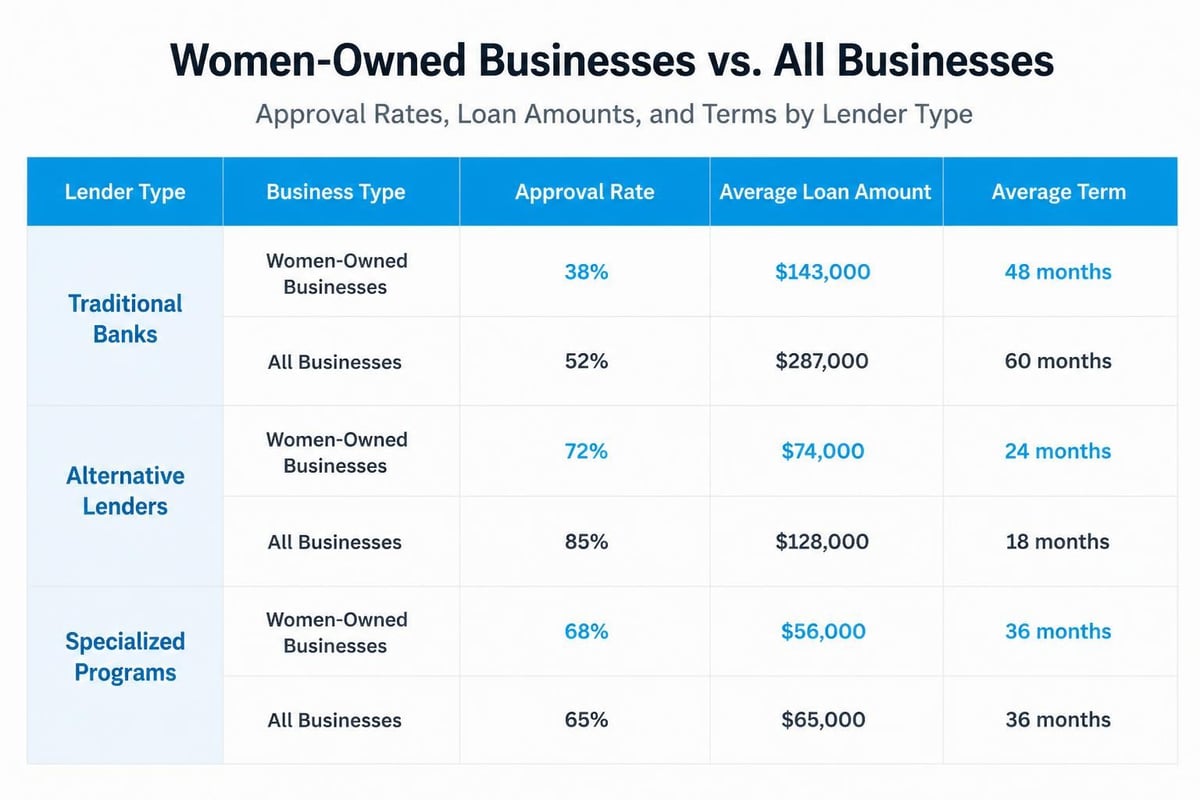
The good news: awareness of these disparities has sparked meaningful responses from both public and private sectors. Federal programs have expanded, community lenders have sharpened their focus on underserved entrepreneurs, and alternative financing models have emerged that evaluate businesses using different criteria than traditional banks employ.
SBA Loan Programs for Women Entrepreneurs
The Small Business Administration offers several pathways specifically designed to improve access to women owned business loans. While SBA loans aren't exclusively for women, certain programs and certifications create advantages for female business owners.
Women-Owned Small Business Federal Contract Program
The WOSB Federal Contract program provides certified women-owned businesses with enhanced access to federal contracting opportunities. While this program focuses on contracts rather than direct lending, it creates significant collateral benefits for financing. Businesses with federal contracts or a demonstrated pipeline of government work typically qualify for more favorable loan terms and higher approval rates.
Key certification benefits include:
- Access to set-aside federal contracts in eligible industries
- Enhanced credibility with commercial lenders
- Streamlined qualification for certain SBA loan products
- Stronger business fundamentals that improve financing applications
SBA 7(a) Loans
The SBA 7(a) program remains the most versatile option for women owned business loans, covering nearly any legitimate business purpose. In 2026, these loans offer amounts up to $5 million with terms extending to 25 years for real estate and 10 years for working capital.
| Loan Feature | Details |
|---|---|
| Maximum Amount | $5,000,000 |
| Typical Use Cases | Working capital, equipment, real estate, refinancing, acquisitions |
| Term Length | Up to 25 years (real estate), 10 years (working capital) |
| Guarantee | SBA guarantees up to 85% (loans ≤$150k) or 75% (loans >$150k) |
| Credit Requirements | Good personal credit (typically 680+), business track record |
Women entrepreneurs often find 7(a) loans particularly useful because the SBA guarantee reduces lender risk, encouraging approval for businesses that might not meet conventional bank standards.
SBA Microloan Program
For women launching startups or seeking smaller capital injections, the SBA Microloan program provides loans up to $50,000 through nonprofit intermediary lenders. These organizations often provide technical assistance alongside capital, addressing both financing and business development needs simultaneously.
Average microloan amounts hover around $13,000, making this program ideal for:
- Inventory purchases for retail or e-commerce businesses
- Equipment for service-based companies
- Working capital for businesses in early growth stages
- Enterprises that need smaller amounts with accessible qualification criteria
Community Development Financial Institutions and Women-Focused Lenders
Community Development Financial Institutions represent a critical piece of the women owned business loans ecosystem. These mission-driven lenders prioritize economic development in underserved communities and among underrepresented entrepreneurs. The CDFI Fund supports hundreds of certified institutions nationwide that direct capital specifically toward women business owners.
CDFIs evaluate loan applications differently than traditional banks. While creditworthiness matters, these lenders place equal or greater emphasis on business viability, owner commitment, and community impact. This approach often results in approval for women entrepreneurs who face rejection from conventional sources.

Specialized Women's Business Centers
The SBA's network of Women's Business Centers operates in every state, providing counseling, training, and direct referrals to lenders familiar with women owned business loans. These centers serve as invaluable resources for preparation, helping entrepreneurs strengthen their applications before approaching lenders.
Services typically include:
- Financial statement preparation and analysis
- Business plan development and refinement
- Lender matchmaking based on business characteristics
- Application coaching and documentation support
- Post-funding advisory to ensure successful capital deployment
Recent evaluation data shows that women who engage with Business Centers before seeking financing experience measurably higher approval rates and secure more favorable terms than those who apply independently.
Alternative Financing Options Beyond Traditional Loans
Traditional bank loans represent just one category within the broader landscape of women owned business loans. Alternative financing products have proliferated in recent years, offering speed, flexibility, and qualification criteria that diverge from conventional lending standards.
Revenue-Based Financing and Merchant Cash Advances
Businesses with consistent monthly revenue but limited collateral or shorter operating histories may find revenue-based products accessible when traditional loans prove elusive. Working capital financing options evaluate businesses primarily on cash flow and sales volume rather than time in business or asset holdings, creating opportunities for women entrepreneurs in service industries or digital businesses with minimal physical assets.
These products typically feature:
- Qualification based heavily on monthly revenue (often $10,000+ required)
- Faster approval and funding timelines (days rather than weeks)
- Repayment tied to future sales or daily/weekly remittances
- Higher effective costs but greater accessibility
Important considerations: While these products offer speed and accessibility, business owners should carefully evaluate total costs and repayment structures to ensure alignment with cash flow patterns and growth projections.
Business Lines of Credit
Lines of credit provide revolving access to capital, allowing women business owners to draw funds as needed and repay on flexible schedules. This structure works particularly well for:
- Seasonal businesses managing cash flow fluctuations
- Companies covering short-term gaps between receivables and payables
- Entrepreneurs pursuing multiple small projects or purchases over time
- Businesses wanting standby capital for unexpected opportunities or emergencies
Unlike term loans that disburse full amounts upfront, lines of credit charge interest only on drawn balances, creating cost efficiency for businesses that need periodic rather than constant access to capital.
Equipment Financing
Women entrepreneurs purchasing machinery, vehicles, technology, or other business equipment can often secure specialized equipment financing with the purchased asset serving as collateral. This structure reduces lender risk and frequently results in approval for businesses that might not qualify for unsecured working capital.
Equipment financing advantages include:
- The equipment itself serves as collateral, reducing additional security requirements
- Terms aligned with the useful life of the asset (3-7 years typically)
- Potential tax benefits through Section 179 deductions or bonus depreciation
- Preservation of working capital and other credit lines for operational needs
State and Federal Programs Expanding Access
Beyond SBA programs, multiple state and federal initiatives specifically target expanded access to women owned business loans. The Treasury Department's State Small Business Credit Initiative has channeled billions to state programs that provide loan guarantees, credit enhancements, and direct capital access for underserved entrepreneurs, including women business owners.
State-Level Loan Guarantee Programs
Many states operate guarantee programs that function similarly to SBA guarantees but with state-specific eligibility and focus areas. These programs encourage commercial lenders to approve women owned business loans by absorbing a portion of default risk.
Notable program features across states:
| Program Component | Typical Structure |
|---|---|
| Guarantee Coverage | 50-80% of loan amount |
| Maximum Loan Size | $250,000-$5,000,000 (varies by state) |
| Eligible Uses | Working capital, equipment, real estate, expansion |
| Fees | 1-3% guarantee fee (often lower than SBA) |
| Lender Requirements | Must be approved state partner institution |
These programs often process faster than federal alternatives and may offer more flexible underwriting for businesses in priority industries or geographic areas within each state.
Grant Programs and Non-Dilutive Capital
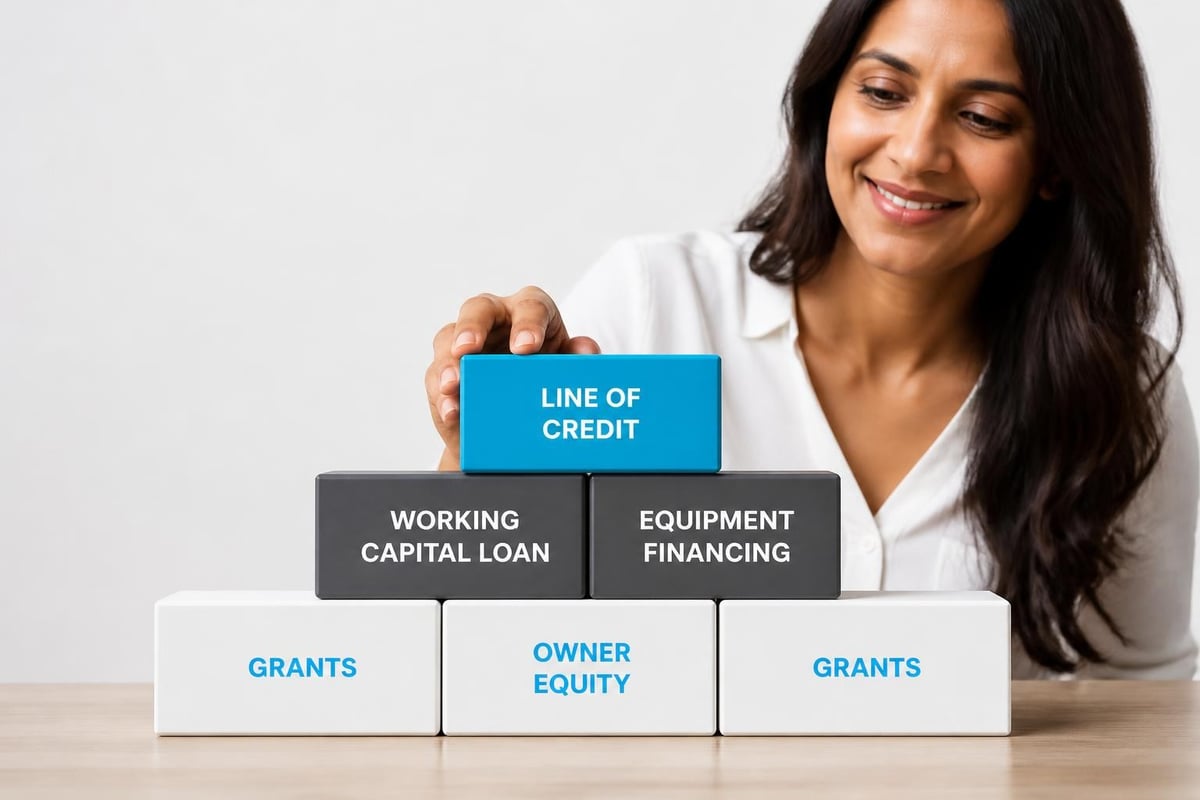
While not loans, grant programs deserve mention as complementary capital sources. Federal agencies, state economic development offices, and private foundations increasingly offer grants specifically for women-owned businesses. These non-repayable funds can strengthen balance sheets, reduce the amount of debt financing needed, and improve creditworthiness for subsequent loan applications.
Overcoming Common Barriers to Approval
Research from Harvard Business Review highlights specific strategies that improve women entrepreneurs' success rates when pursuing business financing. Understanding and addressing common barriers increases approval odds and helps secure more favorable terms.
Strengthening Your Application
Lenders evaluating women owned business loans prioritize similar fundamentals across products and institutions. Preparation in these areas substantially improves outcomes:
- Personal credit optimization (target 680+ FICO scores before applying)
- Comprehensive financial documentation (three years of business and personal tax returns, current financial statements)
- Detailed business plans explaining use of funds and repayment capacity
- Cash flow projections demonstrating ability to service debt while maintaining operations
- Collateral documentation inventorying available assets and their appraised values
Building Banking Relationships Early
Women business owners who establish banking relationships before needing significant capital enjoy measurably better financing outcomes. Regular engagement with business bankers, maintaining operating accounts with potential lenders, and demonstrating consistent financial management create trust and familiarity that influence credit decisions.
Relationship-building tactics:
- Open business checking and savings accounts at target lending institutions
- Schedule annual reviews with business bankers even without immediate financing needs
- Maintain transparent communication about business performance and future plans
- Use ancillary services (merchant services, payroll processing) with relationship banks
- Seek pre-qualification or informal feedback on financing readiness before formal applications
Leveraging Advisory Resources
Data from organizations like Accion Opportunity Fund demonstrates that technical assistance significantly improves both approval rates and business outcomes after funding. Women entrepreneurs who engage advisory resources before and during the financing process secure capital more consistently and deploy it more effectively.
Advisory resources include:
- SCORE mentors with lending and financial management expertise
- Women's Business Centers offering preparation programs
- Small Business Development Centers providing free consulting
- Industry associations with financing-focused programs
- Accountants and bookkeepers who can strengthen financial presentations
Evaluating Total Cost and Terms
Understanding the true cost of women owned business loans requires looking beyond stated interest rates. Total cost of capital includes interest, fees, prepayment penalties, and the opportunity cost of restrictive covenants or collateral requirements.
Comparing Loan Products
| Product Type | Typical APR Range | Speed to Funding | Collateral Requirements | Best For |
|---|---|---|---|---|
| SBA 7(a) | 8-13% | 30-90 days | Often required | Established businesses, larger amounts, long terms |
| Bank Term Loan | 7-12% | 14-60 days | Usually required | Strong credit, significant assets, proven track record |
| CDFI Loan | 8-15% | 14-45 days | Flexible | Underserved markets, non-traditional profiles |
| Revenue-Based | 15-40% APR equivalent | 3-10 days | Minimal/none | Fast needs, consistent revenue, limited collateral |
| Business Line of Credit | 10-25% on drawn balance | 7-30 days | Varies | Ongoing working capital, seasonal needs |
Reading Beyond the Interest Rate
Effective comparison requires calculating the total cost of capital over the full loan term. Consider these factors:
- Origination fees (typically 1-5% of loan amount)
- Prepayment penalties that limit early payoff flexibility
- Draw fees or maintenance charges on lines of credit
- Covenant requirements that restrict business decisions or require maintaining financial ratios
- Personal guarantee implications and potential impact on personal finances
Industry-Specific Considerations
Women owned business loans function differently across industries due to varying asset bases, cash flow patterns, and risk profiles. Understanding industry-specific dynamics helps match businesses with appropriate financing products.
Service-Based Businesses
Professional services, consulting, and personal services businesses often lack substantial physical collateral, making traditional secured lending challenging. These businesses typically find success with:
- Revenue-based products emphasizing cash flow over assets
- SBA loans backed by government guarantee rather than hard collateral
- Lines of credit for managing receivables cycles
- Microloans for modest equipment or working capital needs
Retail and E-Commerce
Inventory-based businesses need capital that aligns with purchasing cycles and seasonal patterns. Appropriate products include:
- Inventory financing secured by stock
- Merchant cash advances tied to sales volume
- Seasonal lines of credit that flex with revenue patterns
- Equipment financing for point-of-sale systems and fixtures
Manufacturing and Distribution
Capital-intensive businesses with significant equipment and real estate often qualify for traditional secured lending but need larger amounts. Optimal approaches include:
- SBA 7(a) or 504 loans for equipment and real estate
- Equipment financing for machinery upgrades
- Asset-based lending against receivables and inventory
- Term loans secured by business assets
Building Long-Term Financial Health
Securing women owned business loans represents just one component of sustainable business growth. Long-term financial health requires strategic capital deployment, disciplined financial management, and progressive strengthening of creditworthiness.
Post-Funding Best Practices
Successful loan deployment and repayment establish foundations for future financing at better terms:
- Track ROI meticulously on funded initiatives to demonstrate capital effectiveness
- Maintain consistent communication with lenders about business performance
- Build reserves to buffer against revenue fluctuations and ensure payment continuity
- Document improvements in revenue, profitability, and business fundamentals
- Establish reporting discipline with monthly financial statements and variance analysis
Creating a Capital Roadmap
Forward-thinking women entrepreneurs develop multi-year capital plans that anticipate future needs and position businesses for progressive access to larger amounts and better terms. This roadmap should:
- Identify upcoming capital needs by quarter and year
- Match financing products to specific use cases and timing
- Establish milestones that improve creditworthiness and borrowing capacity
- Diversify funding sources to reduce dependence on single relationships
- Plan transitions from higher-cost products to more favorable alternatives as businesses strengthen
Preparing for Application Success
The difference between approval and denial for women owned business loans often comes down to preparation quality rather than fundamental business viability. Systematic preparation addresses lender concerns proactively and positions applications competitively.
Essential Documentation Checklist
Compile these materials before beginning applications:
- Three years of business tax returns (or since inception if newer)
- Three years of personal tax returns for all owners with 20%+ equity
- Current financial statements (balance sheet, income statement, cash flow) prepared by accountant
- Year-to-date profit and loss statement and comparison to prior year
- Business plan including executive summary, market analysis, use of funds, and financial projections
- Personal financial statement for all guarantors
- Detailed use-of-funds breakdown with specific amounts and purposes
- Accounts receivable and payable aging reports
- Legal documents (articles of incorporation, operating agreements, commercial leases)
Crafting Your Financing Narrative
Beyond numbers, lenders evaluate the story behind women owned business loans applications. Effective narratives address:
- Business origin and mission that demonstrates passion and commitment
- Market opportunity and competitive positioning showing sustainable demand
- Management experience and expertise relevant to business success
- Growth trajectory and milestones achieved with existing resources
- Specific capital deployment plan with expected returns and timeline
- Realistic risk assessment and mitigation strategies
Women owned business loans have become more accessible through expanded federal programs, mission-driven community lenders, and alternative financing models that evaluate businesses using diverse criteria. Success requires understanding the full landscape of options, preparing comprehensive applications, and matching business characteristics with appropriate products. Enterprise Finest Solutions helps women business owners navigate this complex financing ecosystem, connecting entrepreneurs with funding partners and identifying solutions aligned with revenue patterns, business performance, and capital needs to support sustainable growth.
Written by
Enterprise Finest Solutions
Content creator and writer sharing insights and stories.