VA Small Business Loan Options for Veteran Entrepreneurs
Discover VA small business loan programs and financing options available to veteran entrepreneurs, including SBA loans, grants, and specialized lender programs.

Veteran entrepreneurs face unique opportunities and challenges when launching or expanding their businesses. While the Department of Veterans Affairs doesn't offer direct small business loans, veterans can access a robust ecosystem of financing programs, resources, and support specifically designed for those who have served. Understanding the landscape of a va small business loan-including SBA-backed options, grant programs, and specialized lender initiatives-empowers veteran business owners to secure the capital they need to succeed.
Understanding VA Small Business Loan Resources
The VA Office of Small & Disadvantaged Business Utilization (OSDBU) serves as a central hub for veteran entrepreneurs seeking business resources, procurement opportunities, and financing guidance. While the VA itself doesn't directly underwrite a va small business loan, the agency provides extensive support to help veterans navigate the business financing landscape.
Veterans can leverage VA resources to connect with lenders, access training programs, and obtain certifications that unlock exclusive contracting opportunities. Veteran-Owned Small Business (VOSB) and Service-Disabled Veteran-Owned Small Business (SDVOSB) certifications through the VetBiz portal open doors to set-aside federal contracts that can strengthen your business case when applying for financing.
Key VA Business Support Programs
The VA ecosystem includes several components that complement financing efforts:
- Training and counseling through Veterans Business Outreach Centers
- Certification programs that enhance credibility with lenders
- Procurement assistance that demonstrates revenue potential
- Networking events connecting veterans with capital providers
- Technical assistance for business plan development
These resources don't replace traditional financing but strengthen your position when pursuing a va small business loan through SBA programs or private lenders. Many financial institutions view VA certifications and training completion as positive indicators of business viability.

SBA Loan Programs for Veterans
The Small Business Administration offers the most comprehensive va small business loan options for veteran entrepreneurs. SBA loan programs provide government-backed guarantees that reduce lender risk, enabling veterans to access favorable terms and competitive interest rates.
SBA 7(a) Loan Program
The flagship SBA 7(a) program represents the most versatile va small business loan option for veterans. These loans can fund working capital, equipment purchases, real estate acquisition, refinancing, and business acquisitions.
| Loan Feature | Standard 7(a) | SBA Express | Veteran Advantage |
|---|---|---|---|
| Maximum Amount | $5 million | $500,000 | $500,000 |
| Guarantee Percentage | Up to 85% | Up to 50% | Up to 85% |
| Approval Timeline | 30-60 days | 24-36 hours | 30-45 days |
| Fee Waiver | No | No | Veterans may qualify |
Veterans benefit from waived upfront guarantee fees on certain SBA 7(a) loans, reducing initial capital requirements. The SBAExpress program offers faster approvals for loans up to $500,000, particularly valuable when timing matters for veteran-owned businesses.
SBA 504 Loan Program
For veterans pursuing real estate or major equipment investments, the SBA 504 program structures long-term, fixed-rate financing. This va small business loan option combines three components: a conventional first mortgage (50% from a bank), a second mortgage from a Certified Development Company (40%), and a down payment from the borrower (10%).
The 504 structure offers 20-year terms for real estate and 10-year terms for equipment, providing stability that helps veteran businesses manage cash flow during growth phases. Manufacturing facilities, office buildings, warehouses, and heavy machinery all qualify under this program.
SBA Microloan Program
Veteran entrepreneurs launching startups or small-scale operations can access SBA Microloans ranging from $500 to $50,000. While technically a va small business loan through SBA intermediaries, these programs emphasize accessibility over extensive collateral requirements.
Microloans serve veterans who need:
- Initial inventory purchases for retail operations
- Equipment for service-based businesses
- Working capital during the first year of operations
- Furniture and fixtures for new locations
Interest rates typically range from 8% to 13%, higher than traditional SBA loans but more accessible for businesses with limited operating history.
Veterans Business Outreach Centers and Financing Preparation
Veterans Business Outreach Centers (VBOC) provide no-cost counseling that significantly improves va small business loan approval rates. These centers operate nationwide, offering personalized guidance on business planning, financial projections, and lender preparation.
VBOC advisors help veterans:
- Develop comprehensive business plans that address lender requirements
- Create realistic financial projections based on industry benchmarks
- Organize documentation including tax returns, financial statements, and credit reports
- Understand debt service coverage ratios and other underwriting metrics
- Identify appropriate loan programs matching business needs and qualifications
Research from the Federal Reserve's Small Business Credit Survey indicates that veteran-owned firms with professional counseling experience higher approval rates and more favorable terms when applying for financing.

Alternative Financing Options for Veterans
Beyond traditional SBA programs, veterans can access specialized va small business loan alternatives through private lenders, community development financial institutions, and veteran-focused organizations.
Veteran-Specific Lender Programs
Several financial institutions maintain dedicated veteran lending programs with streamlined applications and preferential terms. These programs recognize military service as a positive qualification factor and may offer:
- Reduced interest rates compared to standard commercial loans
- Lower down payment requirements on equipment or real estate
- Expedited underwriting timelines
- Flexible collateral requirements
StreetShares (now part of Peoples Bank), Bunker Labs partnerships, and veteran divisions within major banks all provide specialized attention to veteran borrowers pursuing business financing.
Revenue-Based Financing for Established Veteran Businesses
Veterans operating established businesses with consistent revenue can explore alternatives that emphasize cash flow over credit history or collateral. For businesses needing capital for inventory, payroll, expansion, marketing, or cash-flow needs, working capital solutions offer flexible access based on business performance rather than traditional underwriting criteria alone.
Revenue-based financing evaluates monthly sales volume, bank account activity, and operational trends rather than requiring extensive collateral or perfect credit scores. This approach benefits veteran entrepreneurs who built successful operations but may not meet conventional loan requirements.
State Small Business Credit Initiative Programs
The State Small Business Credit Initiative (SSBCI) provides federal funding to states for capital access programs supporting small businesses. Many states include veteran-specific components or priority access for veteran-owned businesses within their SSBCI programs.
State programs offer:
- Loan participation programs where states share risk with private lenders
- Collateral support programs that provide additional security to lenders
- Venture capital programs for high-growth veteran businesses
- Technical assistance funding for business development services
Veterans should contact their state economic development agency to learn about available SSBCI resources that can enhance va small business loan accessibility.
Grant Programs and Non-Dilutive Capital
While not traditional loans, grant programs provide non-dilutive capital that veteran entrepreneurs can combine with a va small business loan to reduce borrowing needs and preserve equity.
Federal Grant Opportunities
The Small Business Innovation Research (SBIR) and Small Business Technology Transfer (STTR) programs reserve funding for veteran-owned businesses developing innovative products or services. These competitive grants range from $50,000 Phase I feasibility awards to $1 million Phase II development grants.
Veterans pursuing technology, healthcare, defense, or research-intensive businesses should investigate SBIR/STTR opportunities that align with federal agency priorities. Success in these programs strengthens credibility when seeking complementary debt financing.
Private and Nonprofit Grants
Organizations including the Veteran Business Project, Hivers and Strivers, and FedEx Small Business Grant Contest offer awards ranging from $5,000 to $100,000 for veteran entrepreneurs. While competitive, these grants require no repayment and often include mentorship or networking opportunities.
Preparing a Successful VA Small Business Loan Application
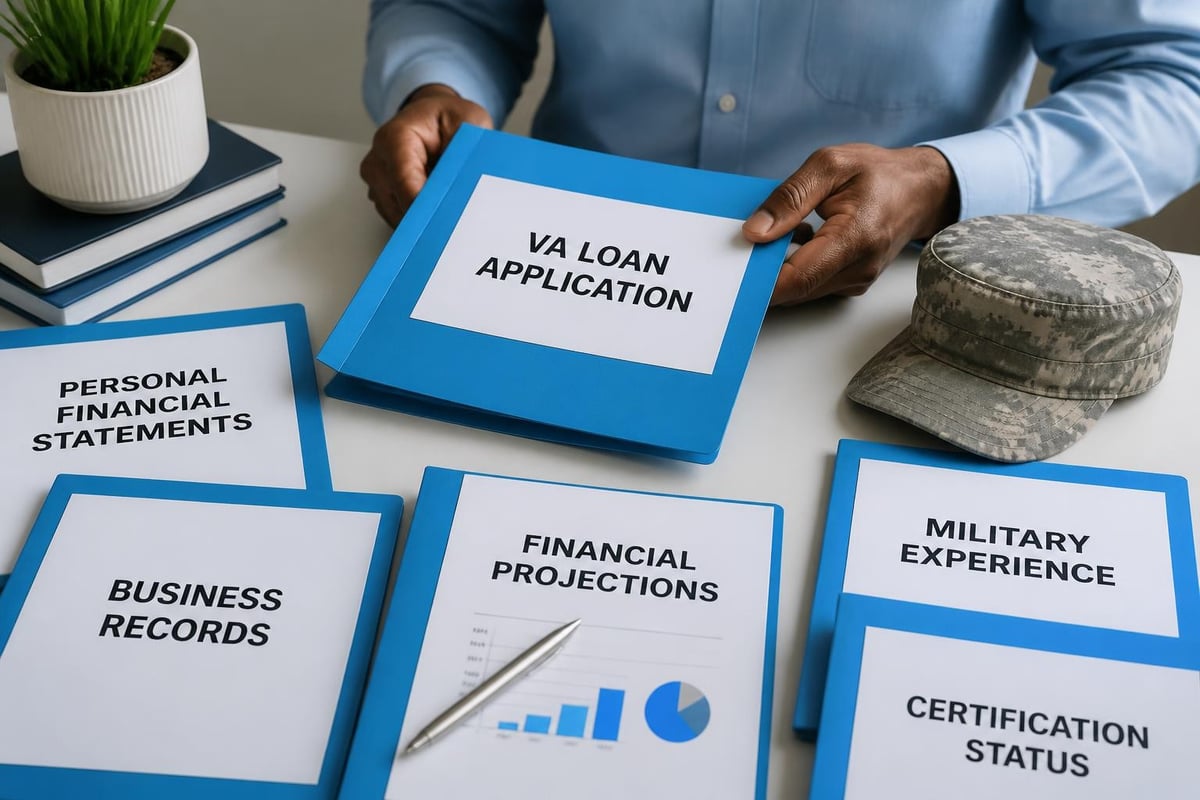
Veteran status alone doesn't guarantee va small business loan approval. Lenders evaluate standard criteria including creditworthiness, business viability, collateral, and debt service capacity. Veterans can strengthen applications by focusing on these elements.
Documentation Requirements
Personal Financial Documents:
- Personal tax returns (typically three years)
- Personal financial statement listing assets and liabilities
- Credit report review and explanation of any adverse items
- Resume highlighting military experience and business qualifications
Business Financial Documents:
- Business tax returns (if operating for more than one year)
- Profit and loss statements and balance sheets
- Cash flow projections for the next 12-24 months
- Business plan with market analysis and growth strategy
Leveraging Military Experience
Veterans should explicitly connect military training, leadership experience, and specialized skills to business operations. Lenders value discipline, strategic thinking, and operational experience that military service develops. Translate military accomplishments into business terms that demonstrate management capability and technical expertise.
Comparing VA Small Business Loan Options
Different financing structures serve different business needs. Veterans should match loan characteristics to specific use cases rather than simply pursuing the largest available amount.
| Loan Type | Best For | Typical Amount | Term Length | Collateral |
|---|---|---|---|---|
| SBA 7(a) | General business purposes | $50K-$5M | 7-25 years | Usually required |
| SBA 504 | Real estate, equipment | $125K-$5M | 10-20 years | Asset being financed |
| SBA Microloan | Startups, small needs | $500-$50K | Up to 6 years | Varies by lender |
| Conventional | Established businesses | $50K+ | 3-10 years | Required |
| Revenue-Based | Working capital | $10K-$500K | 3-18 months | Often unsecured |
Veterans launching service-based businesses with minimal equipment needs benefit from microloans or revenue-based options. Those acquiring commercial real estate or manufacturing equipment should prioritize SBA 504 loans with long-term fixed rates.
Common Challenges and Solutions
Data from the U.S. Census Bureau shows that veteran-owned businesses represent approximately 8.4% of all U.S. firms, yet face distinct challenges when accessing capital.
Credit Issues from Military Service
Deployments, relocations, and transitional periods can disrupt credit management. Veterans should:
- Obtain and review credit reports from all three bureaus before applying
- Document and explain military-related credit issues in writing
- Demonstrate recent credit management through consistent payments
- Consider credit repair services if necessary before applying
Many lenders understand military-related credit disruptions and weigh recent history more heavily than isolated past issues.
Limited Business Credit History
Newly transitioned veterans often lack extensive business credit files. Building business credit involves:
- Establishing vendor accounts with net-30 payment terms
- Opening a business credit card and maintaining low utilization
- Ensuring Dun & Bradstreet, Experian Business, and Equifax Business profiles exist
- Making consistent on-time payments to all business creditors
A va small business loan becomes more accessible after 6-12 months of documented business credit activity.
Collateral Limitations
Veterans without substantial personal assets can explore:
- SBA guarantees that reduce lender collateral requirements
- Equipment financing where the equipment serves as collateral
- Revenue-based options that prioritize cash flow over assets
- Microloans with flexible collateral policies
- Partnership or investor capital to reduce debt needs
Maximizing Approval Odds
Research from the Kauffman Foundation identifies specific practices that improve financing outcomes for entrepreneurs, including veterans.
Relationship Banking: Veterans should establish banking relationships before needing a va small business loan. Regular interaction, business deposits, and credit card usage create familiarity that influences lending decisions.
Industry Selection: Lenders view certain industries more favorably based on failure rates and collateral availability. Professional services, healthcare, and established franchises typically receive more favorable consideration than restaurants or retail startups.
Owner Investment: Demonstrating "skin in the game" through personal capital investment signals commitment and reduces lender risk. Veterans should plan to contribute at least 10-20% of total project costs from personal resources.
Professional Advisors: Engaging accountants, attorneys, and business consultants demonstrates seriousness and produces higher-quality applications. The cost of professional services often pays for itself through improved terms or higher approval rates.
Veteran Entrepreneurship Statistics and Trends
Understanding the broader veteran business landscape helps entrepreneurs position themselves strategically when pursuing a va small business loan.
Veteran-owned businesses generated approximately $1.8 trillion in annual receipts and employed over 5.5 million workers as of recent census data. These firms span all sectors, with concentrations in:
- Professional, scientific, and technical services (22%)
- Construction (14%)
- Transportation and warehousing (9%)
- Administrative and waste management services (8%)
- Retail trade (7%)
Veterans enter entrepreneurship at higher rates than non-veterans, with 11.1% of veterans owning businesses compared to 8.6% of non-veterans. This entrepreneurial tendency makes understanding va small business loan options particularly relevant for the veteran community.
Federal Contracting Advantages
One unique aspect of veteran business financing involves the relationship between federal contracting and capital access. The VA maintains a 3% goal for contract awards to SDVOSBs, while other federal agencies also prioritize veteran-owned businesses.
Securing federal contracts creates revenue predictability that dramatically improves va small business loan approval odds. Lenders view government contracts as highly reliable income sources, often willing to finance against contract receivables or work-in-progress.
Veterans should:
- Complete VOSB or SDVOSB certification before bidding
- Register in the System for Award Management (SAM)
- Identify set-aside opportunities matching business capabilities
- Pursue prime contracts and subcontracting partnerships
- Use contract awards as leverage in financing applications
Contract financing and invoice factoring programs specifically serve government contractors, providing capital against awarded contracts even before work completion.
Building Long-Term Business Capital Access
Securing an initial va small business loan represents just the first step in a long-term capital access strategy. Veterans should think strategically about building relationships, credit, and financial infrastructure.
Establishing Multiple Lender Relationships: Relying on a single lender creates vulnerability. Veterans should cultivate relationships with regional banks, credit unions, online lenders, and SBA-preferred lenders to maintain options as business needs evolve.
Graduating to Conventional Financing: While SBA programs offer excellent initial access, conventional commercial loans typically provide larger amounts and more flexibility once businesses establish track records. Plan progression from SBA to conventional financing as revenue and profitability grow.
Maintaining Capital Reserves: The most creditworthy businesses maintain cash reserves equal to 3-6 months of operating expenses. This cushion reduces emergency borrowing needs and demonstrates financial discipline to lenders.
Veteran entrepreneurs have access to specialized resources, certification programs, and financing options that recognize their service and business potential. Whether pursuing an SBA-backed loan, revenue-based financing, or specialized veteran lender programs, understanding the full landscape of available capital sources positions veteran business owners for success. Enterprise Finest Solutions helps business owners explore flexible financing options that align with their revenue, performance, and capital needs, connecting clients with appropriate funding partners across multiple program types. Discover how Enterprise Finest Solutions can help you identify the right financing solution for your business.
Written by
Enterprise Finest Solutions
Content creator and writer sharing insights and stories.