Small Business Micro Loan Guide for 2026
Discover how small business micro loans work, eligibility requirements, funding amounts, and how these affordable capital options help entrepreneurs grow.

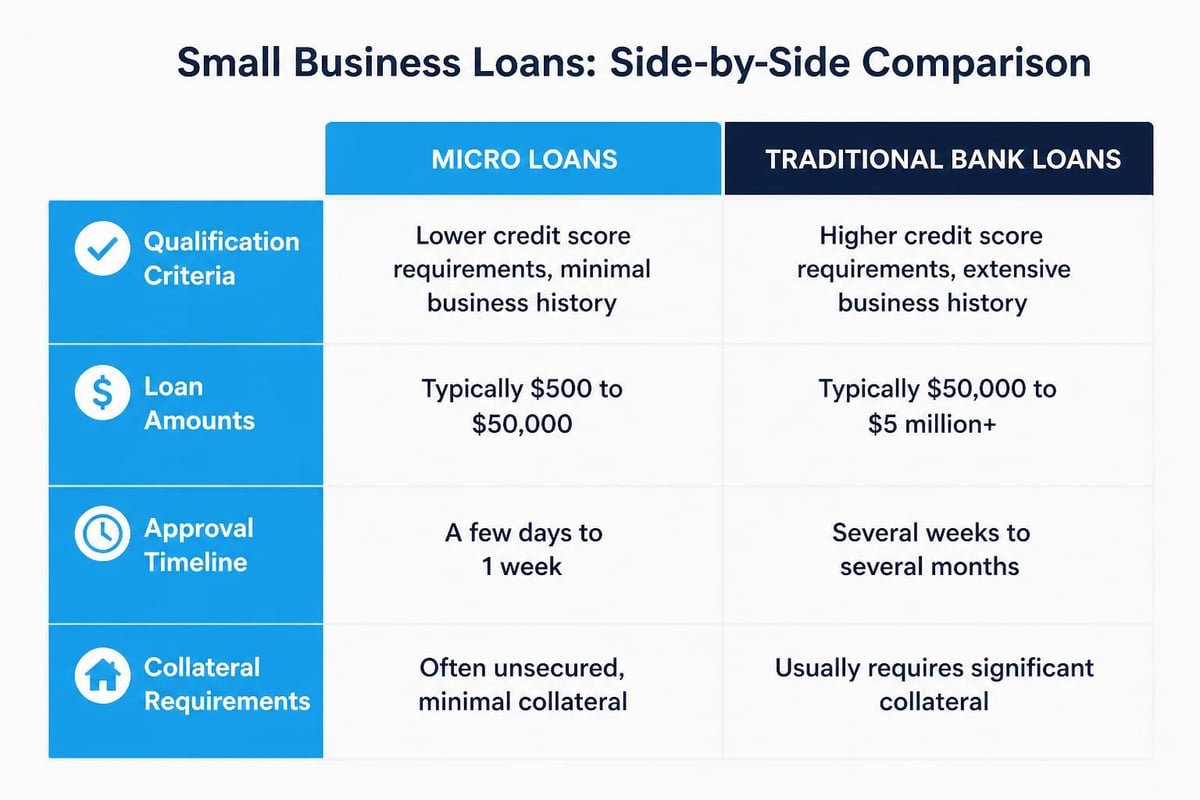
Access to affordable capital remains one of the most significant challenges facing entrepreneurs in 2026. Traditional bank loans often require extensive documentation, strong credit scores, and substantial collateral that many startups and early-stage ventures simply cannot provide. This financing gap has created space for specialized solutions designed specifically for businesses that need smaller amounts of capital to launch, stabilize, or grow. A small business micro loan represents a practical funding alternative that prioritizes accessibility, flexibility, and mission-driven lending to support entrepreneurs who might otherwise be excluded from conventional financing channels.
Understanding Small Business Micro Loans
A small business micro loan is a specialized financing product typically ranging from $500 to $50,000, designed to serve entrepreneurs who need modest amounts of capital but face barriers accessing traditional bank financing. These loans originated from microfinance movements aimed at economic development in underserved communities and have evolved into a mainstream funding option for American small businesses.
According to the Community Development Financial Institutions Fund's FY2024 Annual Report, CDFI-supported microloan programs deployed over $85 million in small-dollar business loans during the fiscal year, demonstrating sustained demand for accessible capital solutions. The average small business micro loan amount hovers around $13,000, making these products particularly suitable for specific business needs rather than large-scale expansions.
Key Characteristics That Define Micro Loans
Several features distinguish small business micro loans from conventional financing:
- Lower borrowing limits typically capped at $50,000
- Relaxed credit requirements compared to traditional banks
- Mission-driven lenders focused on economic development
- Technical assistance often bundled with financing
- Shorter repayment terms usually 6 months to 6 years
- Fixed interest rates providing payment predictability
These characteristics make micro loans especially valuable for entrepreneurs testing business concepts, purchasing essential equipment, or bridging short-term cash flow gaps without taking on excessive debt obligations.
Who Qualifies for Small Business Micro Loans
Eligibility requirements for a small business micro loan vary significantly by lender but generally prioritize business viability and owner commitment over perfect credit scores. Most microloan providers serve businesses that have been operating for at least six months, though some programs specifically target startups and pre-revenue ventures.
Personal credit scores remain a factor, but many microlenders accept applicants with scores as low as 575-600, substantially below the 680+ threshold many traditional banks require. The FDIC's 2024 Report on the Small Business Lending Survey found that nearly 40% of small business loan applications to large banks were denied, with credit history cited as the primary reason, underscoring why alternative lenders fill a critical market gap.
Business and Owner Requirements
| Qualification Factor | Typical Requirement | Purpose |
|---|---|---|
| Time in Business | 6+ months (some accept startups) | Demonstrates basic operational viability |
| Annual Revenue | $50,000+ (varies widely) | Shows capacity to generate repayment funds |
| Personal Credit Score | 575-640+ | Indicates borrower financial responsibility |
| Business Plan | Often required | Proves strategic thinking and planning |
| Collateral | Sometimes required | Provides lender security |
Industry restrictions apply with certain microlenders excluding businesses involved in gambling, speculative investing, or multi-level marketing. Nonprofit microlenders particularly favor businesses that create jobs in underserved communities or are owned by minorities, women, veterans, or other traditionally marginalized entrepreneurs.
The Julian Bond Institute's Small Business Capital Access Survey documented persistent disparities in lending, finding that Black-owned businesses receive smaller loan amounts and face higher denial rates than comparable white-owned firms, making mission-driven microloan programs especially valuable for promoting equity.
How to Apply for a Small Business Micro Loan
The application process for a small business micro loan typically involves more personal interaction and business advising than conventional financing channels. Most microlenders operate through nonprofit organizations or Community Development Financial Institutions (CDFIs) that prioritize relationship-based underwriting over purely algorithmic credit decisions.
Step-by-Step Application Process
- Research microlenders serving your geographic area or industry focus
- Attend an orientation session to understand program requirements
- Complete financial projections showing how you'll use and repay funds
- Gather documentation including tax returns, bank statements, and business licenses
- Submit formal application with business plan and personal financial statement
- Participate in interview to discuss your business model and capital needs
- Complete required training if mandated by the lender
- Receive funding typically within 30-60 days of approval
Unlike large banks that process applications through centralized underwriting departments, microlenders often assign loan officers who work directly with applicants throughout the process. This personalized approach means borrowers receive feedback on their applications and can address deficiencies rather than simply receiving denials.
Research from FinRegLab examining financing gaps for underserved small businesses found that alternative lenders using expanded data and relationship-based underwriting approved 23% more applications from minority-owned businesses than traditional credit scoring alone would have predicted, demonstrating the value of holistic evaluation methods common in microloan programs.
Common Uses and Strategic Applications
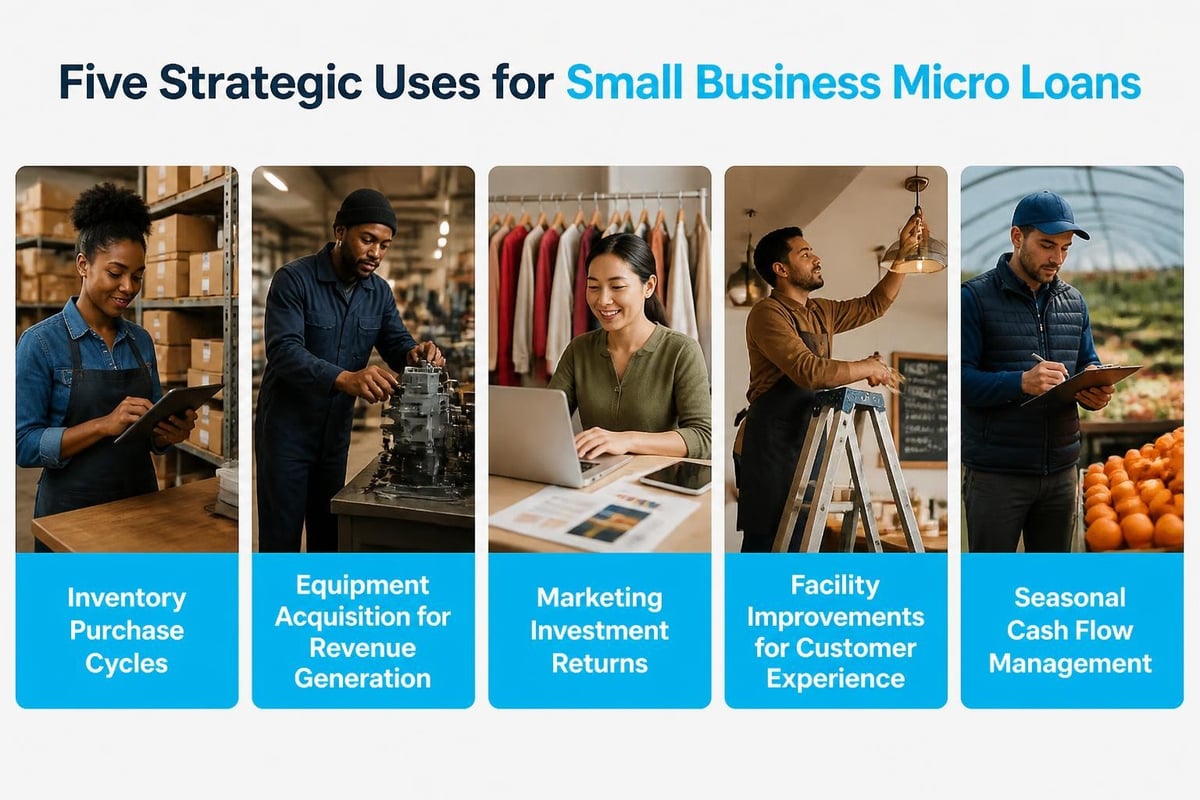
Business owners pursue a small business micro loan for highly specific capital needs rather than general expansion funding. The relatively small loan amounts align perfectly with targeted investments that generate near-term returns.
Inventory purchases represent one of the most common applications, allowing retail and e-commerce businesses to stock seasonal merchandise or take advantage of bulk purchasing discounts. A $15,000 microloan enabling a boutique owner to purchase holiday inventory at wholesale prices can generate immediate revenue that covers the loan payment and produces profit.
Equipment acquisitions suited to microloan amounts include commercial kitchen appliances, salon stations, landscaping tools, point-of-sale systems, and light machinery. These productive assets directly enable revenue generation, making the investment self-supporting. For business owners exploring more substantial equipment needs that exceed microloan limits, working capital financing through commercial lenders may provide appropriate alternatives.
- Marketing campaign funding for website development, advertising, or promotional materials
- Facility improvements including minor renovations, signage, or accessibility upgrades
- Technology investments such as computers, software licenses, or security systems
- Cash flow bridging during seasonal revenue fluctuations
- License and certification fees required for business operation
The Consumer Financial Protection Bureau's research on small business owner financial security revealed that 42% of small business owners personally experienced material hardship in the past year, with many using expensive personal credit cards or payday loans for business expenses, highlighting the importance of accessing appropriate small-dollar business financing.
Interest Rates and Repayment Terms
Pricing on a small business micro loan typically falls between traditional bank loans and alternative financing products. Most microlenders charge annual percentage rates ranging from 8% to 18%, depending on borrower qualifications, loan amount, and local market conditions.
Fixed monthly payments characterize most microloan structures, providing predictable cash flow planning for business owners. A $20,000 microloan at 12% APR over 4 years results in monthly payments of approximately $526, making budgeting straightforward.
Comparative Pricing Analysis
| Financing Type | Typical APR Range | Term Length | Monthly Payment (on $20K) |
|---|---|---|---|
| Small Business Micro Loan | 8-18% | 1-6 years | $380-$525 |
| Traditional Bank Loan | 6-12% | 3-10 years | $300-$445 |
| Business Credit Card | 18-28% | Revolving | $400+ (minimum) |
| Alternative Lender | 15-40%+ | 3-24 months | $900-$1,800 |
Some microlenders charge origination fees of 1-5% to cover underwriting and administrative costs. These fees may be deducted from loan proceeds or added to the principal balance, affecting the total cost of capital.
Prepayment penalties are uncommon with microloans, allowing borrowers to pay off balances early without financial penalty when cash flow permits. This flexibility distinguishes mission-driven microlenders from profit-maximizing commercial lenders.
Analysis from the Chicago Fed examining the 2024 Small Business Credit Survey found that applicant firms with revenues under $100,000 were significantly more likely to receive funding from online lenders or CDFIs than from large banks, and those who did receive funding reported satisfaction rates above 80% when technical assistance accompanied financing.
Technical Assistance and Beyond-Capital Support
A distinguishing feature of many small business micro loan programs is the integration of business development services with financing. Recognizing that capital alone doesn't guarantee success, microlenders frequently require or offer training, mentorship, and ongoing advising.
Pre-loan training may cover financial management, business planning, marketing strategies, or industry-specific operations. These programs ensure borrowers understand the responsibilities of debt financing and have realistic projections for repayment.
Support Services Commonly Bundled with Micro Loans
- One-on-one business coaching sessions
- Financial literacy and bookkeeping workshops
- Marketing and customer acquisition training
- Legal structure and compliance guidance
- Industry networking and peer learning groups
- Access to procurement and contracting opportunities
Post-disbursement support continues throughout the loan term, with loan officers checking in regularly to monitor business progress and address challenges before they threaten repayment. This relationship-based approach creates accountability while providing safety nets that reduce default rates.
Research from the University of Washington Foster School on lending inequities documented that minority-owned businesses face interest rates 0.8 percentage points higher than white-owned firms with identical credit profiles when accessing traditional loans, but mission-driven microlenders actively work to eliminate such disparities through standardized pricing and equity-focused underwriting.
Advantages and Limitations to Consider
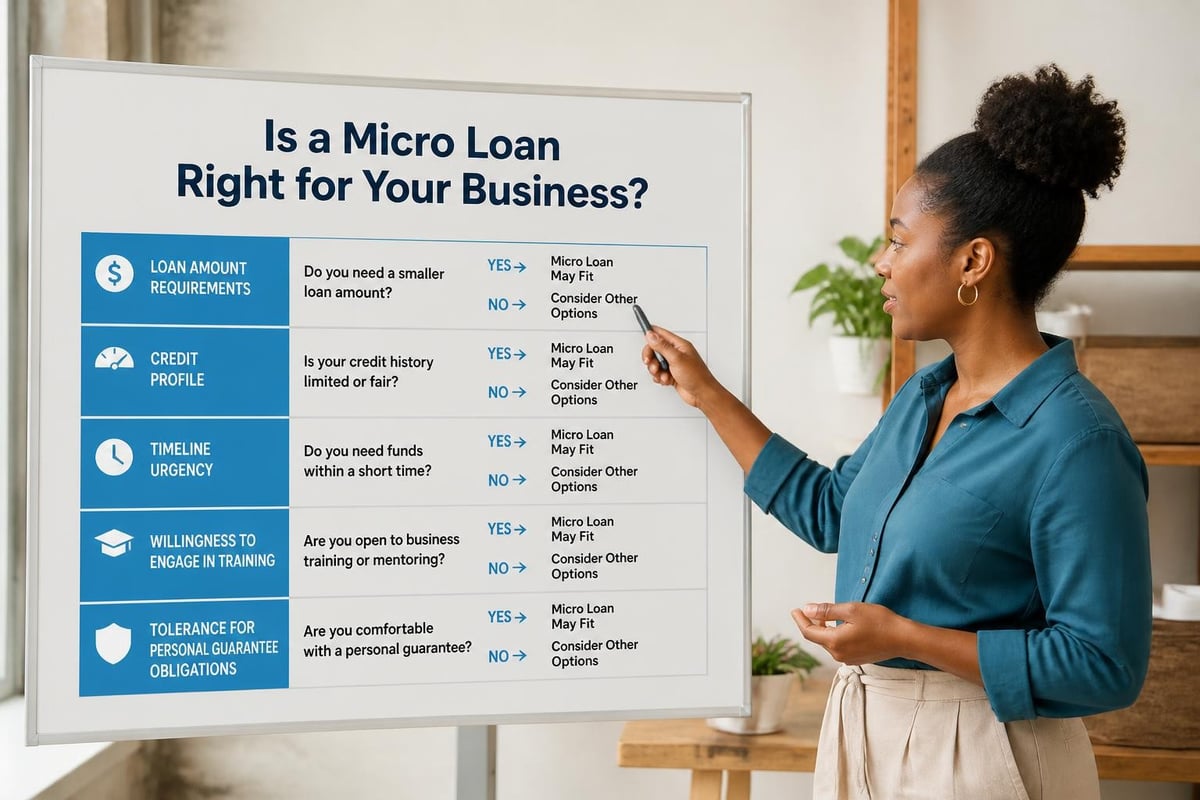
Business owners evaluating whether a small business micro loan aligns with their needs should weigh both benefits and constraints inherent to these specialized products.
Accessibility stands as the primary advantage, with approval rates significantly higher than conventional bank loans for applicants with challenged credit, limited business history, or minimal collateral. Entrepreneurs repeatedly denied by traditional lenders often find microloan programs willing to evaluate applications holistically.
Speed to funding varies but generally falls between traditional banks and online alternative lenders. While not as fast as same-day merchant cash advances, most microloan approvals occur within 30-45 days, faster than the 60-90 day timelines common with SBA loans.
Lower amounts represent both benefit and limitation. For businesses needing exactly $15,000 for specific equipment, a microloan perfectly matches the need without burdening the company with excessive debt. However, entrepreneurs requiring $100,000+ for major expansions must look to conventional loans or alternative products.
Required training and advising consumes time that busy entrepreneurs might prefer spending on operations, though this investment in business skills typically pays dividends long after loan repayment.
Personal guarantees are nearly universal, meaning business owners remain personally liable for repayment even if the venture fails. This risk mirrors traditional business loans but warrants careful consideration given small business failure rates.
Finding the Right Microlender
Identifying appropriate small business micro loan providers requires research into organizations serving your geographic area, industry focus, and demographic profile. Most microlenders concentrate operations within specific regions or serve particular entrepreneur populations.
The U.S. Small Business Administration maintains a microloan intermediary directory listing approved nonprofit organizations authorized to make microloans using SBA funds. These intermediaries operate in all 50 states and U.S. territories, making them accessible to most entrepreneurs.
Community Development Financial Institutions (CDFIs) represent another primary source, with over 1,300 certified organizations nationwide offering mission-driven financing to underserved markets. The CDFI Fund provides a locator tool helping business owners identify lenders in their area.
Key Questions to Ask Prospective Microlenders
- What are your minimum and maximum loan amounts?
- What credit score do you require for approval?
- Do you serve my industry and business type?
- What is your typical approval timeline?
- What interest rates and fees do you charge?
- What training or technical assistance is required?
- Can you provide references from current borrowers?
Local economic development agencies, chambers of commerce, and Small Business Development Centers (SBDCs) maintain relationships with microlenders and can provide referrals based on specific business circumstances.
Industry associations sometimes partner with specialized microlenders serving their sectors, offering members preferential access or enhanced terms.
Alternatives When Micro Loans Don't Fit
While a small business micro loan serves many entrepreneurs effectively, specific circumstances warrant exploring alternative funding solutions better aligned with larger capital needs, different qualification criteria, or structural preferences.
Business owners requiring amounts exceeding typical microloan caps might investigate traditional term loans, SBA 7(a) loans, or commercial lines of credit that accommodate larger borrowing needs. Companies with significant monthly revenue may find revenue-based financing or merchant cash advances provide faster access to capital with approvals based primarily on sales volume rather than credit scores.
Equipment financing structures loans specifically around asset purchases, often using the equipment itself as collateral and enabling approval for borrowers who might not qualify for unsecured microloans.
Business credit cards offer revolving access to capital suitable for ongoing smaller purchases, though interest rates typically exceed microloan pricing for carried balances.
Grants and competitions provide non-dilutive capital without repayment obligations but require significant application effort and offer lower success rates.
The optimal financing solution depends on specific capital requirements, qualification profile, intended use, and repayment capacity. Business owners benefit from evaluating multiple options before committing to any single product.
Building Toward Larger Financing Opportunities
Successfully managing a small business micro loan creates valuable opportunities for accessing larger amounts of capital as businesses grow. Establishing positive payment history, building business credit profiles, and demonstrating revenue growth position companies for conventional financing that may have been previously unavailable.
Business credit bureaus track microloan payments just as they monitor traditional commercial loans, meaning consistent on-time payments improve credit scores and expand future financing options. Many entrepreneurs strategically use microloans as stepping stones toward larger credit facilities.
Relationship development with microlenders often leads to additional financing rounds at increased amounts and improved terms as trust and track record accumulate. Lenders familiar with business operations and owner integrity are more willing to extend larger credit lines than unfamiliar banks reviewing cold applications.
Financial discipline required for regular loan payments instills management practices that strengthen overall business operations, including cash flow forecasting, budget adherence, and profitability monitoring.
Progressive Capital Access Strategy
| Business Stage | Typical Financing | Loan Amount | Primary Purpose |
|---|---|---|---|
| Startup/Early | Micro Loan | $5,000-$15,000 | Initial inventory, licenses, equipment |
| Established | Micro Loan or Small Business Loan | $15,000-$50,000 | Expansion, marketing, facility improvements |
| Growth | Traditional Business Loan | $50,000-$250,000 | Significant expansion, additional locations |
| Mature | Commercial Credit Lines | $100,000+ | Working capital, ongoing operations |
This progressive approach allows entrepreneurs to build credit history and business fundamentals methodically rather than overextending with debt loads inappropriate for current revenue levels.
A small business micro loan provides accessible, mission-driven capital designed specifically for entrepreneurs who need modest funding amounts and face barriers to traditional financing. Understanding eligibility requirements, strategic applications, and the role these loans play in broader business development enables informed financing decisions. Whether you're launching a new venture, purchasing essential equipment, or bridging seasonal cash flow gaps, Enterprise Finest Solutions connects business owners with appropriate funding partners suited to your revenue profile, industry, and capital requirements, helping you identify financing solutions that support sustainable growth.
Written by
Enterprise Finest Solutions
Content creator and writer sharing insights and stories.