Small Business Loans for Restaurants in 2026
Discover how small business loans for restaurants work in 2026. Compare SBA loans, equipment financing, working capital and more to fund your restaurant.

Securing adequate capital remains one of the most critical challenges facing restaurant owners in 2026. Whether you're launching a new concept, expanding to a second location, purchasing commercial kitchen equipment, or managing seasonal cash flow gaps, small business loans for restaurants provide the financial foundation necessary to build and sustain a thriving food service business. Understanding the landscape of restaurant financing-from traditional bank loans to alternative funding solutions-empowers owners to make informed decisions that align with their business model, revenue patterns, and growth objectives.
Understanding the Restaurant Financing Landscape
The restaurant industry presents unique financing challenges that distinguish it from other small business sectors. High failure rates, thin profit margins, significant upfront equipment costs, and seasonal revenue fluctuations make traditional lenders cautious when evaluating restaurant loan applications. According to the Federal Reserve's Small Business Credit Survey, restaurants face approval challenges that require owners to understand both conventional and alternative financing pathways.
Why Restaurants Need Specialized Financing Approaches
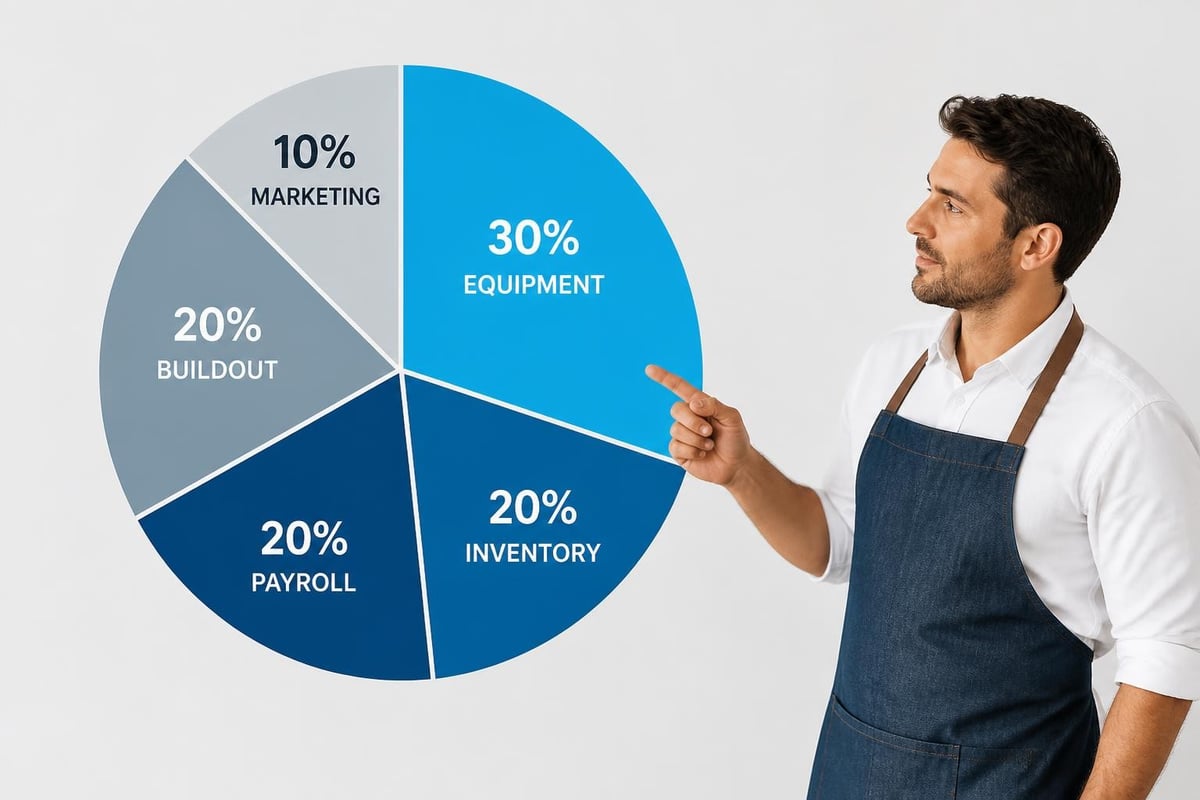
Restaurant operations demand substantial working capital from day one. Initial buildout costs, commercial-grade equipment, licensing fees, initial inventory, and pre-opening payroll create significant capital requirements before the first customer walks through the door. Many restaurateurs underestimate the ongoing capital needs for inventory replenishment, equipment maintenance, seasonal staffing adjustments, and marketing campaigns necessary to remain competitive.
Key capital needs for restaurant businesses include:
- Commercial kitchen equipment and fixtures
- Leasehold improvements and dining room buildout
- Initial inventory and ongoing food/beverage procurement
- Payroll during slow seasons or expansion phases
- Marketing and digital presence development
- Health and safety compliance upgrades
- Technology systems (POS, reservation, delivery integration)
The FDIC's 2024 Small Business Lending Survey reveals that banks evaluate restaurant applications with heightened scrutiny, focusing heavily on owner experience, concept viability, location demographics, and detailed financial projections. This reality makes preparation and proper loan matching essential for success.
SBA Loan Programs for Restaurant Owners
Small Business Administration loan programs represent the gold standard for restaurant financing when owners qualify and can navigate the application process. These federally guaranteed loans offer favorable terms, lower down payments, and longer repayment periods than conventional commercial loans. The SBA 7(a) loan program remains the most versatile option for restaurant financing, supporting nearly any legitimate business purpose from acquisition to expansion.
SBA 7(a) Loan Details for Restaurants
The 7(a) program provides up to $5 million in financing with government guarantees that reduce lender risk. Restaurants can use these funds for working capital, equipment purchases, real estate acquisition, refinancing existing debt, or new location expansion. Interest rates typically range from prime plus 2.25% to prime plus 4.75%, depending on loan size and term length.
| Loan Feature | SBA 7(a) Specification |
|---|---|
| Maximum Amount | $5,000,000 |
| Typical Terms | 10 years (equipment/working capital), 25 years (real estate) |
| Down Payment | As low as 10% |
| Guarantee | Up to 85% (loans ≤$150k) or 75% (loans >$150k) |
| Credit Requirements | Typically 680+ personal credit score |
| Time to Funding | 60-90 days average |
SBA 504 Loans for Real Estate and Equipment
The SBA 504 program specifically targets fixed asset purchases-ideal for restaurants acquiring buildings or undertaking major equipment investments. This program structures financing through a combination of conventional bank loans (50%), Certified Development Company loans (40%), and owner equity (10%). The extended 20-year terms and below-market fixed rates make this program attractive for significant capital projects, though the application process requires substantial documentation and time.
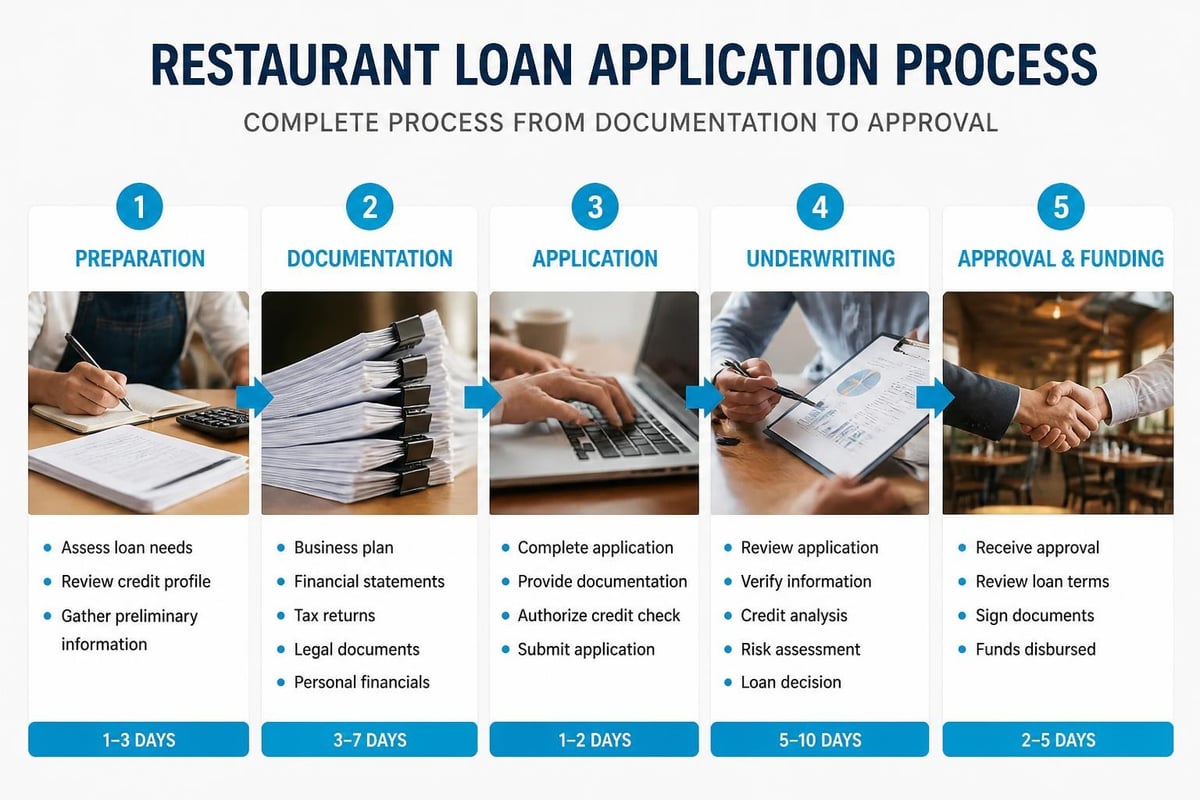
Restaurants pursuing small business loans for restaurants through SBA channels should prepare comprehensive business plans, detailed financial projections, personal financial statements, tax returns, and evidence of industry experience. The National Restaurant Association provides guidance on preparing strong applications and responding to denials.
Equipment Financing Solutions
Restaurant equipment represents one of the largest capital expenses, with commercial kitchens requiring specialized appliances, refrigeration, cooking equipment, and ventilation systems. Equipment financing structures loans or leases specifically around these purchases, often using the equipment itself as collateral. This arrangement typically results in higher approval rates and faster funding than unsecured working capital loans.
How Equipment Financing Works for Restaurants
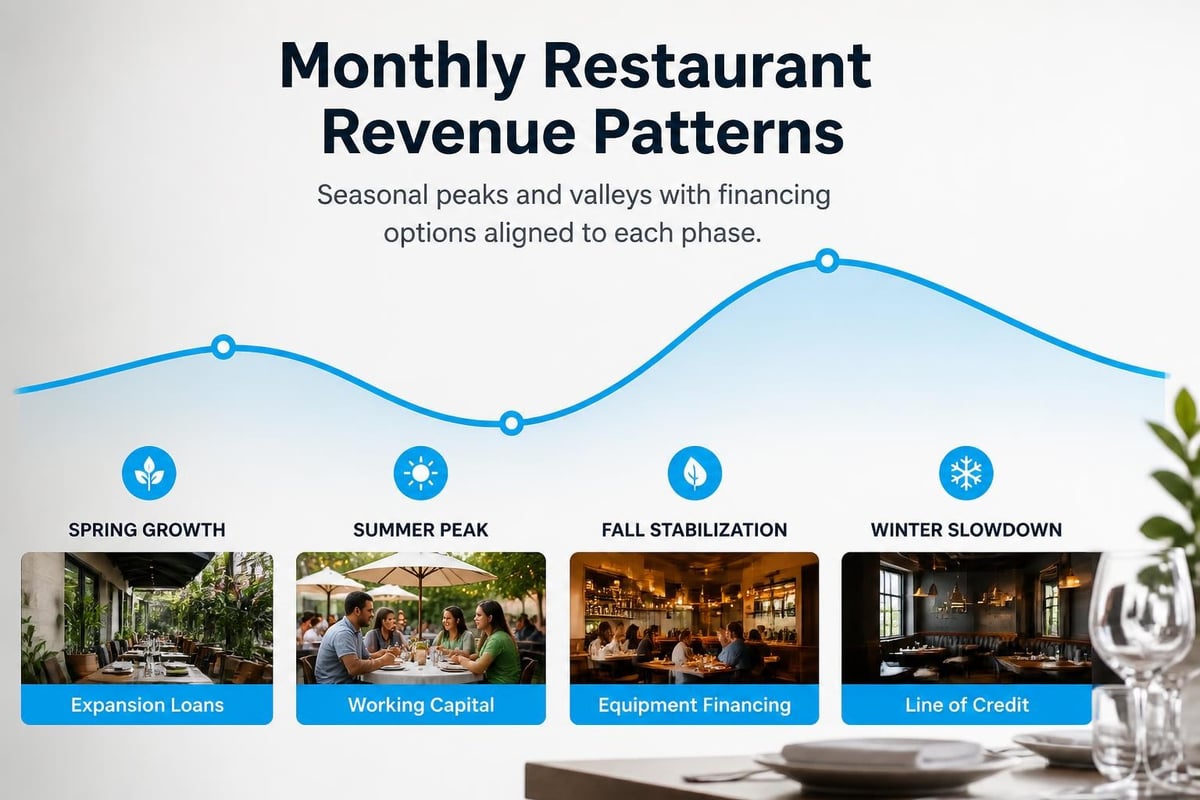
Lenders provide 80-100% financing for new or used restaurant equipment with repayment terms matching the equipment's useful life-typically three to seven years. Monthly payments remain fixed, and many lenders offer seasonal payment structures that align with restaurant revenue patterns. Since the equipment secures the loan, credit requirements are often more flexible than unsecured options.
Common equipment financed by restaurants:
- Commercial ovens, ranges, and grills
- Walk-in coolers and freezers
- Dishwashing and sanitation systems
- Point-of-sale and kitchen display systems
- Food preparation equipment and smallwares
- HVAC and ventilation systems
- Furniture, fixtures, and equipment (FF&E) packages
The tax advantages also merit consideration. According to IRS Publication 334, Section 179 allows restaurants to deduct the full purchase price of qualifying equipment in the year of purchase, subject to annual limits. This immediate expense recognition can significantly reduce tax liability during expansion or upgrade years.
Working Capital and Revenue-Based Financing
Day-to-day operational expenses create ongoing capital demands that don't always align with traditional term loan structures. Working capital financing addresses short-term needs like inventory purchases, payroll gaps, unexpected repairs, or marketing campaigns. These flexible financing options have become increasingly popular among restaurant owners who need quick access to capital without lengthy approval processes.
Revenue-based financing and merchant cash advances provide funding based on a restaurant's sales volume rather than traditional credit metrics. Repayment occurs through a percentage of daily credit card sales or fixed daily/weekly withdrawals, creating a payment structure that naturally adjusts with business performance. For businesses with consistent revenue that need capital for inventory, payroll, expansion, or other expenses, merchant cash advance and revenue-based financing offer accessible alternatives when conventional loans prove difficult to secure.
Evaluating Revenue-Based Products
| Feature | Revenue-Based Financing | Traditional Term Loan |
|---|---|---|
| Approval Speed | 24-72 hours | 2-12 weeks |
| Primary Qualification | Monthly revenue, sales history | Credit score, collateral, time in business |
| Repayment Structure | Percentage of daily sales | Fixed monthly payment |
| Funding Amount | Typically 1-2x monthly revenue | Based on creditworthiness and collateral |
| Documentation | Minimal (bank statements, sales data) | Extensive (tax returns, financials, projections) |
Business Lines of Credit
A business line of credit provides ongoing access to capital that restaurants can draw upon as needed, similar to a business credit card but typically with higher limits and lower costs. This revolving credit facility allows restaurant owners to borrow, repay, and re-borrow up to a predetermined limit, paying interest only on the outstanding balance.
Strategic Uses for Restaurant Credit Lines
Lines of credit excel at managing cash flow variability inherent in restaurant operations. Slow winter months, unexpected equipment failures, or opportunities to purchase inventory at bulk discounts all benefit from flexible credit access. Many restaurant owners maintain lines of credit as financial safety nets, drawing funds only when specific needs arise.
Optimal scenarios for using business credit lines:
- Bridging payroll gaps during slow seasons
- Taking advantage of bulk inventory discounts
- Funding short-term marketing campaigns
- Covering emergency equipment repairs
- Managing accounts payable timing
- Supporting temporary staffing increases
Credit lines typically require stronger credit profiles and established business history than term loans. Lenders expect restaurants to demonstrate consistent revenue, positive cash flow, and sound financial management. Interest rates vary based on creditworthiness, but established restaurants often secure rates comparable to or better than credit cards.
Alternative Lending Options
Beyond traditional banks and SBA programs, the alternative lending market has expanded significantly, offering restaurant owners diverse options for small business loans for restaurants. Online lenders, fintech platforms, and specialized restaurant financing companies have created products specifically designed for the industry's unique characteristics.
Online Term Loans and Installment Products
Online lenders streamline the application and approval process, often providing decisions within days and funding within a week. These term loans typically range from $10,000 to $500,000 with repayment periods of six months to five years. While interest rates generally exceed traditional bank rates, the speed and accessibility make these products valuable for time-sensitive opportunities or urgent needs.
Invoice Financing and Accounts Receivable Solutions
Restaurants serving corporate clients, catering events, or providing contract food services can leverage outstanding invoices for immediate capital. Invoice financing advances 80-90% of invoice value immediately, with the remainder (minus fees) paid when the customer settles the invoice. This approach works particularly well for restaurants with B2B revenue streams and reliable commercial customers.
Preparing Your Restaurant for Loan Approval
Regardless of which financing option you pursue, preparation significantly impacts approval likelihood and terms offered. Lenders evaluate restaurants through both quantitative metrics and qualitative factors that together paint a picture of business viability and repayment capacity.
Financial Documentation Requirements
Essential documents for restaurant loan applications:
- Two to three years of business tax returns
- Personal tax returns for all owners with 20%+ ownership
- Year-to-date profit and loss statements
- Current balance sheet
- Bank statements (typically 3-6 months)
- Accounts receivable and payable aging reports
- Lease agreements or property documentation
- Business licenses and permits
- Personal financial statements for guarantors
The CFPB's small business lending compliance guide outlines disclosure requirements that lenders must provide, helping borrowers understand true costs and compare options effectively.
Building a Compelling Business Case
Numbers tell only part of the story. Successful restaurant loan applications demonstrate deep market knowledge, operational expertise, competitive differentiation, and realistic growth planning. Lenders want to see evidence that you understand your target market, have relevant industry experience, and have developed strategies to overcome common restaurant challenges.
Key elements of strong restaurant loan proposals:
- Detailed market analysis and target customer demographics
- Competitive landscape assessment and differentiation strategy
- Comprehensive financial projections with realistic assumptions
- Owner background highlighting relevant experience
- Marketing and customer acquisition plans
- Risk mitigation strategies for common industry challenges
- Clear explanation of capital use and expected ROI
Many restaurant owners benefit from working with Small Business Development Centers, which offer free counseling and loan packaging assistance. Resources like DC SBDC's financing guidance help entrepreneurs understand lender expectations and strengthen applications before submission.
Comparing Total Financing Costs
Understanding the true cost of small business loans for restaurants requires looking beyond stated interest rates. Annual percentage rates (APR), origination fees, prepayment penalties, and repayment structures all impact total financing costs. A loan with a lower interest rate but significant origination fees may ultimately cost more than a higher-rate loan with minimal upfront costs.
Factor Rate vs. Interest Rate
Traditional loans express costs as annual interest rates, making comparison straightforward. However, many alternative financing products use factor rates-a decimal figure (typically 1.1 to 1.5) multiplied by the borrowed amount to determine total repayment. A $50,000 advance with a 1.3 factor rate requires repaying $65,000, regardless of repayment timeline.
| Loan Product | Amount | Cost Structure | Total Repayment | Effective APR* |
|---|---|---|---|---|
| Bank Term Loan | $50,000 | 8% interest, 5 years | $60,662 | 8.0% |
| SBA 7(a) Loan | $50,000 | 7% interest, 10 years | $69,567 | 7.0% |
| Revenue-Based Advance | $50,000 | 1.3 factor, 12 months | $65,000 | ~40% |
| Equipment Financing | $50,000 | 10% interest, 5 years | $63,741 | 10.0% |
*APR calculations vary by repayment structure and timeline
Hidden Costs and Fee Structures
Origination fees, underwriting charges, broker fees, closing costs, and servicing fees can add thousands to financing costs. Some lenders also charge prepayment penalties that discourage early repayment, while others allow penalty-free payoff. Request a complete fee schedule and APR calculation from every lender before committing.
Industry-Specific Lender Programs
Several financial institutions have developed specialized restaurant financing programs that recognize industry nuances and structure products accordingly. These programs often feature streamlined applications, industry-appropriate underwriting criteria, and relationship managers who understand restaurant economics.
Bank of America's restaurant financing resources exemplify how major banks approach the sector, offering tailored products and industry insights. Regional banks and credit unions often maintain similar programs with local market focus and relationship-driven underwriting.
Restaurant-Focused Alternative Lenders
Specialized lenders focusing exclusively on restaurant and hospitality financing have emerged, offering products designed around the industry's operational realities. These lenders understand seasonal fluctuations, typical profit margins, and equipment needs, often resulting in more favorable terms than general-purpose lenders unfamiliar with restaurant economics.
According to restaurant finance industry analysis, specialized restaurant financing has grown substantially as lenders recognize the sector's financing needs and develop expertise in underwriting food service businesses.
Strategic Timing for Restaurant Financing
When you apply for financing matters almost as much as what you apply for. Restaurant owners should time applications to coincide with strong seasonal performance, leverage positive trends in financial statements, and avoid periods of operational disruption or poor sales performance.
Building Creditworthiness Before Applying
Proactive credit management improves approval odds and secures better terms. Maintaining strong personal credit scores, establishing business credit through vendor accounts and business credit cards, keeping debt-to-income ratios manageable, and demonstrating consistent profitability all strengthen applications.
Pre-application creditworthiness checklist:
- Review personal credit reports and resolve errors
- Pay down existing debt to improve utilization ratios
- Establish business credit through vendor net-30 accounts
- Maintain clean business bank account activity
- Build cash reserves demonstrating financial management
- Document improving revenue trends over multiple quarters
Restaurant owners should obtain credit reports from major bureaus several months before applying, allowing time to address issues. Business credit reports from Dun & Bradstreet, Experian Business, and Equifax Business should also be reviewed and optimized.
Managing Multiple Funding Sources
Sophisticated restaurant operators often utilize multiple financing products simultaneously, matching each capital source to specific use cases. Equipment financing for kitchen upgrades, a line of credit for working capital management, and a term loan for expansion can coexist when properly structured and managed.
Avoiding Over-Leverage
While access to capital enables growth, excessive debt burdens create financial stress that threatens business viability. Restaurant operators should maintain debt service coverage ratios above 1.25, meaning operating income should exceed debt payments by at least 25%. This buffer protects against revenue fluctuations and unexpected expenses.
Warning signs of over-leverage:
- Debt payments exceed 15-20% of monthly revenue
- Difficulty making payments during normal slow periods
- Borrowing to make existing loan payments
- Declining cash reserves despite stable revenue
- Stress affecting operational decisions and quality
Financial advisors recommend restaurant owners develop comprehensive capital plans that project financing needs 12-24 months ahead, allowing strategic timing and preventing emergency borrowing at unfavorable terms.
Franchise-Specific Financing Considerations
Restaurant franchisees face unique financing dynamics. Franchisors often maintain relationships with preferred lenders familiar with their concept, unit economics, and success rates. These lender partnerships can streamline approvals and provide better terms than general small business loans for restaurants.
Franchisor Requirements and Support
Many franchise agreements specify minimum liquidity and net worth requirements, limiting how much debt franchisees can assume. However, franchisors also provide detailed financial performance representations, validated business models, and operational support that lenders value highly. Established franchise systems with strong unit economics often secure better financing terms than independent restaurants.
Some franchisors offer direct financing or loan guarantees to qualified franchisees, particularly for multi-unit operators or territory development agreements. These programs recognize that franchisee success drives system growth and create mutually beneficial financing structures.
When to Consider Equity Instead of Debt
Not every capital need should be financed through loans. Equity investors-whether partners, angel investors, or private equity-provide capital without creating debt obligations or fixed payment schedules. For restaurants with high growth potential but limited cash flow to service debt, equity financing may prove more appropriate.
Balancing Debt and Equity
Equity financing dilutes ownership and control, while debt preserves full ownership but creates payment obligations regardless of business performance. Early-stage restaurants with unproven concepts often benefit from equity, while established operations with predictable cash flow can leverage debt more safely.
Scenarios favoring equity over debt:
- Pre-revenue startup phase with no cash flow
- Unproven concept requiring market validation
- Aggressive expansion requiring patient capital
- Weak personal credit limiting debt access
- Desire for strategic partners with industry expertise
Conversely, profitable restaurants with established cash flow should generally prefer debt financing to avoid unnecessary ownership dilution. Each dollar of equity given up represents permanent ownership transfer, while debt obligations eventually terminate.
Navigating the complex landscape of restaurant financing requires understanding the full spectrum of options available and matching capital sources to specific business needs. From SBA guaranteed loans and equipment financing to working capital solutions and revenue-based products, restaurant owners have more financing pathways than ever before. Enterprise Finest Solutions helps restaurant owners evaluate these options and connect with appropriate lenders based on their business performance, revenue patterns, and capital requirements, ensuring access to practical funding solutions that support sustainable growth.
Written by
Enterprise Finest Solutions
Content creator and writer sharing insights and stories.