SBDC Grants: Funding, Eligibility & Benefits for 2026
Discover how SBDC grants work in 2026, who qualifies, funding opportunities, and how Small Business Development Centers help businesses grow.

Small businesses across the United States rely on a robust network of advisory services, training programs, and capital access support to navigate the challenges of growth, market expansion, and competitive pressures. Among the most valuable resources available are Small Business Development Centers (SBDCs), which operate through a unique grant-funded model that combines federal support with state and local matching contributions. Understanding how sbdc grants function, who qualifies, and how these funds translate into tangible business support can help entrepreneurs make informed decisions about where to seek guidance and how to access complementary financing options.
What Are SBDC Grants and How Do They Work
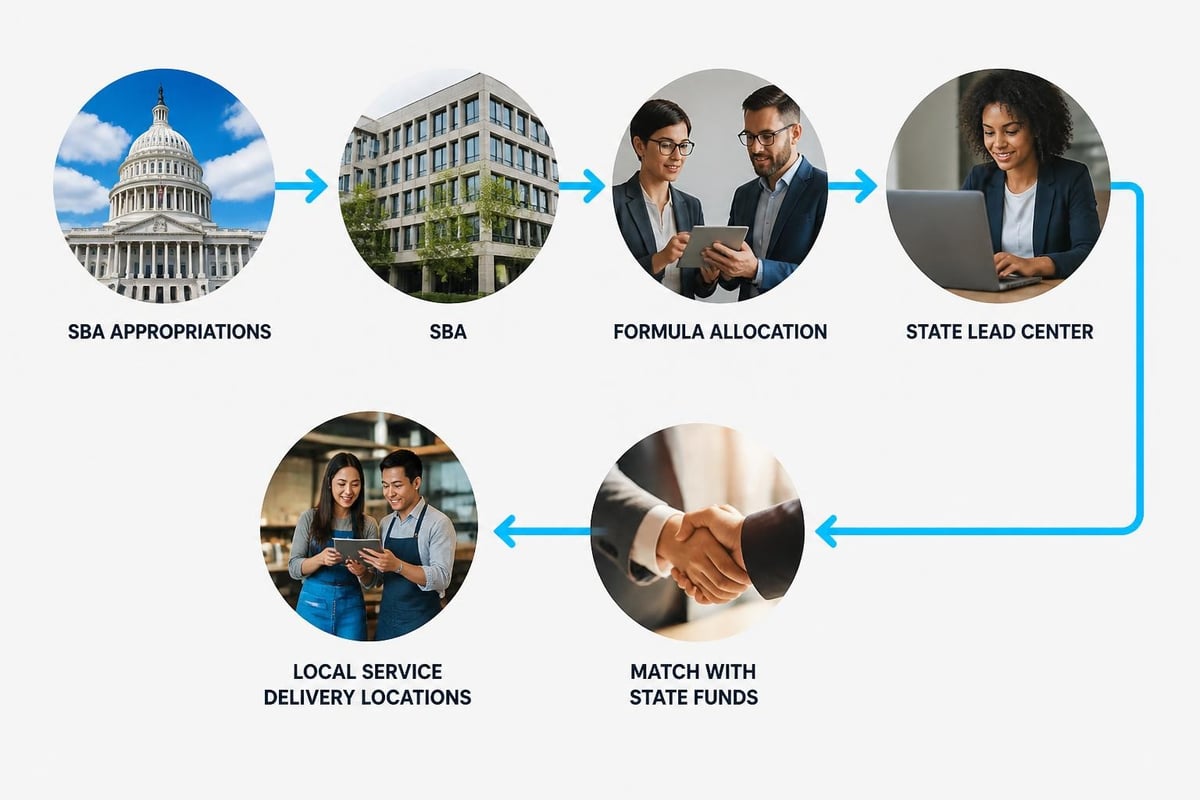
SBDC grants represent federal appropriations provided by the U.S. Small Business Administration (SBA) to establish and maintain Small Business Development Centers throughout the country. These grants do not go directly to individual businesses; instead, they fund the operation of centers that deliver no-cost or low-cost advising, training, and resource connections to entrepreneurs and established business owners.
The grants operate under a matching-fund requirement, which means recipient institutions must provide at least one dollar for every dollar of federal grant money received. This structure, codified in 15 U.S.C. § 648, ensures shared investment between federal and state or local partners, typically universities, economic development agencies, or chambers of commerce.
Federal Authorization and Program Structure
The SBDC program receives annual appropriations through the SBA budget, which Congress authorizes and adjusts each fiscal year. According to the Congressional Research Service report on SBA programs, the SBDC network has grown to include over 1,000 service locations nationwide, each staffed by business advisors who provide expertise in areas ranging from financial planning to marketing strategy.
Federal sbdc grants are distributed using a formula that considers each state's population and economic activity. States with larger small business populations typically receive proportionally larger allocations, though minimum funding levels ensure even smaller states maintain viable center operations.
Eligibility and Application for SBDC Grant Funding
While individual business owners cannot apply directly for sbdc grants, understanding eligibility requirements for host institutions clarifies how the network maintains quality and reach. Eligible applicants to become SBDC host organizations include:
- State governments and their economic development agencies
- Colleges and universities with business or entrepreneurship programs
- Private nonprofit organizations focused on economic development
- Junior or community colleges serving regional business communities
These entities must demonstrate capacity to deliver business counseling, maintain qualified advisors, and secure matching funds from non-federal sources. The matching requirement can be met through cash contributions, in-kind services, or a combination of both.
What Match Funding Covers
Match funding typically comes from:
- State appropriations specifically designated for small business support
- Local economic development budgets
- University general funds when hosted by academic institutions
- Private sector sponsorships and donations
- Fee-based training programs (though core advising remains free)
This diversified funding model creates stability and ensures centers remain responsive to both federal priorities and local business needs. The requirement for non-federal match also means SBDC services reflect community investment, not just top-down federal programming.
Services SBDC Grants Enable for Small Businesses
The primary purpose of sbdc grants is to fund comprehensive business support services that would otherwise be cost-prohibitive for many entrepreneurs. Centers funded through these grants provide:
| Service Category | Typical Offerings | Business Impact |
|---|---|---|
| Business Planning | Market research, competitive analysis, financial projections | Stronger loan applications, clearer growth strategies |
| Financial Management | Cash flow planning, pricing strategy, bookkeeping systems | Improved profitability, better capital allocation |
| Marketing & Sales | Digital marketing, branding, customer acquisition | Revenue growth, market expansion |
| Access to Capital | Lender introductions, financing option analysis, loan packaging | Higher approval rates, appropriate capital structure |
| Regulatory Compliance | Licensing guidance, tax planning, employment law | Risk reduction, avoided penalties |
For businesses seeking financing, SBDC advisors can help identify whether traditional bank loans, working capital financing, equipment loans, or alternative funding sources best match their situation and qualifications. This advisory function complements the role of financing brokerages by ensuring business owners understand their full range of options before committing to specific products.
Economic Impact Metrics
The 2025 America's SBDC Annual Report demonstrates the measurable returns from sbdc grants. In 2024 alone, SBDC clients reported:
- $7.8 billion in new sales and revenues
- 103,500 new jobs created
- 15,200 new businesses started
- $4.7 billion in capital formation (loans, investments, grants secured)
These outcomes reflect an average return of approximately $4.75 in economic activity for every dollar of federal SBDC grant funding invested, demonstrating exceptional efficiency in public resource deployment.

How SBDC Grants Connect to Other Funding Opportunities
While sbdc grants themselves fund center operations, SBDC advisors frequently help clients identify and pursue additional grant programs for which their businesses may qualify. This indirect benefit multiplies the value of the core SBDC program.
Common grant programs SBDC advisors help clients access include:
- SBIR/STTR grants for research and technology development
- USDA rural business grants for agricultural and rural enterprises
- State-specific grant programs for manufacturing, clean energy, or workforce development
- EDA grants through the Economic Development Administration for disaster recovery or regional projects
Research from the Missouri SBDC on federal grant programs illustrates how centers systematically guide agricultural businesses through USDA-administered grant applications, increasing success rates through proposal review, budget development, and compliance guidance.
Grant Effectiveness and Business Outcomes
Academic research on publicly funded advisory services provides evidence that SBDC support significantly improves business performance. A working paper examining SBDC advisory impact found that businesses receiving SBDC counseling experienced measurable improvements in revenue growth and employment compared to similar businesses that did not use center services.
The study also noted that businesses facing capital constraints showed particularly strong benefits from SBDC advising, suggesting the centers effectively bridge information gaps that often prevent small businesses from accessing appropriate financing.
Geographic Distribution and Local Accessibility
SBDC grants are distributed to ensure nationwide coverage, with at least one lead center in every state and territory. This geographic distribution model means businesses in both urban centers and rural communities can access services without extensive travel.
State Lead Centers and Satellite Locations
Each state's lead center receives the primary sbdc grant allocation and coordinates with satellite locations to deliver services locally. This structure typically involves:
- Lead center housed at a flagship university or state agency
- Regional centers at community colleges or regional universities
- Satellite offices at chambers of commerce, libraries, or business incubators
- Virtual advising through video conferencing for remote areas
The decentralized delivery model funded by sbdc grants ensures entrepreneurs can receive personalized guidance regardless of location, addressing the geographic barriers that often limit rural business access to professional services.
Matching Requirements and Program Sustainability
The one-to-one match requirement embedded in SBDC grant regulations serves multiple strategic purposes beyond simple cost-sharing. This structure ensures:
Local Accountability: When states and host institutions invest their own funds, they maintain strong oversight and demand measurable results. Centers that fail to demonstrate value risk losing both federal and state support.
Program Stability: Federal appropriations can fluctuate with political priorities, but the matching requirement creates constituencies that advocate for continued funding at both levels. Universities and economic development agencies with established programs resist cuts that would jeopardize their matching investments.
Service Quality: Non-federal match often comes from institutions with vested interests in business success. Universities enhance regional economic development; economic development agencies pursue job creation. These aligned incentives drive quality advising that produces tangible outcomes.
| Match Source | Typical Percentage | Strategic Benefit |
|---|---|---|
| State appropriations | 40-50% | Political support, statewide consistency |
| University general funds | 25-35% | Academic credibility, student engagement |
| Local government | 10-20% | Community relevance, targeted priorities |
| Private sector | 5-15% | Industry expertise, network connections |
This diversified matching structure, required by the federal grant regulations, creates resilience against any single funding source reducing support.
SBDC Grants Versus Direct Business Grants
A common misconception is that sbdc grants provide direct financial assistance to businesses. This confusion stems from the terminology: SBDC centers receive grants, but they use those funds to deliver services, not to make grants to clients.
Understanding this distinction helps business owners set appropriate expectations:
- SBDC grants fund advisor salaries, office operations, training programs, and resource development
- Business grants (such as SBIR, USDA programs, or state economic development grants) provide direct capital to qualifying businesses
- SBDC advisory services help businesses identify and apply for direct business grants, but the center itself is not a grant-making entity
For businesses seeking direct capital, SBDC advisors can clarify whether grants, loans, equity investment, or revenue-based financing best suits their stage, industry, and growth plans. This strategic guidance helps business owners avoid pursuing inappropriate funding sources that waste time or carry unsuitable terms.
Special Initiatives and Targeted SBDC Grant Programs
Beyond the core SBDC program, the SBA occasionally funds specialized grant initiatives that address specific business populations or economic challenges. Recent examples include:
Veterans Business Outreach Centers
Additional sbdc grants support specialized services for veteran entrepreneurs, including transition assistance, federal contracting guidance, and peer networking. These grants supplement standard SBDC funding to ensure veterans receive tailored support that addresses their unique circumstances and opportunities.
Emerging Leaders Initiative
Select SBDC locations receive supplemental grants to deliver intensive executive education for entrepreneurs in underserved communities. This initiative targets high-potential businesses poised for significant growth with focused training in strategic planning, marketing, and financial management.
Regional Innovation Clusters
Some sbdc grants fund collaborative programs that connect multiple centers to support industry-specific clusters, such as advanced manufacturing, biotechnology, or clean energy. These specialized programs leverage SBDC infrastructure to deliver sector-specific expertise and networking opportunities.

How Research Informs SBDC Grant Effectiveness
Academic and policy research continuously evaluates SBDC program outcomes to inform funding decisions and service delivery improvements. Recent studies provide evidence that helps justify continued federal investment in sbdc grants.
Research on how R&D grant size affects innovation in small firms offers insights applicable to SBDC programming: larger, more comprehensive support packages generate stronger outcomes than minimal interventions. This finding suggests that robust SBDC funding, rather than token support, creates meaningful business impact.
Similarly, research on investment grants and firm productivity demonstrates that repeated interactions and sustained support generate compounding benefits. This evidence supports the SBDC model of ongoing advisory relationships rather than one-time consultations, justifying the operational funding that sbdc grants provide for long-term advisor availability.
Applying for Services at Your Local SBDC
While businesses cannot apply for sbdc grants directly, accessing SBDC services is straightforward and typically involves:
- Locate your nearest center through the America's SBDC website or state economic development agency
- Contact the center via phone, email, or online form to schedule an initial consultation
- Prepare basic information about your business, including revenue, employees, industry, and specific challenges
- Meet with an advisor for a confidential, no-cost assessment of your situation
- Develop an action plan with your advisor, including recommendations for training, resources, or financing options
Most centers offer same-week or next-week appointments, and initial consultations typically last 60-90 minutes. Advisors maintain strict confidentiality and do not require equity, fees, or ongoing obligations in exchange for assistance.
Complementary Financing Options Beyond SBDC Services
SBDC advisors help businesses understand their financing landscape, but centers funded by sbdc grants do not provide capital directly. Business owners often work simultaneously with SBDC advisors for strategic planning and with financing partners for capital access.
Common financing paths SBDC clients pursue include:
- Traditional bank term loans for equipment, real estate, or expansion
- SBA 7(a) or 504 loans for qualified borrowers seeking favorable terms
- Business lines of credit for ongoing working capital needs
- Equipment financing for machinery, vehicles, or technology
- Revenue-based financing or merchant cash advances for established businesses with consistent sales
Understanding which financing option matches your business stage, revenue profile, and capital needs enables more productive conversations with both SBDC advisors and funding providers. Centers help you prepare stronger applications, while financing brokerages and lenders evaluate your qualifications and structure appropriate products.
State-Level Variations in SBDC Grant Administration
While federal law establishes baseline requirements for sbdc grants, states maintain flexibility in how they administer programs and allocate matching funds. This variation means SBDC services can differ significantly by location.
Some states concentrate resources in a few comprehensive centers serving large geographic areas, while others establish numerous small satellite locations for maximum local presence. States with robust economic development budgets often exceed minimum matching requirements, enabling enhanced services such as:
- Industry-specific advisors with expertise in manufacturing, agriculture, technology, or healthcare
- Export assistance programs helping businesses enter international markets
- Technology commercialization support connecting university research to business applications
- Procurement assistance for businesses seeking government contracts
Businesses should inquire about specialized services their state SBDC network offers beyond core advising, as these enhanced programs often reflect priorities funded through additional state match dollars.
Future Trends in SBDC Grant Funding and Services
As the small business landscape evolves, sbdc grants and the programs they support adapt to emerging needs. Current trends shaping SBDC services in 2026 include:
Digital Transformation Support: Growing numbers of SBDC advisors specialize in helping traditional businesses adopt e-commerce, digital marketing, and cloud-based operational systems. Grant funds increasingly support technology training and digital infrastructure at centers.
Climate and Sustainability Advising: As more funding programs prioritize environmental sustainability, SBDC advisors help businesses identify green technology grants, energy efficiency financing, and sustainable supply chain development opportunities.
Hybrid Service Delivery: Post-pandemic, sbdc grants fund both physical center operations and virtual advising platforms, expanding reach while maintaining personal connection. Many centers now offer same-day video consultations alongside traditional in-person meetings.
Data Analytics and Impact Measurement: Enhanced reporting requirements tied to sbdc grants drive investment in client tracking systems that demonstrate outcomes. This data helps centers identify which services generate strongest results and allocate resources accordingly.
Maximizing Value from SBDC Advisory Services
Business owners who achieve the strongest outcomes from SBDC services, funded through sbdc grants, typically approach the relationship strategically:
Come prepared with financial statements, business plans, and specific questions rather than expecting advisors to diagnose problems without information.
Commit to implementation of advisor recommendations. Centers track client outcomes and prioritize engaged entrepreneurs who act on guidance over those seeking only validation.
Utilize multiple resources offered by centers, including group training, peer networks, and online tools, rather than relying solely on one-on-one advising.
Maintain regular contact as your business evolves. The most successful SBDC clients check in quarterly or semi-annually to adjust strategies as market conditions change.
Provide feedback on service quality and outcomes. Centers funded by sbdc grants must demonstrate impact to maintain funding, so sharing results helps justify continued program support.
SBDC grants create a nationwide infrastructure of business advisory services that help entrepreneurs navigate complex decisions about growth, operations, and capital access. These federally funded, locally matched programs deliver measurable economic returns through improved business planning, strategic financing guidance, and connections to additional resources. Whether you're launching a startup, expanding an established business, or seeking financing options that match your revenue and growth profile, Enterprise Finest Solutions can help you identify practical funding solutions that complement the strategic planning you develop with SBDC advisors and other business resources.
Written by
Enterprise Finest Solutions
Content creator and writer sharing insights and stories.