Restaurant Business Loan: Complete Guide for Operators
Learn how restaurant business loans work, which types fit your needs, and how to qualify. Explore bank loans, SBA programs, and alternative funding.

Opening a new location, upgrading kitchen equipment, managing seasonal cash flow, or simply keeping the lights on during slow months-restaurant owners face capital challenges that can make or break their business. A restaurant business loan provides the funding operators need to invest in their establishment, whether that means purchasing commercial ovens, expanding seating capacity, hiring seasonal staff, or bridging revenue gaps. Understanding which financing products align with your restaurant's revenue profile, credit standing, and repayment capacity is essential for making smart funding decisions that support long-term profitability rather than creating unsustainable debt burdens.
Why Restaurants Need Business Financing
The restaurant industry operates on notoriously thin profit margins, typically ranging from 3% to 5% for full-service establishments and slightly higher for quick-service concepts. This razor-thin cushion leaves little room for unexpected expenses or delayed revenue.
High Upfront Capital Requirements
Opening a restaurant demands significant investment before the first customer walks through the door. Commercial kitchen equipment alone can cost $50,000 to $200,000 depending on concept and capacity. Leasehold improvements, furniture, point-of-sale systems, initial inventory, and pre-opening marketing push total startup costs well into six figures for most concepts.
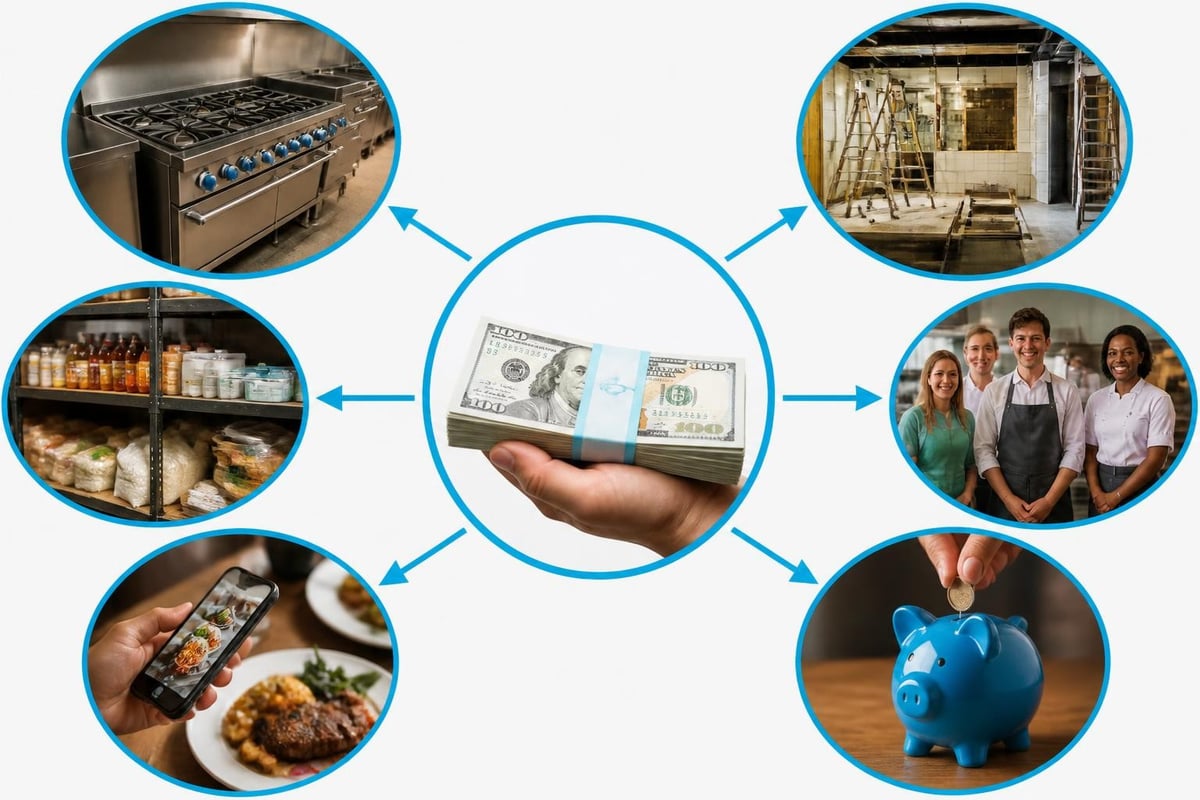
Established restaurants face ongoing capital needs as well:
- Equipment replacement and upgrades
- Seasonal inventory buildups
- Dining room renovations and remodeling
- Technology investments (online ordering, delivery integration)
- Expansion into new locations or service models
- Emergency repairs and regulatory compliance
Seasonal and Cyclical Revenue Patterns
Many restaurants experience pronounced seasonal fluctuations tied to tourism, weather, holidays, or local business cycles. A ski-resort restaurant may generate 70% of annual revenue during winter months, while a beach-town eatery thrives in summer. These patterns create predictable cash-flow gaps that owners must bridge with working capital.
According to the National Restaurant Association's research, operator concerns about cost pressures and staffing remain elevated, making access to flexible financing increasingly important for maintaining operations during challenging periods.
Labor and Inventory Challenges
Food costs and labor typically consume 60% to 70% of restaurant revenue combined. When suppliers raise prices, minimum wages increase, or you need to hire additional staff for a busy season, working capital needs spike. A restaurant business loan can help operators manage these increases without depleting operating reserves or compromising service quality.
Types of Restaurant Business Loans
Restaurant owners can choose from multiple financing structures, each with distinct qualification criteria, repayment terms, and appropriate use cases.
Traditional Bank Term Loans
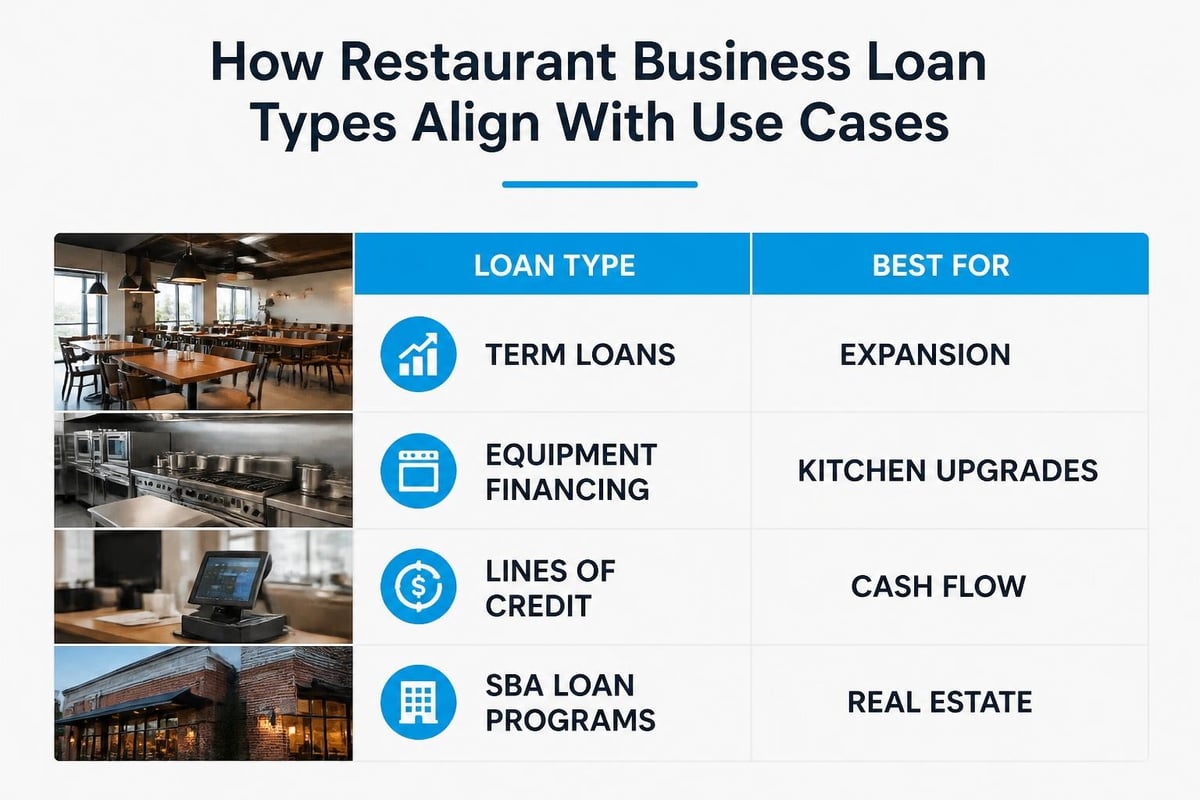
Commercial banks offer term loans with fixed repayment schedules, typically ranging from one to ten years. These loans generally provide the lowest interest rates but require strong credit profiles, substantial collateral, and detailed financial documentation.
Best suited for:
- Established restaurants with two-plus years of profitable operations
- Owners with personal credit scores above 680
- Large capital projects with clear ROI (new locations, major renovations)
- Borrowers who can provide real estate or equipment as collateral
Typical requirements:
| Criteria | Standard Expectation |
|---|---|
| Time in business | 2+ years |
| Annual revenue | $500,000+ |
| Credit score | 680+ |
| Collateral | Often required |
| Documentation | Extensive (tax returns, financials, projections) |
The FDIC's 2024 Small Business Lending Survey reveals that community banks remain active small-business lenders but have tightened underwriting standards, making strong financials and credit history more important than ever.
SBA Loan Programs
The Small Business Administration guarantees a portion of loans made by approved lenders, reducing lender risk and enabling more favorable terms for qualified borrowers.
SBA 7(a) loans are the most versatile, with maximum loan amounts up to $5 million and terms extending 10 years for equipment and working capital or 25 years for real estate. These loans can fund nearly any business purpose, making them popular for restaurant acquisitions, equipment purchases, and working capital needs.
SBA 504 loans specifically target fixed-asset purchases like real estate and major equipment. The SBA's 504 program combines a conventional bank loan (covering roughly 50% of the project), an SBA-backed debenture (40%), and borrower equity (10%) to finance large capital investments with below-market fixed rates for up to 25 years.
SBA Microloan program provides smaller amounts (up to $50,000) through nonprofit intermediaries, suitable for equipment purchases, furniture, supplies, or working capital needs of newer or smaller operations.
Equipment Financing
Lenders offer loans or leases specifically secured by the equipment being financed-commercial ranges, refrigeration units, ovens, dishwashers, or furniture. Because the equipment itself serves as collateral, approval requirements may be less stringent than unsecured financing.
Payment structures vary:
- Term loans: Fixed monthly payments over 3-7 years, with ownership transferring at closing
- Equipment leases: Monthly lease payments with an option or obligation to purchase at lease end
- Sale-leaseback: Sell owned equipment to a lessor and lease it back, freeing up capital tied in assets
Lines of Credit
A business line of credit provides revolving access to capital up to a predetermined limit. Borrowers draw funds as needed, pay interest only on the outstanding balance, and can re-borrow as they repay-similar to a credit card but with higher limits and lower rates.
Lines of credit excel at managing short-term cash-flow gaps, covering payroll between slow and busy periods, or taking advantage of bulk inventory discounts. Approval typically requires demonstrated revenue and may include both secured and unsecured options depending on business strength.
Alternative Financing for Restaurants
When traditional bank loans aren't accessible due to credit challenges, limited operating history, or urgent timing needs, restaurant owners often explore alternative funding sources.
Revenue-Based Financing and Merchant Cash Advances
These products advance capital based on your business's revenue performance rather than traditional credit metrics. Repayment occurs through a percentage of daily credit card sales or fixed daily/weekly withdrawals from your business bank account.
Key characteristics:
- Fast approval and funding (often 24-72 hours)
- Qualification based primarily on revenue volume
- Higher cost than traditional loans
- Flexible repayment that adjusts with sales volume
- No fixed term-repayment period varies based on revenue
For restaurants with consistent credit card volume but limited credit history or collateral, exploring working capital financing options through specialized providers can offer faster access to capital than traditional bank channels, particularly when timing is critical for operational needs.
Invoice Factoring
Restaurants that invoice corporate clients (catering, meal programs, venue services) can sell those receivables to a factoring company at a discount, receiving immediate cash rather than waiting 30-60 days for payment. While uncommon for traditional dine-in establishments, factoring serves catering-heavy concepts effectively.
Franchise Financing
Restaurant franchisees may access specialized financing programs offered through their franchisor or affiliated lenders familiar with the franchise system's performance metrics. These programs may offer streamlined approvals and favorable terms based on the brand's track record rather than solely the individual operator's financials.
Qualifying for a Restaurant Business Loan
Lenders evaluate restaurant loan applications using multiple criteria, weighing factors differently based on loan type and lender philosophy.
Credit Profile Requirements
Personal credit score: Most traditional lenders require personal credit scores of 650 minimum, with scores above 700 significantly improving approval odds and rate offerings. SBA loans typically require 680+.
Business credit: Established restaurants benefit from building strong business credit profiles through Dun & Bradstreet, Experian Business, and Equifax Business. Consistent vendor payments and trade credit usage strengthen this profile.
Credit history concerns: Lenders scrutinize bankruptcies, liens, judgments, and charge-offs. Recent negative items (within two years) significantly impact approval, while older issues diminish in importance over time.
Financial Performance Metrics
Lenders analyze your restaurant's financial statements to assess profitability, cash flow, and debt capacity:
- Revenue trends: Consistent or growing revenue signals business stability
- Profit margins: Net profit margins above industry averages strengthen applications
- Debt service coverage ratio (DSCR): Monthly net income divided by monthly debt obligations; most lenders require 1.25x minimum
- Cash reserves: Operating accounts demonstrating 2-3 months of expenses signal financial stability
Documentation Requirements
Prepare to provide comprehensive documentation:
- Business tax returns (typically 2-3 years)
- Personal tax returns (2 years for owners with 20%+ ownership)
- Profit and loss statements (year-to-date and previous year)
- Balance sheet (current)
- Bank statements (3-6 months business and personal)
- Business plan (for startups or expansion projects)
- Use of funds statement (detailed breakdown of how loan proceeds will be deployed)
- Lease agreement (copy of current restaurant lease)
- Licenses and permits (food service license, liquor license, health permits)
The Federal Reserve's Small Business Credit Survey provides valuable insight into financing experiences across industries, revealing that applicant satisfaction correlates strongly with transparency about requirements and decision timelines.
Collateral and Personal Guarantees
Most restaurant business loans require either collateral (assets pledged to secure the loan) or personal guarantees (personal liability for business debt), often both.
Common collateral types:
- Real estate (commercial property, personal residence)
- Equipment (kitchen equipment, furniture, fixtures)
- Inventory and receivables
- Securities or cash accounts
Personal guarantees hold business owners personally responsible if the business defaults. While uncomfortable, they're standard practice for small business lending, particularly for newer establishments or higher-risk loan structures.
Strategic Use of Restaurant Loan Proceeds
Deploying borrowed capital strategically determines whether a restaurant business loan accelerates growth or merely postpones problems.
Revenue-Generating Investments
Prioritize uses that directly increase revenue or reduce costs:
Capacity expansion: Additional seating, patio enclosures, or private dining rooms increase covers per service period. Calculate break-even based on incremental covers needed to service loan payments.
Kitchen efficiency: High-capacity equipment reduces ticket times, enabling more table turns during peak periods. Automation (dishwashers, prep equipment) may also reduce labor costs.
Technology platforms: Online ordering systems, delivery integration, reservation management, and kitchen display systems improve customer experience and operational efficiency, potentially driving higher check averages and repeat visits.
Marketing initiatives: Website development, local SEO, paid advertising, and loyalty programs funded through borrowed capital should deliver measurable customer acquisition or retention improvements.
Operational Stability Uses
Some loan uses don't directly generate revenue but improve stability and reduce risk:
- Equipment replacement: Preventing breakdowns that shut down operations
- Regulatory compliance: Meeting health code, ADA, or building code requirements
- Cash reserves: Building working capital cushions for seasonal dips or emergencies
- Debt consolidation: Refinancing higher-cost debt to reduce monthly obligations
Tax Considerations
Understanding tax implications helps optimize loan structure and repayment planning. The IRS provides guidance on business credits and deductions relevant to restaurant operators, including Section 179 deductions for equipment purchases and Work Opportunity Tax Credits for hiring from targeted groups.
Key tax planning points:
- Equipment purchases may qualify for Section 179 expensing or bonus depreciation
- Leasehold improvements follow specific depreciation schedules
- Interest payments are generally tax-deductible
- Loan principal repayment is not deductible
- Consult tax professionals to optimize timing and structure
Application Strategy and Timeline
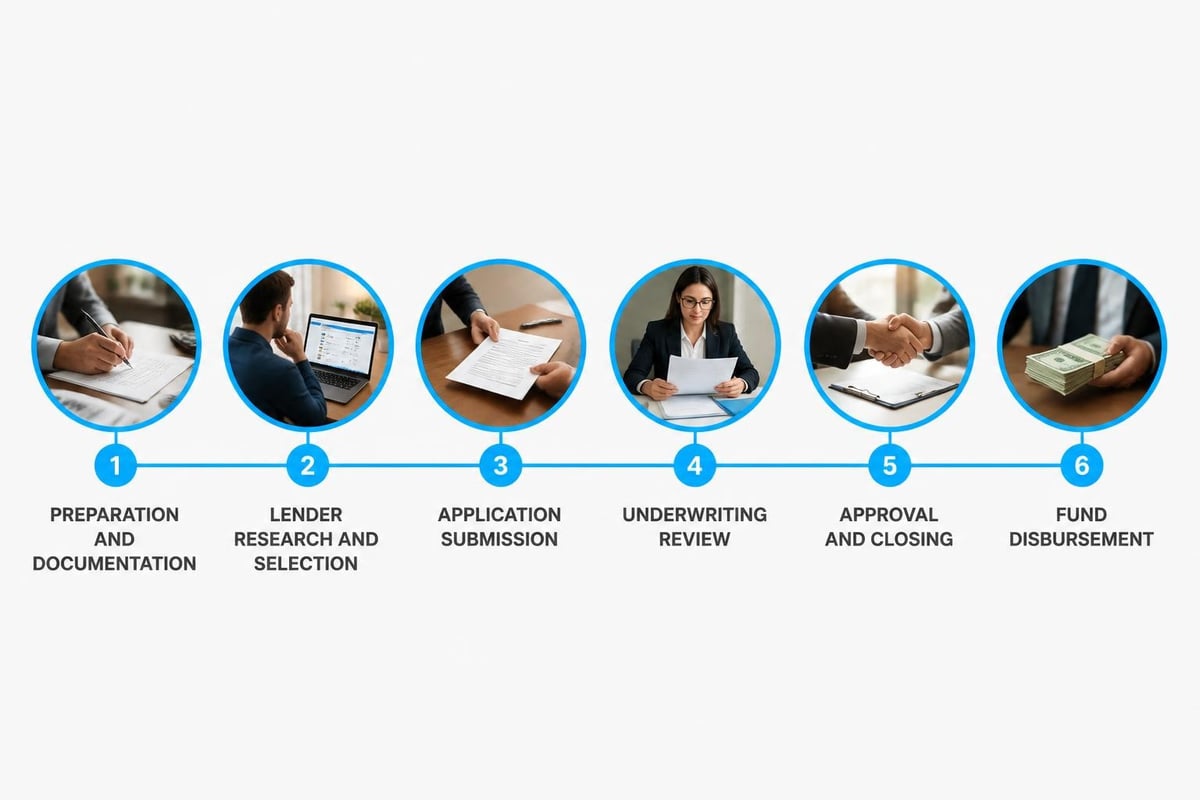
Successfully securing a restaurant business loan requires preparation, patience, and strategic lender selection.
Pre-Application Preparation
Before submitting applications, strengthen your profile:
- Review credit reports: Pull personal and business credit reports, dispute errors, and address correctable issues
- Organize documentation: Assemble all required documents in digital format
- Develop financial projections: Create realistic revenue and expense forecasts showing loan repayment capacity
- Clarify use of funds: Prepare detailed explanations of exactly how proceeds will be deployed and the expected return
Lender Selection
Different lenders serve different niches:
| Lender Type | Best For | Timeline | Rate Range |
|---|---|---|---|
| National banks | Large loans, strong credit | 30-90 days | Prime + 1-3% |
| Community banks | Local relationships, moderate size | 30-60 days | Prime + 2-4% |
| SBA lenders | Government-guaranteed terms | 60-120 days | Prime + 2.25-2.75% |
| Online lenders | Speed, moderate credit | 3-14 days | 8-25% APR |
| Alternative funders | Revenue-based approval | 1-5 days | Factor rates vary |
Match your profile and urgency to appropriate lender types. Applying to incompatible lenders wastes time and generates hard credit inquiries that temporarily lower scores.
Application Timeline
Traditional bank or SBA loan:
- Application submission and initial review: 1-2 weeks
- Underwriting and due diligence: 2-6 weeks
- Final approval and documentation: 1-2 weeks
- Funding: 1-3 days after closing
Alternative financing:
- Application: Same day
- Approval decision: 24-72 hours
- Funding: 1-5 business days
Build appropriate time buffers into capital planning. If you need funds in two weeks, traditional bank loans aren't viable options.
Common Pitfalls and How to Avoid Them
Restaurant owners frequently encounter preventable obstacles during the financing process.
Borrowing Too Much or Too Little
Over-borrowing saddles restaurants with debt payments that strain cash flow, particularly if projected revenue increases don't materialize. Monthly payments must be comfortable even during slow periods.
Under-borrowing forces owners to return for additional capital before completing projects or leaves insufficient reserves for unexpected costs. Build 15-20% cushions into funding requests.
Ignoring Total Cost of Capital
Focus on total cost, not just interest rate. A lower-rate loan with extensive fees may cost more than a higher-rate loan with minimal fees. Calculate total repayment amount and effective APR for accurate comparisons.
Mismatching Loan Terms to Asset Life
Avoid financing short-lived assets with long-term debt. Financing a $30,000 point-of-sale system over seven years means paying for obsolete technology. Match loan terms to asset useful life.
Failing to Build Contingencies
Restaurant operations encounter constant surprises-equipment failures, supplier price increases, construction delays, permitting issues. Maintain working capital reserves separate from project funding.
Neglecting Regulatory Guidance
The CFPB's small business lending resources outline borrower protections and lender obligations under the Small Business Lending Rule. Understanding your rights as an applicant helps you evaluate lender practices and identify potential red flags.
Managing Debt After Approval
Securing funding is only the beginning-managing debt responsibly determines long-term success.
Cash Flow Monitoring
Implement weekly cash-flow forecasting to anticipate shortfalls before they occur. Track actual performance against projections and adjust operations when revenue underperforms or expenses exceed budgets.
Payment Prioritization
During cash-flow crunches, prioritize obligations strategically:
- Payroll (legal obligation and operational necessity)
- Critical suppliers (food, beverage)
- Rent and utilities
- Loan payments (protecting credit and avoiding default)
- Non-critical vendors
Communicate proactively with lenders if payment difficulties arise. Many lenders offer temporary modifications for struggling borrowers with strong communication records.
Refinancing Opportunities
Monitor interest rate environments and your credit profile for refinancing opportunities. As your business strengthens and credit improves, refinancing high-cost debt with lower-rate products reduces expenses and improves profitability.
Building Equity and Creditworthiness
Each on-time payment strengthens business credit and demonstrates reliability to future lenders. Successful loan management opens doors to larger facilities and better terms for subsequent growth stages.
Industry-Specific Considerations
Restaurants face unique challenges that influence financing decisions.
Liquor License Implications
In many jurisdictions, liquor licenses represent significant value but come with transfer restrictions and regulatory requirements that affect financing. Some lenders won't accept liquor licenses as collateral due to regulatory uncertainty, while others specialize in liquor-license-backed financing.
Franchise vs. Independent Operations
Franchised restaurants may access franchisor-affiliated lending programs with streamlined approvals but face restrictions on operational changes and required capital investments. Independent operators enjoy complete operational flexibility but lack brand recognition that influences lender comfort.
Concept and Location Risk
Lenders evaluate concept viability and location demographics. Fine dining in struggling suburban markets faces greater scrutiny than fast-casual concepts in growing urban neighborhoods. First-time restaurant owners attempting unproven concepts face the steepest approval hurdles.
Lease Structure
Restaurant leases significantly impact financing. Personal guarantees on long-term leases create contingent liabilities lenders consider when evaluating debt capacity. Leases approaching expiration without renewal options create uncertainty that may delay or prevent approvals.
Securing the right restaurant business loan requires understanding your establishment's specific capital needs, matching those needs to appropriate financing products, and presenting a compelling case to lenders based on financial performance and strategic planning. Whether pursuing traditional bank financing, SBA-guaranteed loans, or alternative funding solutions, the key is aligning loan structure with your restaurant's revenue patterns and repayment capacity. Enterprise Finest Solutions helps restaurant owners navigate the complex financing landscape by connecting them with a network of lenders and funding partners, identifying solutions tailored to each business's revenue profile, operating history, and growth objectives.
Written by
Enterprise Finest Solutions
Content creator and writer sharing insights and stories.