Private Lenders for Business Loans: A 2026 Guide
Explore how private lenders for business loans work, their benefits, qualification criteria, and what borrowers should evaluate in 2026.

Business owners today face a financing landscape that has shifted dramatically away from traditional banking. Private lenders for business loans have become a significant force in commercial lending, offering speed, flexibility, and alternative underwriting that many businesses cannot find at conventional institutions. Understanding how these lenders operate, what they offer, and how to evaluate their terms is essential for any entrepreneur seeking capital in 2026.
The Rise of Private Business Lending
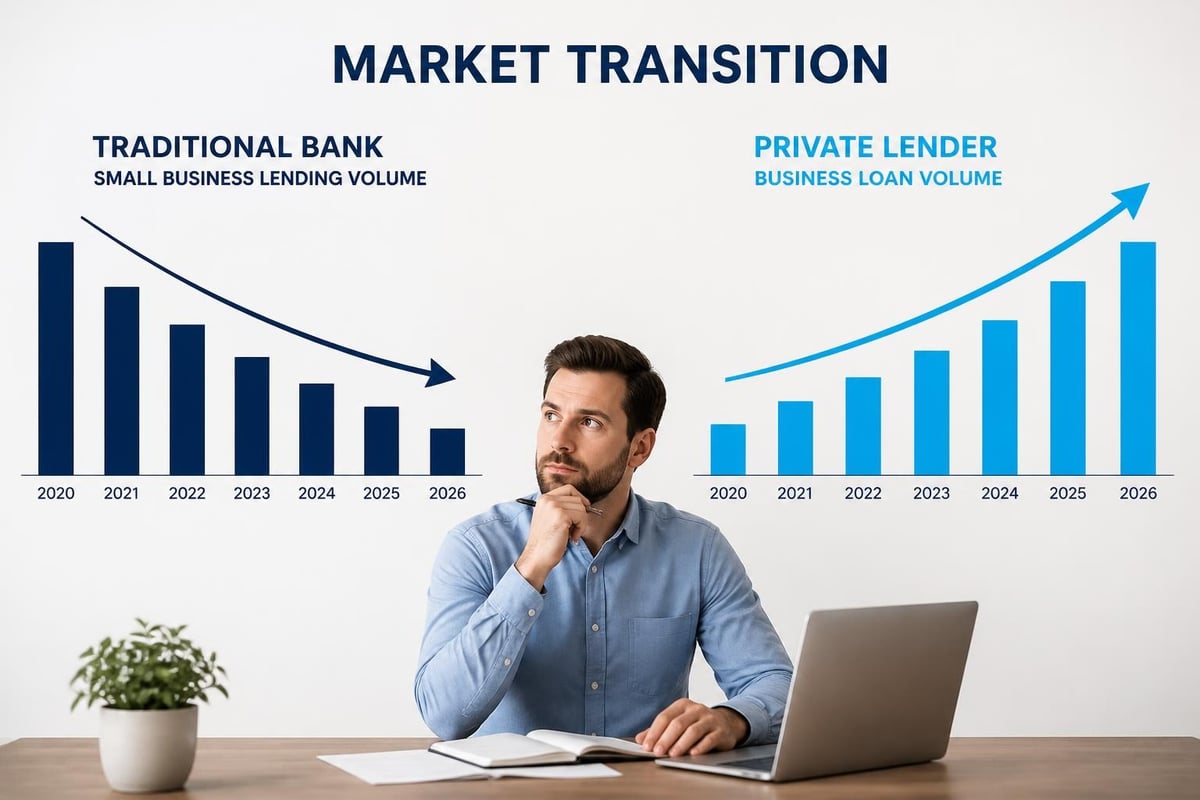
The decline of traditional bank lending to small and middle-market businesses has created substantial opportunity for private credit providers. According to Harvard Law School research, traditional bank loans have become increasingly scarce for businesses that don't fit standardized credit-box criteria, pushing borrowers toward alternative funding sources. Private lenders for business loans have filled this gap, offering capital to businesses that may have strong revenue but lack perfect credit, extensive collateral, or multi-year operating history.
This shift reflects broader financial market trends. The Federal Reserve's Financial Stability Report documents the rapid growth of private credit markets, noting that direct lending to businesses has expanded significantly as banks have retreated from certain segments. Private lenders now serve businesses across virtually every industry, from retail and hospitality to professional services and manufacturing.
Several factors have accelerated this transition:
- Stricter bank regulatory requirements following the financial crisis
- Technology platforms that enable faster underwriting and funding
- Investor appetite for alternative assets with attractive risk-adjusted returns
- Growing recognition that revenue and business performance matter more than traditional credit scores
The result is a diverse ecosystem of private lenders for business loans, each with distinct lending criteria, product structures, and target borrowers.
Types of Private Business Lenders
Private lenders encompass a broad spectrum of institutions and funding models. Understanding the differences helps borrowers identify the right capital partner for their specific needs.
Institutional Direct Lenders
These are specialized finance companies, often backed by private equity or institutional capital, that originate and hold business loans on their balance sheets. They typically serve middle-market companies with annual revenues between five million and one hundred million dollars. Direct lenders offer term loans, asset-based financing, and growth capital, often with more flexible covenant structures than banks.
Business Development Companies (BDCs)
BDCs are publicly traded or privately held investment vehicles that provide debt and equity financing to small and mid-sized businesses. The U.S. Treasury's Financial Stability Oversight Council report highlights BDCs as significant participants in private credit markets, noting both their role in expanding access to capital and potential transparency concerns. BDCs often focus on senior secured loans and mezzanine debt.
Alternative Lenders and Fintech Platforms
These companies leverage technology to streamline underwriting and funding processes, often serving smaller businesses that need capital quickly. Alternative lenders may offer term loans, revenue-based financing, invoice factoring, or merchant cash advances. Their underwriting models frequently emphasize business performance metrics like revenue, cash flow, and customer acquisition rather than traditional credit scores alone.
Private Debt Funds
Managed by asset managers and alternative investment firms, these funds pool capital from institutional investors and deploy it through direct business loans. Private debt funds typically target larger transactions and may specialize by industry, transaction type, or risk profile.
| Lender Type | Typical Loan Size | Speed to Funding | Primary Focus |
|---|---|---|---|
| Institutional Direct Lenders | $5M – $100M+ | 3-8 weeks | Middle-market, growth capital |
| BDCs | $1M – $50M | 4-10 weeks | Senior secured, mezzanine debt |
| Alternative/Fintech Lenders | $10K – $5M | 1-5 days | Revenue, performance, speed |
| Private Debt Funds | $10M – $250M+ | 6-12 weeks | Large transactions, specialization |
For businesses exploring options through a brokerage, access to multiple lender types expands the likelihood of finding financing that matches specific revenue profiles, industry characteristics, and capital needs.
How Private Lenders Evaluate Loan Applications
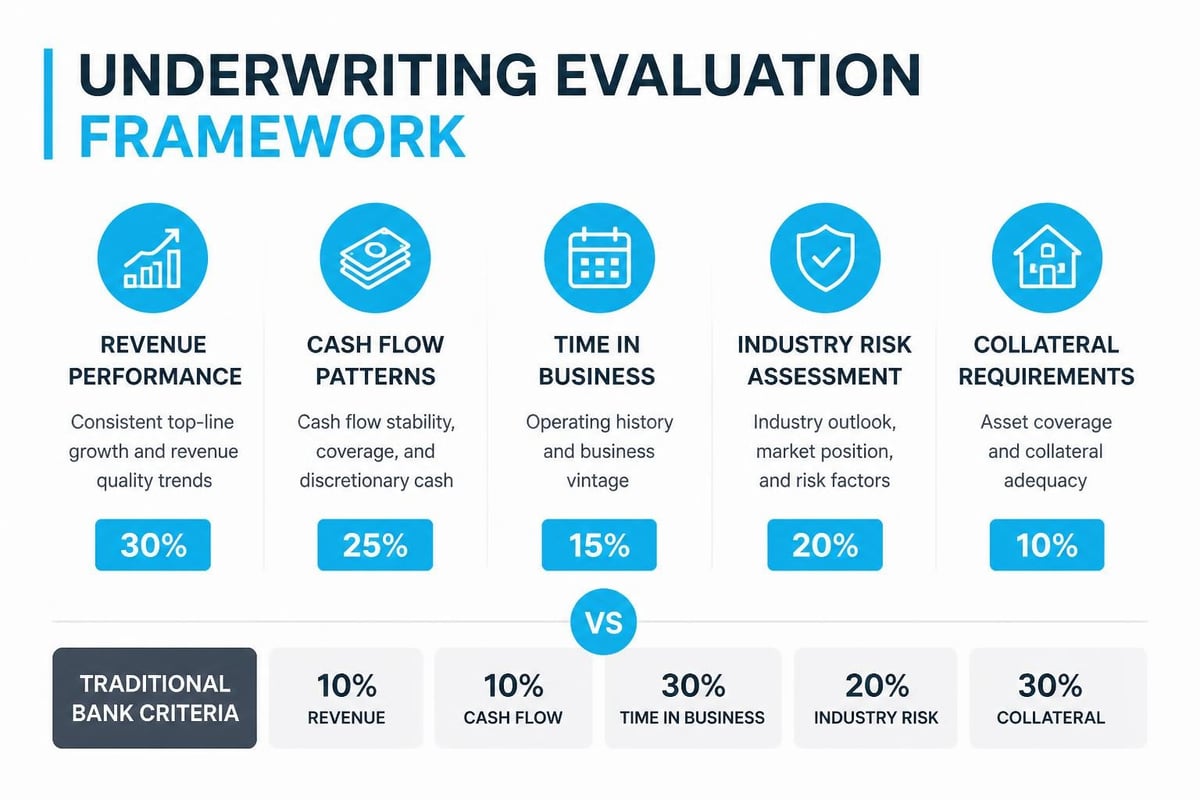
Private lenders for business loans use different underwriting criteria than traditional banks, though the specific factors vary significantly across lender types. Understanding these evaluation methods helps businesses prepare stronger applications and set realistic expectations.
Revenue and Cash Flow Analysis
Most private lenders prioritize business revenue and cash flow over personal credit scores. Lenders review bank statements, merchant processing data, and financial statements to assess the business's ability to generate consistent income and service debt. Many alternative lenders require minimum monthly revenue thresholds, often between $10,000 and $100,000 depending on the loan size.
Revenue consistency matters as much as absolute volume. Lenders look for stable or growing revenue patterns rather than erratic fluctuations. Seasonal businesses may need to demonstrate strong peak-season performance and adequate cash reserves to cover slower periods.
Time in Business and Operating History
While traditional banks often require two to five years of operating history, private lenders for business loans may work with younger companies. Some alternative lenders approve businesses with as little as six months of revenue history, provided the business demonstrates strong performance metrics. Institutional lenders and private debt funds typically require longer track records, often three years or more.
Industry and Business Model
Lenders evaluate industry risk, competitive dynamics, and business model sustainability. Certain industries, such as healthcare, professional services, and technology, may receive more favorable terms due to perceived stability and growth potential. Higher-risk industries like restaurants, retail, or construction may face higher rates or stricter requirements, though specialized lenders often serve these sectors effectively.
Collateral and Personal Guarantees
Secured lenders require assets as collateral, such as real estate, equipment, inventory, or accounts receivable. Asset-based lenders advance capital based on a percentage of collateral value, offering larger loan amounts but requiring detailed asset documentation. Unsecured lenders do not require specific collateral but often demand personal guarantees from business owners, creating personal liability if the business defaults.
Benefits of Working with Private Lenders
Private lenders for business loans offer distinct advantages that make them attractive alternatives to traditional financing, particularly for businesses that need capital quickly or fall outside conventional lending parameters.
Speed represents perhaps the most significant benefit. Alternative lenders can approve and fund loans within days, compared to weeks or months for bank loans. This speed enables businesses to capitalize on time-sensitive opportunities, manage unexpected expenses, or bridge cash-flow gaps without lengthy delays.
Flexibility in underwriting and structure allows private lenders to say yes when banks say no. Businesses with less-than-perfect credit, limited collateral, or unconventional business models can often secure financing through private channels. Revenue-based products, for example, align repayment with business performance, reducing pressure during slower periods.
Simplified documentation and process streamline the borrowing experience. Many alternative lenders require minimal paperwork, relying on automated bank-statement analysis and digital applications. This reduces administrative burden and accelerates decision-making.
Relationship-based approach characterizes many private lenders, particularly direct lenders and specialized funds. These lenders often develop deeper understanding of their borrowers' businesses and industries, enabling more nuanced credit decisions and ongoing support as businesses grow.
For businesses seeking flexible access to capital for recurring or unexpected expenses, a business line of credit through a network of financing partners can provide revolving access to funds, subject to qualification and lender terms.
Risks and Considerations
Despite their benefits, private lenders for business loans present risks and trade-offs that borrowers must carefully evaluate. As Harvard Business Review noted in April 2026, businesses should assess their exposure to private credit markets and understand the implications of non-bank financing.
Higher Cost of Capital
Private lenders typically charge higher interest rates and fees than traditional banks. Annual percentage rates may range from 10% to 50% or higher, depending on loan type, risk profile, and lender category. Factor rates, commonly used in merchant cash advances and revenue-based financing, can translate to effective APRs significantly above traditional loans when annualized.
Borrowers must evaluate whether the cost of capital justifies the business benefit. Fast funding to capture a major contract or prevent inventory shortages may warrant higher rates, while routine expenses might not.
Less Regulatory Oversight
Private lenders operate with less regulatory oversight than banks. While the Consumer Financial Protection Bureau's Small Business Lending Rule introduced new data-collection and anti-discrimination requirements in recent years, private lenders still face fewer restrictions on rates, fees, and practices than depository institutions.
This regulatory gap creates potential for predatory lending practices. Borrowers should carefully review all terms, understand total cost of capital, and verify lender reputation before committing.
Shorter Terms and Faster Repayment
Many private business loans carry shorter terms than bank loans, ranging from three months to three years rather than five to ten years. Faster repayment schedules mean higher periodic payments, which can strain cash flow if not properly planned. Borrowers must ensure their revenue can support the repayment schedule while maintaining operational liquidity.
Prepayment Penalties and Restrictive Terms
Some private lenders impose prepayment penalties or calculate interest and fees upfront, eliminating the benefit of early repayment. Others include restrictive covenants, such as limitations on additional borrowing, dividend restrictions, or mandatory cash reserves. Understanding these terms before signing is essential.
| Risk Factor | Impact | Mitigation Strategy |
|---|---|---|
| High interest rates | Increased capital cost | Compare multiple offers, calculate total repayment |
| Limited regulation | Potential predatory terms | Review contracts with legal/financial advisor |
| Short repayment terms | Cash-flow pressure | Model payment schedule against revenue projections |
| Prepayment penalties | Reduced flexibility | Negotiate terms, understand total cost scenarios |
Evaluating Lender Reputation and Transparency
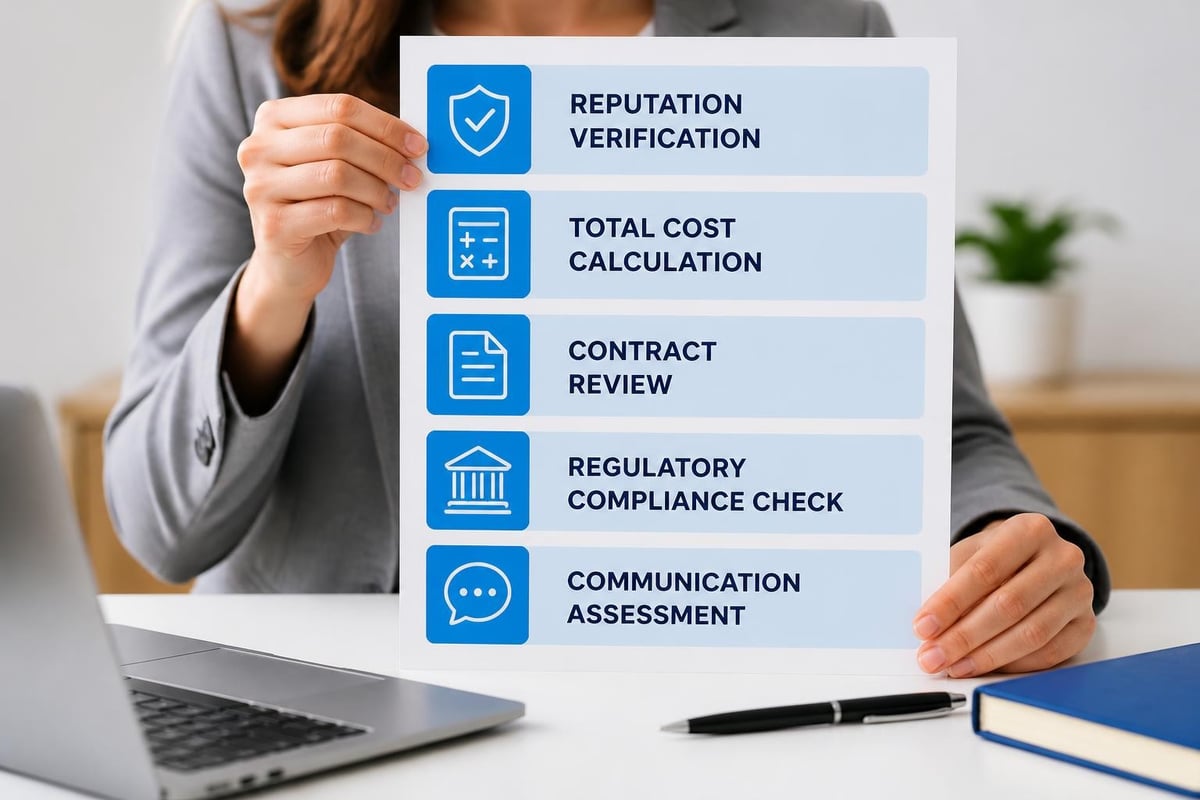
As Brookings Institution research explains, transparency remains a concern in private credit markets. Borrowers should conduct thorough due diligence on potential lenders before accepting financing.
Research Lender Background
Investigate how long the lender has operated, their funding sources, and their track record. Established lenders with institutional backing or public reporting obligations typically offer greater stability and accountability than newer, opaque entities. Review online ratings, Better Business Bureau profiles, and industry complaints.
Understand Total Cost of Capital
Request clear disclosure of all fees, rates, and charges. Calculate the total amount to be repaid and the effective APR, accounting for origination fees, administrative charges, and any ongoing costs. Compare this total across multiple offers to identify the most cost-effective option.
Review Contract Terms Carefully
Read the entire loan agreement, paying particular attention to repayment schedule, prepayment provisions, default conditions, and remedies available to the lender. Identify any provisions that could create unexpected costs or obligations. Consider engaging an attorney or financial advisor to review complex agreements.
Assess Communication and Support
Evaluate how responsive and transparent the lender is during the application process. Lenders who provide clear answers, explain terms thoroughly, and demonstrate willingness to address concerns are more likely to be reliable partners throughout the loan term.
Matching Loan Type to Business Need
Private lenders for business loans offer various product structures, each suited to different business situations and capital needs. Selecting the right product type maximizes value and minimizes cost.
Term Loans
Traditional installment loans with fixed repayment schedules work well for one-time capital needs like equipment purchases, expansion projects, or debt consolidation. Term loans from private lenders typically range from $25,000 to several million dollars, with terms from one to five years.
Revenue-Based Financing
This structure ties repayment to business revenue, with the borrower remitting a fixed percentage of daily or weekly sales until the advance plus fees is repaid. Revenue-based financing suits businesses with fluctuating revenue, as payments automatically adjust with sales volume.
Lines of Credit
Revolving credit lines provide ongoing access to capital up to a predetermined limit. Businesses draw funds as needed and pay interest only on outstanding balances. Lines of credit work well for managing cash-flow variability, seasonal inventory needs, or recurring short-term expenses.
Invoice Factoring and Accounts Receivable Financing
Businesses with outstanding invoices can access immediate capital by selling receivables to a factor or borrowing against them. This product suits B2B companies with net-30 or net-60 payment terms who need to accelerate cash flow without waiting for customer payments.
Equipment Financing
Specialized lenders advance capital for equipment purchases, using the equipment itself as collateral. This structure minimizes upfront capital requirements and aligns payments with the productive life of the asset.
Selecting the optimal product requires matching loan characteristics to business circumstances:
- One-time project: Term loan with appropriate repayment period
- Fluctuating revenue: Revenue-based financing or line of credit
- Seasonal needs: Line of credit with seasonal draw patterns
- B2B with slow-paying customers: Invoice factoring or receivables financing
- Equipment purchase: Equipment financing with asset-based structure
Working with a Financing Brokerage
Many businesses engage financing brokerages to navigate the complex landscape of private lenders for business loans. Brokerages maintain relationships with multiple lenders across various product categories, enabling them to match businesses with appropriate capital sources based on specific qualifications and needs.
Brokerages streamline the search process by submitting applications to multiple lenders simultaneously, comparing offers, and negotiating terms on behalf of clients. This approach saves time and increases the likelihood of approval, particularly for businesses that might not know which lenders serve their industry or revenue profile.
Reputable brokerages provide transparent disclosure of fees and explain how they are compensated, whether through lender commissions, borrower fees, or both. They should present multiple options when available and help clients understand the trade-offs between different offers.
Regulatory Developments and Market Outlook
The regulatory environment for private business lending continues to evolve. Implementation of the Small Business Lending Rule under the Equal Credit Opportunity Act requires many lenders to collect and report demographic and other data about small business loan applications, with the goal of identifying and addressing potential discrimination.
Industry observers note ongoing debate about whether additional regulation is needed to protect borrowers while preserving the innovation and access that private lenders provide. Policymakers must balance consumer protection with the recognition that private credit serves businesses unable to access traditional banking.
Market conditions in 2026 suggest continued growth in private business lending. Economic uncertainty, persistent bank caution in small business lending, and technological advances in underwriting all support ongoing expansion of private credit markets. Borrowers benefit from this growth through increased competition, product innovation, and improved access to capital.
Private lenders for business loans have become indispensable sources of capital for businesses that need speed, flexibility, or alternative underwriting. By understanding lender types, evaluation criteria, costs, and risks, business owners can make informed financing decisions that support growth while protecting their interests. Enterprise Finest Solutions connects businesses with a network of lenders and alternative funding providers, helping clients identify financing options aligned with their revenue, performance, industry, and capital needs.
Written by
Enterprise Finest Solutions
Content creator and writer sharing insights and stories.