No Doc Small Business Loans: Fast Funding Guide 2026
Discover how no doc small business loans work, qualification requirements, benefits, risks, and practical alternatives in 2026.

Small business owners often face urgent capital needs that demand quick action. Traditional bank loans require extensive documentation, financial statements, tax returns, and weeks of underwriting. When time is critical and documentation is limited, no doc small business loans offer an alternative path to financing. These products prioritize revenue performance and business cash flow over exhaustive paperwork, delivering decisions in days rather than months. Understanding how these loans work, their advantages, limitations, and when they make strategic sense can help business owners make informed funding decisions in 2026.
Understanding No Documentation Business Financing
No doc small business loans represent a category of financing that minimizes traditional documentation requirements. Rather than requesting multiple years of tax returns, detailed financial statements, and extensive business plans, these lenders focus primarily on verifiable revenue streams and bank account activity.
The term "no doc" can be somewhat misleading. Most lenders still require basic information to verify business legitimacy and assess repayment capacity. Documentation typically includes recent bank statements, proof of business registration, and identification. The key difference lies in what lenders don't require: comprehensive tax returns, audited financials, or detailed projections.
How Revenue-Based Verification Works
Modern no doc small business loans leverage technology to analyze business performance through direct bank account access. Lenders use automated systems to review deposit patterns, transaction volumes, and cash flow stability over recent months.
This approach offers several advantages:
- Speed: Automated analysis delivers decisions within 24-48 hours
- Accessibility: Businesses with limited financial documentation can qualify
- Relevance: Recent performance matters more than historical tax filings
- Transparency: Real-time banking data provides accurate cash flow pictures
The verification process typically examines three to six months of banking activity. Consistent deposits, healthy balances, and stable transaction patterns strengthen applications significantly.

Who Benefits Most From Minimal Documentation Loans
No doc small business loans serve specific business situations and owner profiles particularly well. Understanding whether your circumstances align with this financing model helps determine if it's the right choice.
Newer businesses often lack the multi-year financial history traditional lenders require. Startups and companies operating for less than two years may find conventional financing inaccessible, making revenue-based options more practical.
Businesses with strong cash flow but complex tax situations represent another ideal candidate group. Companies showing healthy revenue but carrying significant deductions, depreciation, or pass-through structures may appear less profitable on tax returns than their actual cash position indicates.
Specific Business Scenarios
| Business Situation | Why No Doc Works | Typical Use Case |
|---|---|---|
| Seasonal revenue spikes | Captures current high-revenue period | Inventory purchase before peak season |
| Recent expansion | Tax returns don't reflect new locations | Working capital for new store operations |
| Owner-operator with minimal staff | Simple structure, strong deposits | Equipment upgrade or marketing campaign |
| Time-sensitive opportunity | Needs funding within days | Bulk inventory discount or contract deposit |
Self-employed professionals and independent contractors may find their personal tax strategies create barriers to traditional lending. No doc products focusing on business account activity can provide clearer pictures of their actual earning capacity.
Emergency situations demand rapid responses. Equipment failures, unexpected repair needs, or sudden growth opportunities don't wait for 30-day underwriting processes. The speed of minimal documentation financing can make the difference between capitalizing on opportunities and missing them entirely.
Regulatory Context and Lender Requirements
Federal oversight of small business lending has evolved significantly. The Consumer Financial Protection Bureau's small business lending data collection rule under Regulation B establishes reporting requirements for certain lenders, though it doesn't specifically regulate documentation levels.
The interagency policy statement on documentation provides guidance for federally supervised institutions regarding when reduced documentation may be appropriate for smaller loans. This framework acknowledges that proportionate documentation makes sense for lower-risk, smaller-dollar lending.
What Lenders Still Verify
Even with streamlined processes, responsible lenders maintain basic verification standards:
- Business legitimacy: Operating licenses, registration documents, or DBA filings
- Identity confirmation: Government-issued ID and Social Security number or EIN
- Banking relationship: Active business checking account with sufficient history
- Revenue threshold: Minimum monthly deposits (often $10,000-$25,000)
- Time in business: Typically at least six months of operations
The FDIC's small business lending survey indicates that alternative documentation methods have gained acceptance across the lending industry, particularly for loans under $100,000 where traditional underwriting costs can exceed the risk-adjusted return.
Comparing Costs and Terms
No doc small business loans typically carry higher costs than conventional bank financing. This reflects the increased risk lenders assume when accepting less documentation and the speed they provide.
Factor rates rather than annual percentage rates often structure these products. A factor rate of 1.15 to 1.40 means borrowing $50,000 requires repaying $57,500 to $70,000 regardless of how quickly you repay. This differs fundamentally from interest-based loans where early repayment reduces total cost.
Cost Comparison Framework
| Financing Type | Typical Cost Range | Approval Time | Documentation Level |
|---|---|---|---|
| Traditional bank loan | 6-10% APR | 3-8 weeks | Extensive |
| SBA 7(a) loan | 8-13% APR | 4-12 weeks | Very extensive |
| No doc revenue loan | 1.15-1.40 factor | 1-3 days | Minimal |
| Business line of credit | 12-25% APR | 1-2 weeks | Moderate |
Repayment structures vary significantly. Daily or weekly automatic deductions from your business checking account are common. Some products take a fixed percentage of daily credit card receipts, aligning payments with actual revenue.
Term lengths typically range from three to eighteen months. Shorter terms mean higher periodic payments but lower total costs. Carefully modeling the payment schedule against your cash flow prevents strain on operations.

When evaluating offers, convert factor rates to APR equivalents for accurate comparison. A 1.25 factor repaid over six months equals approximately 50% APR, while the same factor over twelve months equals roughly 25% APR.
Strategic Advantages Beyond Speed
Speed represents the most obvious benefit of no doc small business loans, but several strategic advantages deserve consideration. Preserving cash reserves during growth phases or uncertain periods can be more valuable than minimizing financing costs.
Traditional loans often require business owners to exhaust available cash before approving financing. Revenue-based products generally don't impose this restriction, allowing businesses to maintain emergency reserves while accessing growth capital.
Credit preservation matters for businesses planning larger future financing needs. Hard credit inquiries for multiple loan applications can temporarily lower scores. Many no doc lenders perform soft credit checks that don't impact credit reports, or they place minimal weight on credit scores in their decisions.
Building Lender Relationships
Successfully repaying a no doc loan establishes track records with alternative lenders. Many businesses use initial smaller advances to demonstrate reliability, then access larger amounts or better terms for subsequent financing needs.
This progression can look like:
- First funding: $25,000 at 1.35 factor, six-month term
- Second funding (after successful repayment): $50,000 at 1.28 factor, nine-month term
- Third funding: $75,000 at 1.22 factor, twelve-month term
Each successful cycle improves terms and increases available capital. For businesses unable to qualify for traditional financing initially, this creates pathways toward more favorable products over time.
Risk Factors and Potential Pitfalls
No doc small business loans carry specific risks that business owners must evaluate honestly. The high cost of capital represents the most significant concern. Annual percentage rates often exceed 40-60% when calculated correctly, making these products expensive relative to traditional alternatives.
Payment frequency can strain cash flow if not properly modeled. Daily deductions of $500 equal $10,000 monthly, which may represent 15-25% of revenue for smaller businesses. This leaves less margin for unexpected expenses or revenue fluctuations.
Warning Signs of Predatory Terms
| Red Flag | Why It Matters | What to Watch For |
|---|---|---|
| Confessions of judgment | Waives legal defenses if you default | Any clause allowing automatic judgment |
| UCC blanket liens | Claims all business assets | Lien filing on equipment, inventory, receivables |
| Stacking penalties | Allows multiple loans with compounding fees | Encouragement to take new advances before payoff |
| Prepayment penalties | Charges fees for early repayment | Terms preventing payoff savings |
The OCC's guidance on small business lending emphasizes that even alternative products should maintain reasonable and transparent pricing. Business owners should understand total repayment amounts, effective interest rates, and all fees before accepting funding.
Renewal pressure presents another concern. Some lenders aggressively market renewals or additional advances before existing obligations are satisfied. This creates debt cycles that become difficult to escape. Responsible borrowing means having clear repayment plans and exit strategies.
Default consequences vary by product structure. While most no doc lenders don't place liens on business assets initially, default can trigger collections, legal action, and damage to business credit profiles. Understanding exact default terms and cure periods protects business owners if payment difficulties arise.
Practical Alternatives Worth Considering
Before committing to no doc small business loans, exploring alternative options ensures you're selecting the most appropriate solution. Several products offer middle-ground approaches between traditional bank loans and minimal-documentation funding.
Business lines of credit provide flexible access to capital with moderate documentation requirements. For established businesses with at least one year of operations and decent credit profiles, working capital financing through a revolving credit line may deliver better terms while maintaining relatively quick approval times.
The SBA's loan programs include microloans up to $50,000 with streamlined documentation compared to larger SBA products. Community Development Financial Institutions (CDFIs) and nonprofit microlenders often provide similar amounts with technical assistance and flexible underwriting.
Comparing Flexibility and Cost
Invoice financing and factoring convert outstanding receivables into immediate cash. If your business works with creditworthy commercial clients on net-30 or net-60 terms, advancing against those invoices may cost less than revenue-based loans while providing similar speed.
Equipment financing secures loans with the equipment being purchased, allowing lenders to offer better rates despite minimal financial documentation. The collateral reduces their risk, translating to lower costs for borrowers.
For businesses experiencing short-term gaps rather than needing growth capital, merchant cash advances based on credit card receivables may align better with revenue patterns. Restaurants, retail stores, and service businesses with significant card volume can access capital that automatically adjusts with daily sales.
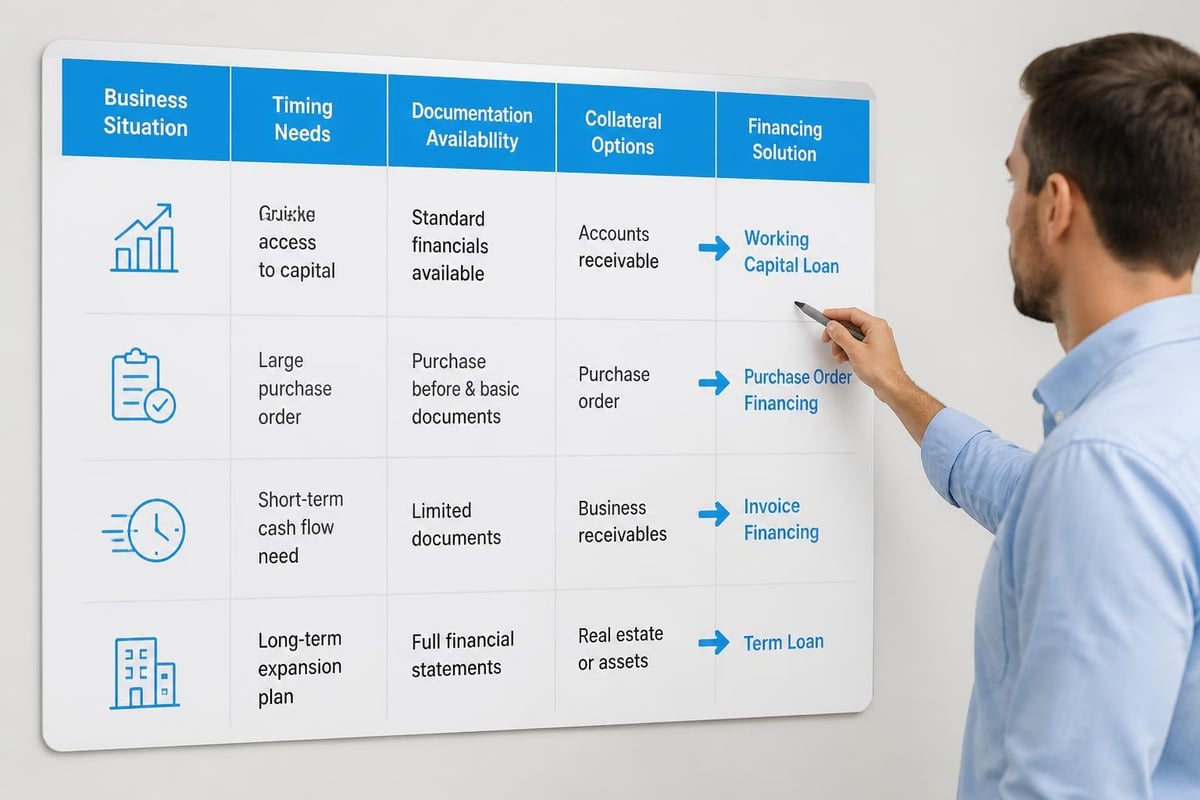
Personal guarantees backed by home equity or other assets can unlock traditional lending for businesses that otherwise lack documentation. This approach separates business performance from personal creditworthiness but introduces personal financial risk that must be carefully weighed.
Application Process and Approval Timeline
Applying for no doc small business loans follows a streamlined process designed for speed. Most lenders offer fully online applications that take 10-20 minutes to complete. The typical sequence includes:
- Basic information submission: Business name, address, industry, time in operation, and monthly revenue
- Owner details: Name, Social Security number, ownership percentage, and contact information
- Banking connection: Secure link to business checking account for automated statement review
- Supporting documents: Business license, void check, and identification upload
Automated decisioning analyzes submitted data within minutes to hours. Advanced algorithms review bank deposits, calculate average daily balances, identify revenue patterns, and assess payment capacity. This technology enables the speed that defines these products.
What Happens After Approval
Funding typically occurs within 24-72 hours of approval. Electronic transfers deposit funds directly into the business checking account provided during application. Some lenders offer same-day funding for premium fees.
The account used for deposit usually becomes the repayment source through ACH authorization. Daily or weekly deductions begin according to the schedule disclosed at closing. Maintaining sufficient balances to cover these automated withdrawals prevents NSF fees and potential default.
Transparent communication with your lender about cash flow challenges can prevent problems. Most lenders prefer working with borrowers experiencing temporary difficulties rather than pursuing default remedies. Early communication opens options like payment restructuring or temporary relief.
Making Informed Decisions in 2026
The landscape of small business financing continues evolving. Data from the Federal Reserve's Financial Stability Report shows strong small business loan origination volumes throughout 2024 and into 2026, with alternative lenders capturing growing market share.
No doc small business loans fill legitimate needs when traditional financing proves inaccessible or too slow. The key to beneficial use lies in understanding true costs, modeling repayment against realistic revenue projections, and having clear purposes for the capital.
Best practices for no doc financing include:
- Calculate total repayment amounts and effective APRs before accepting offers
- Model daily or weekly payment impacts on cash flow with conservative revenue assumptions
- Understand all fees, including origination, processing, and potential penalties
- Compare multiple offers from different lenders to ensure competitive terms
- Read all agreements completely before signing, paying special attention to default provisions
- Use funds for revenue-generating activities that can support repayment
- Avoid taking multiple advances simultaneously unless absolutely necessary
- Plan exit strategies to transition toward lower-cost financing as your business grows
The recent updates to CFPB filing requirements reflect ongoing regulatory attention to small business lending transparency. While these rules primarily affect lender reporting rather than product terms, they signal broader industry focus on fair lending practices and disclosure standards.
Industry-Specific Considerations
Different industries face unique financing challenges that influence how well no doc small business loans serve their needs. Restaurants and food service businesses often show strong cash flow but carry high operating expenses that reduce taxable income. Revenue-based lending that looks at gross deposits rather than net profit can work particularly well.
Construction and contracting businesses experience lumpy cash flow tied to project completion and payment schedules. No doc products with flexible repayment structures that adapt to revenue timing may accommodate these patterns better than fixed monthly loans.
Retail operations with seasonal peaks benefit from the ability to access capital quickly before high-volume periods. The higher cost of no doc financing may be offset by increased sales enabled by adequate inventory during critical selling seasons.
Professional Services and Consulting
Service businesses typically carry minimal hard assets but generate strong revenue. This profile often challenges traditional asset-based lending but fits revenue-based models perfectly. Consultants, agencies, and professional services can demonstrate payment capacity through bank statements even without extensive financial documentation.
Healthcare providers face specific regulatory and insurance reimbursement considerations. Medical practices, dental offices, and veterinary clinics with strong patient volume but complex insurance receivables may find revenue-based lending more accessible than traditional healthcare-specific loans.
E-commerce and online businesses present unique verification challenges. Digital businesses with strong sales through platforms like Shopify, Amazon, or proprietary websites can use payment processor statements as documentation, even when traditional financials are limited.
No doc small business loans provide valuable financing options when speed and accessibility outweigh cost considerations, but they require careful evaluation of terms, realistic cash flow planning, and clear strategic purposes. Whether you need emergency capital, face time-sensitive opportunities, or lack traditional documentation, understanding the full landscape of available funding helps you make choices that support long-term business success. Enterprise Finest Solutions connects business owners with a network of lenders and alternative funding providers, helping you identify financing options that align with your specific revenue patterns, industry requirements, and capital needs.
Written by
Enterprise Finest Solutions
Content creator and writer sharing insights and stories.