Loans Funding: How Businesses Access Capital in 2026
Learn how loans funding works for businesses in 2026, from traditional banks to alternative lenders, and discover strategies to secure capital.

Business owners seeking growth capital, working funds, or equipment financing face a complex landscape of loans funding options in 2026. Understanding how lenders source capital, evaluate applications, and structure financing can mean the difference between rapid deployment of funds and prolonged delays. The modern loans funding ecosystem blends traditional bank lending with alternative providers, each drawing from distinct capital sources and applying varied underwriting standards. For small and medium-sized businesses, navigating these channels effectively requires knowledge of how funding flows from source to borrower.
Understanding the Loans Funding Ecosystem
The infrastructure supporting loans funding has evolved dramatically over the past decade. Traditional banks remain significant players, but their share of small-business lending has shifted as alternative providers entered the market with innovative funding models.
Banks typically fund loans through deposits, borrowing from other financial institutions, or selling loans into secondary markets. This funding structure influences their lending criteria, interest rates, and approval timelines. According to the Federal Reserve's research on deposit specialization and lending behavior, banks with stable deposit bases tend to offer longer-term loans at lower rates, while those relying on wholesale funding often focus on shorter-term, higher-yield products.
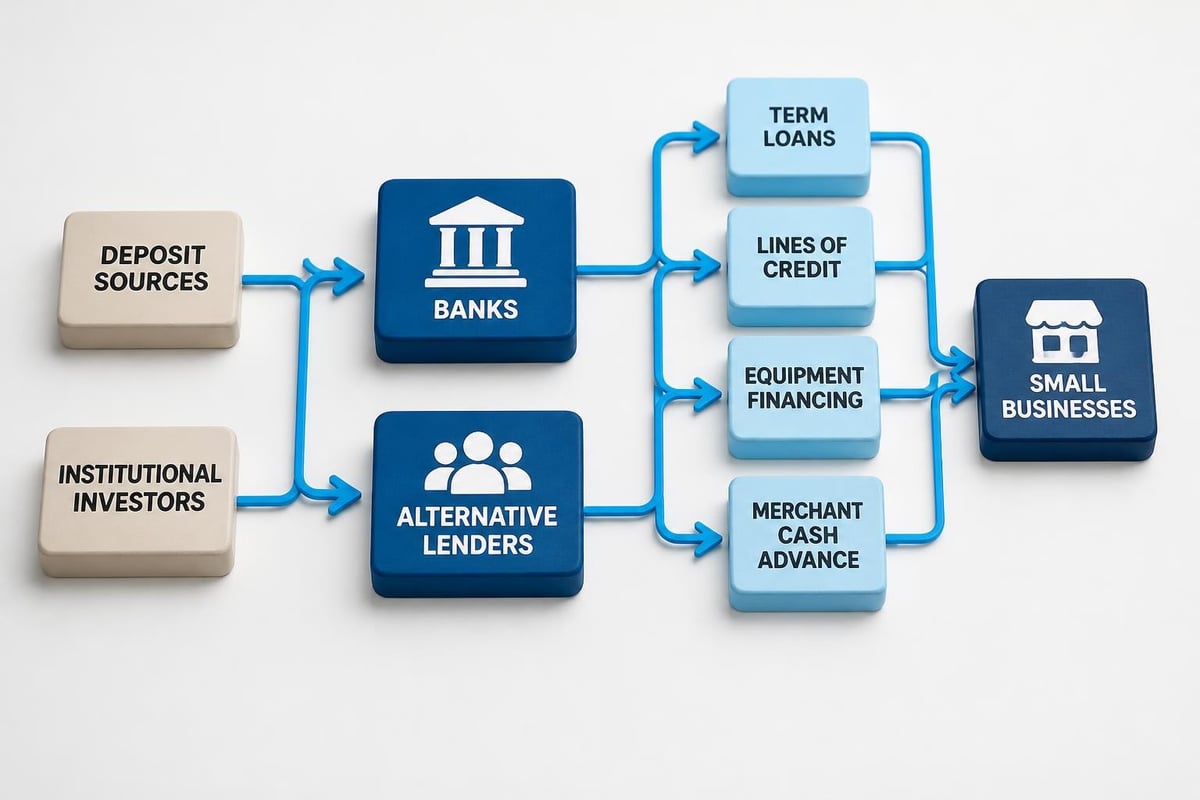
Alternative lenders source capital differently. Many rely on:
- Institutional investors seeking yield in private credit markets
- Credit facilities from larger financial institutions
- Securitization of existing loan portfolios
- Private equity and venture capital backing
- Revenue-based funding models that align repayment with business performance
These diverse funding sources enable alternative providers to offer flexible structures that traditional banks may not accommodate. The World Bank's analysis of SME finance highlights how non-bank lenders have expanded access to capital in markets where conventional banking infrastructure proves insufficient for growing businesses.
Capital Sources and Their Impact on Loan Terms
The origin of a lender's capital directly affects the loans funding products they offer. Banks funding loans through FDIC-insured deposits generally provide lower interest rates because their cost of capital remains relatively stable. These institutions face regulatory capital requirements that influence their lending appetite across different business sectors.
Non-depository lenders accessing capital through institutional channels often operate with higher funding costs. This reality translates to higher interest rates for borrowers, offset by faster approval processes, more flexible underwriting, and willingness to work with businesses that don't meet traditional bank criteria. The FDIC's 2025 Risk Review documents how banks have tightened lending standards in certain sectors, creating opportunities for alternative providers to serve creditworthy businesses through different risk models.
Traditional Bank Loans Funding Structures
Commercial banks remain the cornerstone of business loans funding for established companies with strong credit profiles. Their lending decisions reflect conservative underwriting standards shaped by regulatory requirements, deposit insurance obligations, and long-term relationship banking models.
Bank loans funding typically requires:
- Established credit history – Minimum two years in business, often three or more
- Strong personal and business credit scores – Usually 680+ personal FICO, depending on loan size
- Collateral or security interest – Real estate, equipment, inventory, or accounts receivable
- Detailed financial documentation – Tax returns, profit-and-loss statements, balance sheets, projections
- Demonstrated cash flow – Debt-service coverage ratios of 1.25× or higher
The SBA 7(a) loan program represents a hybrid approach where the federal government guarantees a portion of bank loans funding, reducing lender risk and enabling more flexible terms for qualified small businesses. Maximum loan amounts reach $5 million, with repayment terms extending up to 25 years for real estate purchases.
Bank Funding Timeline and Process
Traditional bank loans funding unfolds over weeks or months, not days. The application-to-funding sequence typically follows this pattern:
| Stage | Timeline | Key Activities |
|---|---|---|
| Pre-qualification | 1-3 days | Initial credit check, basic eligibility review |
| Full application | 3-7 days | Complete documentation package submission |
| Underwriting | 7-21 days | Credit analysis, collateral valuation, financial review |
| Approval and documentation | 5-10 days | Loan committee decision, legal document preparation |
| Funding | 1-5 days | Final signatures, lien filings, capital disbursement |
This extended timeline reflects banks' thorough due diligence and regulatory compliance requirements. The Consumer Financial Protection Bureau's small-business lending guidance establishes data collection and reporting standards that add administrative steps to the loans funding process, though these rules ultimately improve market transparency and fair lending practices.
Alternative Loans Funding Models
Beyond traditional banking, alternative loans funding encompasses a spectrum of products designed for speed, flexibility, and accessibility. These options serve businesses that need capital quickly, don't meet conventional bank criteria, or prefer repayment structures aligned with revenue patterns.
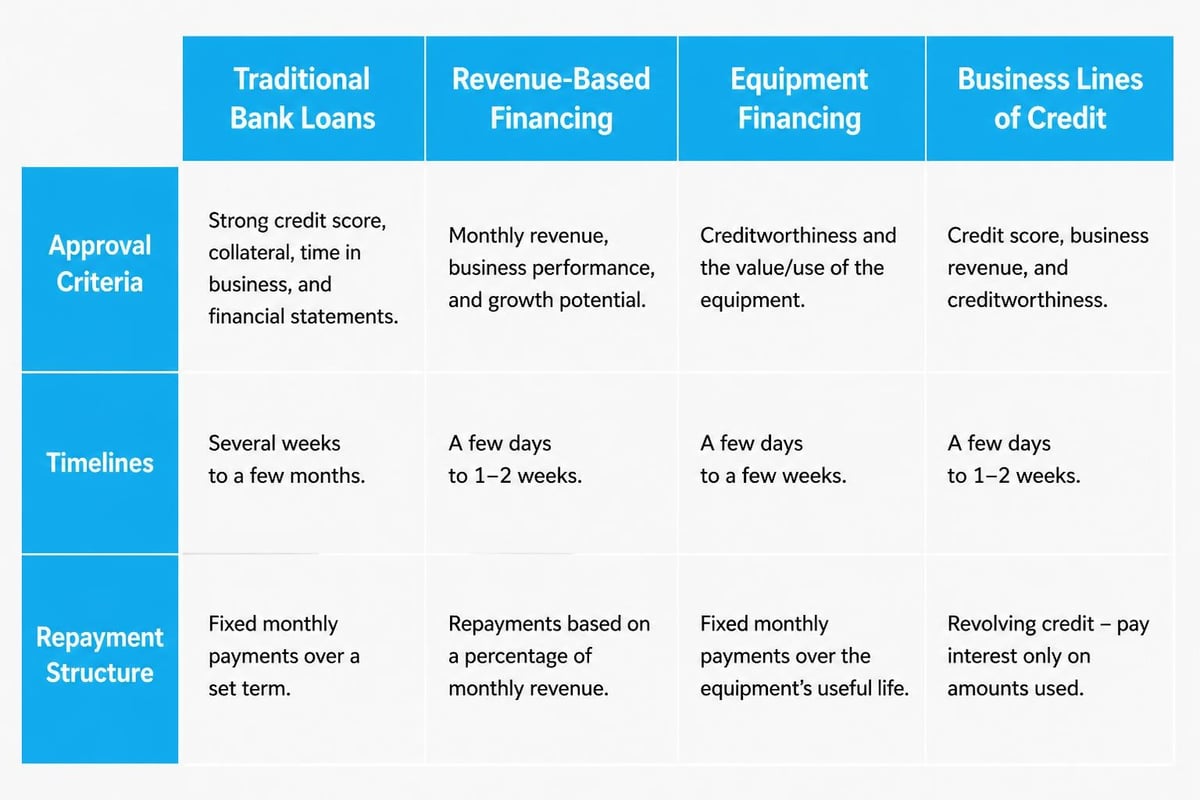
Revenue-based financing represents a growing segment of alternative loans funding. Instead of fixed monthly payments, businesses repay a percentage of daily or weekly revenue until the advance plus fees is satisfied. This model appeals to seasonal businesses, those with fluctuating cash flow, or companies investing in growth initiatives with uncertain short-term returns.
Merchant cash advances provide a specific form of revenue-based funding where lenders purchase a portion of future credit card receivables. Businesses with strong card transaction volume can access capital within days, though the effective cost often exceeds traditional loan rates. For established businesses with consistent revenue exploring flexible funding solutions, merchant cash advance and revenue-based financing options can address immediate capital needs when qualification focuses on business performance rather than credit scores alone.
Comparing Alternative Funding Structures
Different alternative loans funding products serve distinct business needs and circumstances:
Equipment financing structures loans around specific asset purchases, using the equipment itself as collateral. This approach enables businesses to acquire machinery, vehicles, or technology without depleting working capital. Lenders advance 80-100% of equipment value, with repayment terms matching the asset's useful life.
Invoice financing converts outstanding accounts receivable into immediate cash. Lenders advance 70-90% of invoice value upfront, then collect directly from customers or remit the balance (minus fees) when customers pay. This loans funding method suits B2B businesses with long payment cycles.
Business lines of credit provide revolving access to capital up to a predetermined limit. Businesses draw funds as needed, pay interest only on outstanding balances, and can re-borrow as they repay. This flexibility makes lines of credit ideal for managing cash flow gaps, seasonal inventory needs, or unexpected expenses.
Technology's Role in Modern Loans Funding
Digital platforms and data analytics have transformed how lenders evaluate applications and deploy capital. The FinRegLab report on technology in small-business credit documents how alternative data sources and machine-learning models enable faster, more accurate credit decisions for businesses that lack traditional credit histories.
Automated underwriting systems now analyze:
- Bank account transaction patterns and cash flow velocity
- Online revenue data from e-commerce platforms and payment processors
- Social media presence and customer engagement metrics
- Industry-specific performance benchmarks
- Real-time inventory and accounts receivable levels
This technology accelerates the loans funding timeline from weeks to hours in some cases. Fintech lenders can deliver preliminary approvals within minutes, though final funding still requires verification and compliance checks.
Open Banking and Data Sharing
Open banking initiatives allow businesses to securely share financial data directly from their accounting software or bank accounts to potential lenders. This connectivity eliminates manual document gathering and provides lenders with verified, real-time financial information for loans funding decisions.
Benefits include:
- Reduced application time – No scanning tax returns or downloading bank statements
- Improved accuracy – Direct data feeds eliminate transcription errors
- Faster approvals – Real-time verification accelerates underwriting
- Better terms – Comprehensive data may reveal creditworthiness invisible to traditional scoring
The U.S. Treasury's policy brief on small-business financing emphasizes how technology-enabled lending expands access while noting the importance of consumer protection and data security safeguards in these evolving loans funding channels.
Qualifying for Loans Funding in 2026
Lender requirements vary widely across the loans funding spectrum, but certain factors consistently influence approval decisions and terms. Understanding these criteria helps businesses position themselves favorably before applying.
Key Qualification Factors
Credit profile remains foundational across most loans funding options. Traditional banks emphasize personal credit scores (typically 680+), while alternative lenders may accept scores in the 500-650 range, compensating for higher risk through pricing and structure. Business credit scores from Dun & Bradstreet, Experian, or Equifax increasingly influence larger facilities.
Time in business affects both eligibility and terms. Banks generally require two to three years of operating history, though SBA programs may work with newer companies showing strong fundamentals. Alternative lenders often accept businesses operating for 6-12 months, particularly those demonstrating consistent revenue growth.
Revenue and cash flow drive approval decisions for revenue-based loans funding models. Minimum monthly revenue thresholds range from $10,000 for smaller advances to $100,000+ for substantial working capital facilities. Lenders analyze bank statements to verify income consistency and identify seasonal patterns.
| Lender Type | Min. Credit Score | Min. Time in Business | Min. Monthly Revenue | Typical Approval Time |
|---|---|---|---|---|
| Traditional Bank | 680+ | 2-3 years | Varies by loan size | 2-8 weeks |
| SBA Lender | 640-680 | 2+ years | $50,000+ | 4-12 weeks |
| Alternative Online | 550-600 | 6-12 months | $10,000-$25,000 | 1-5 days |
| Revenue-Based | 500-550 | 6+ months | $15,000-$30,000 | 1-3 days |
| Equipment Finance | 600+ | 1-2 years | $10,000+ | 2-7 days |
Collateral requirements separate secured from unsecured loans funding. Banks typically require security interests in business assets, personal guarantees, or both. Alternative lenders may offer unsecured options to businesses with strong revenue, accepting higher risk through pricing rather than collateral demands.
Strategic Approaches to Securing Loans Funding
Successful capital acquisition requires preparation, timing, and strategic positioning. Businesses that plan ahead and maintain strong financial practices access better terms across all loans funding channels.
Financial House in Order
Before seeking loans funding, businesses should:
- Clean up credit reports – Dispute inaccuracies, pay down revolving balances below 30% utilization, resolve collections
- Organize financial records – Ensure tax returns filed, accounting current, bank statements accessible
- Document use of funds – Prepare clear explanation of how capital will drive revenue or reduce costs
- Build business credit – Establish trade lines, maintain vendor payment history, register with credit bureaus
- Strengthen cash position – Demonstrate positive cash flow and reasonable operating reserves
The Federal Reserve's financial stability report notes that funding risks in credit markets can tighten capital availability during economic uncertainty. Businesses maintaining strong fundamentals position themselves to access loans funding even when lenders become selective.
Matching Funding Source to Business Need
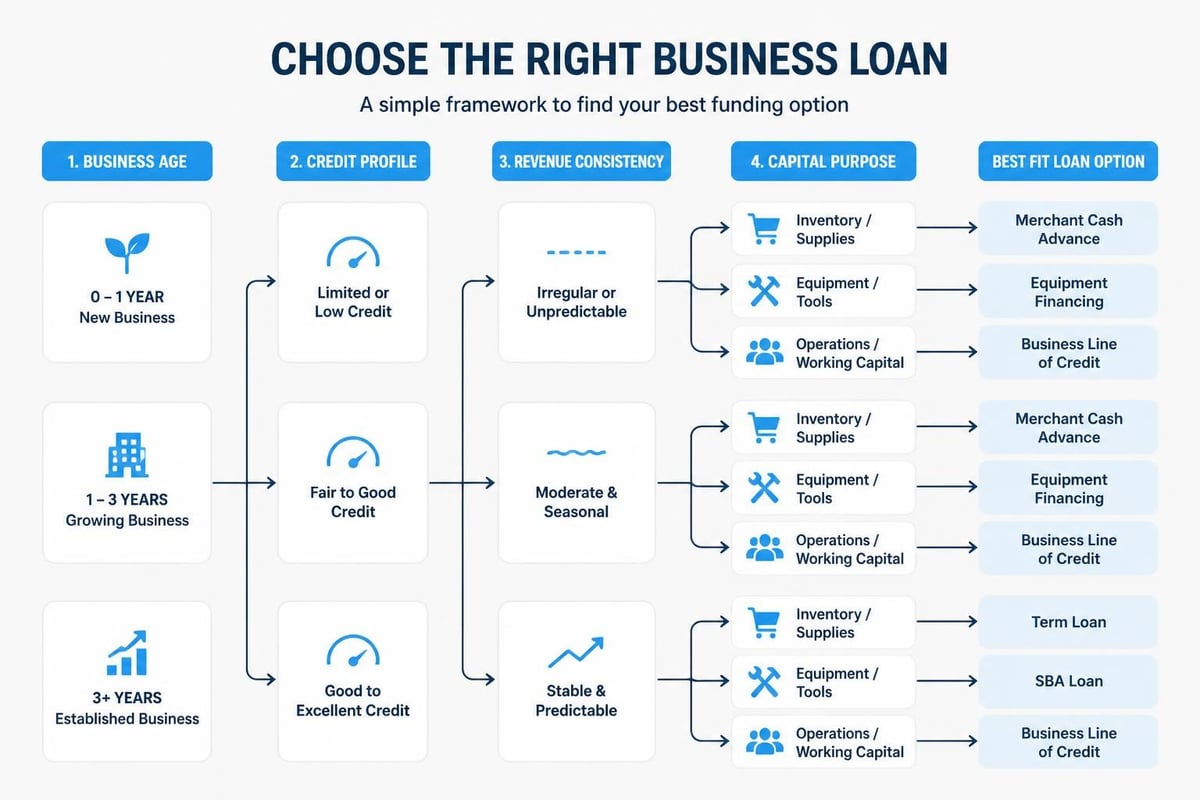
Different capital requirements call for different loans funding solutions. Short-term working capital needs might warrant revenue-based financing or a business line of credit, while long-term growth investments often justify traditional bank loans or SBA products with lower costs extended over years.
Expansion and growth projects with clear ROI typically qualify for conventional loans funding at favorable rates. Banks and SBA lenders view investment in capacity, locations, or market entry as lower-risk when backed by solid business plans and financial projections.
Seasonal inventory or short-term cash flow gaps suit revolving credit lines or invoice financing. These loans funding tools provide flexibility without the commitment of term debt, allowing businesses to access capital during peak seasons and carry minimal costs during slower periods.
Equipment acquisition merits specialized equipment financing where the asset secures the loan and may offer tax advantages through Section 179 deductions or bonus depreciation. This preserves other credit capacity for operating needs while matching repayment to the equipment's productive life.
Working with Funding Brokers and Intermediaries
Many businesses access loans funding through brokers or financial advisors who maintain relationships across multiple lending sources. These intermediaries can accelerate the funding process by matching businesses with appropriate lenders based on qualification criteria and product fit.
Brokers bring several advantages to the loans funding search:
- Market knowledge – Understanding of which lenders serve specific industries, credit profiles, or transaction sizes
- Application efficiency – Ability to position applications to highlight strengths relevant to each lender's criteria
- Negotiation leverage – Established relationships that may influence terms or expedite underwriting
- Time savings – Parallel submission to multiple funding sources rather than sequential applications
- Option comparison – Side-by-side analysis of competing offers with different structures
Quality brokers don't charge upfront fees; they receive compensation from lenders upon successful funding. This alignment ensures brokers focus on securing appropriate loans funding rather than collecting application fees regardless of outcome.
Regulatory Considerations and Transparency
The loans funding landscape operates under evolving regulatory frameworks designed to ensure fair lending, transparent pricing, and responsible borrowing. Small-business borrowers benefit from understanding their rights and lenders' obligations under current law.
Federal and state regulations govern:
- Truth-in-lending disclosures – Annual percentage rates, total payback amounts, payment schedules
- Fair lending practices – Prohibition of discrimination based on protected characteristics
- Data collection requirements – Reporting on small-business lending patterns to identify market gaps
- Licensing and registration – State-by-state requirements for commercial lenders and brokers
Responsible lenders provide clear, written documentation of all loans funding terms before final commitment. Borrowers should understand total cost of capital, prepayment options, default provisions, and any covenants or restrictions before accepting funds.
Evaluating Loan Offers
When comparing multiple loans funding options, look beyond the interest rate or factor rate to understand true costs and obligations:
Total repayment amount reveals the complete cost across the loan's life. A 12-month loan with weekly payments of $1,500 totals $78,000 repayment; if the advance was $60,000, the cost of capital is $18,000 or 30% of the borrowed amount.
Payment structure affects cash flow management. Fixed daily or weekly payments continue regardless of revenue fluctuations, while percentage-of-revenue structures flex with business performance. Understanding this dynamic prevents payment defaults during slow periods.
Prepayment terms determine flexibility to refinance or pay off early as business conditions improve. Some loans funding products include prepayment penalties or fixed interest charges regardless of early payoff, while others allow penalty-free prepayment.
Covenants and restrictions may limit business operations, require maintaining certain financial ratios, or restrict additional borrowing. These terms protect lenders but can constrain business agility if not carefully reviewed before acceptance.
Future Trends in Loans Funding
The business lending market continues evolving as technology, regulation, and economic conditions reshape how capital flows to small and medium-sized enterprises. Several trends appear poised to influence loans funding availability and structure through the remainder of the 2020s.
Embedded financing integrates capital access directly into business software platforms and marketplaces. E-commerce platforms, accounting systems, and payment processors increasingly offer loans funding to their business users based on transaction data flowing through their systems. This seamless integration reduces friction in the application process and enables near-instant decisions.
Climate and sustainability-linked lending ties loans funding terms to environmental performance metrics. Businesses achieving sustainability goals may qualify for rate reductions or extended terms, while those in high-emission sectors face increased scrutiny or less favorable conditions.
Real-time underwriting and servicing leverages continuous data feeds to monitor business health throughout the loan term. Rather than static underwriting at origination, lenders gain ongoing visibility into cash flow, revenue trends, and operational metrics. This transparency can enable larger facilities with dynamic pricing that adjusts to business performance.
Regulatory harmonization efforts aim to create more consistent disclosure standards across different types of loans funding products. As alternative lending matures, policymakers seek to ensure businesses can compare options on an apples-to-apples basis, understanding total costs and terms regardless of product structure.
Navigating the diverse landscape of loans funding requires understanding how different capital sources, underwriting models, and product structures align with your business's specific circumstances and needs. Whether pursuing traditional bank financing, alternative revenue-based options, or specialized equipment loans, preparation and strategic positioning determine both approval likelihood and the quality of terms you'll secure. Enterprise Finest Solutions connects small and medium-sized businesses with a network of lenders and funding providers, helping you identify financing options that match your revenue, performance, industry, and capital requirements for fast, flexible deployment of the working capital your business needs.
Written by
Enterprise Finest Solutions
Content creator and writer sharing insights and stories.