Kabbage Funding: What Happened and Alternatives in 2026
Kabbage funding was a leading fintech small-business lender acquired by American Express. Learn what happened, legal issues, and today's alternatives.

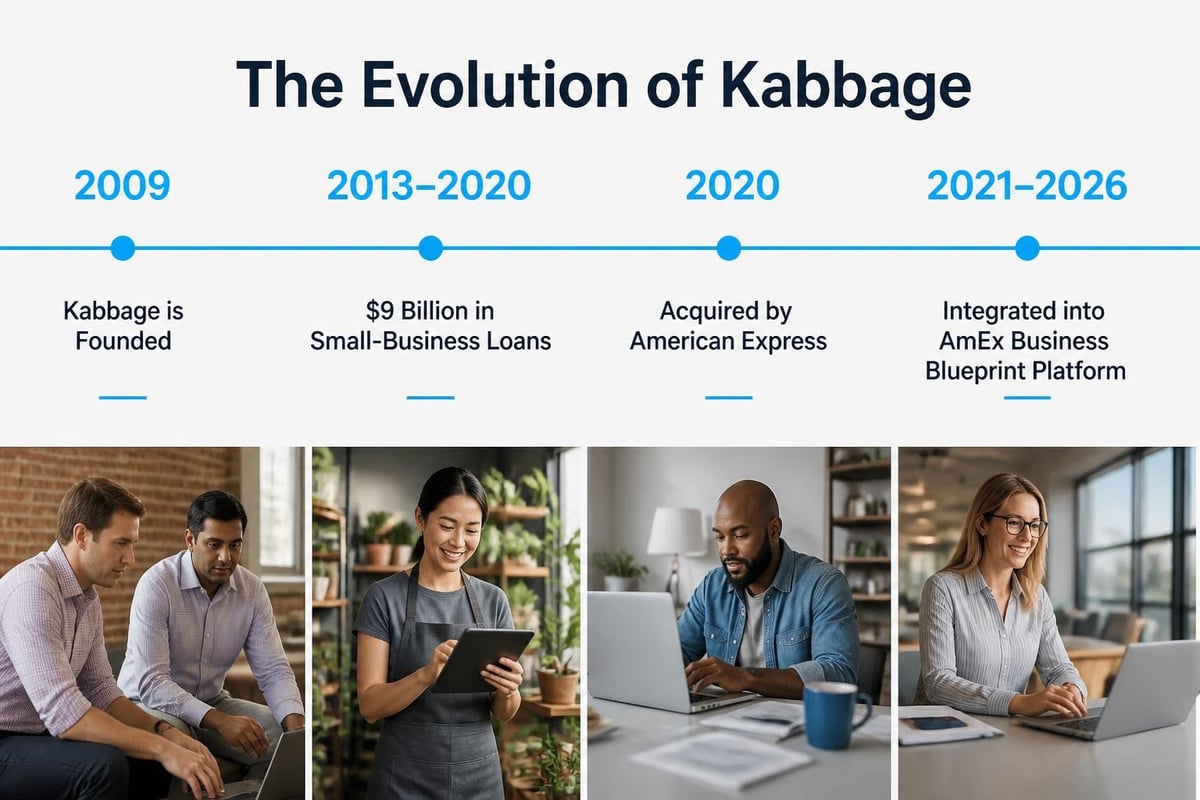
Kabbage funding transformed small-business lending when it launched in 2009, pioneering automated underwriting that promised credit decisions in minutes rather than weeks. The Atlanta-based fintech became synonymous with fast, data-driven loans for small businesses that struggled to access traditional bank financing. By analyzing bank account transactions, accounting software, and online sales data, Kabbage funding offered lines of credit up to $250,000 to businesses that might otherwise have been turned away by conventional lenders. The platform's rise and subsequent challenges offer important lessons for today's business owners seeking capital.
The Rise of Kabbage as a Fintech Lender
Kabbage funding emerged during the aftermath of the 2008 financial crisis, when traditional banks significantly tightened lending standards and small businesses faced unprecedented difficulty securing working capital. The company's founders recognized that small-business owners had valuable data flowing through their digital operations-payment processors, e-commerce platforms, accounting systems-that could predict creditworthiness more accurately than traditional metrics alone.
The platform's automated approach eliminated much of the paperwork and waiting time associated with conventional business loans. Business owners could connect their financial accounts directly to Kabbage's system, which analyzed revenue patterns, cash flow consistency, and business performance to generate credit decisions. This data-driven methodology allowed Kabbage funding to serve businesses that had been operating for as little as one year, a stark contrast to banks that typically required multiple years of financial statements and extensive documentation.

Growth Through Technology and Accessibility
Between 2009 and 2020, Kabbage funding extended more than $9 billion in loans to over 300,000 small businesses across the United States. The platform became particularly popular among e-commerce sellers, service providers, and small retailers who needed quick access to working capital for inventory purchases, marketing campaigns, or seasonal cash-flow gaps.
Several factors drove Kabbage's rapid expansion:
- Speed: Credit decisions in minutes, funding within 24-48 hours
- Technology integration: Direct connections to QuickBooks, PayPal, Shopify, Amazon, and other platforms
- Flexible repayment: Monthly payments with the option to pay down balances early
- Revolving credit: Access to a line of credit rather than term loans
- Minimal documentation: Automated data pulls replaced traditional loan applications
The company also pioneered transparent pricing displays, showing fees upfront rather than obscuring costs in complex annual percentage rate calculations. This transparency, combined with accessibility, positioned Kabbage funding as a disruptive force in small-business finance.
American Express Acquisition and Strategic Shift
In October 2020, American Express announced plans to acquire substantially all of Kabbage's assets for an undisclosed sum. The acquisition represented a significant strategic move by American Express to enhance its digital lending capabilities and expand its small-business product suite beyond traditional charge cards and payment processing.
The deal completed in August 2021, and American Express began integrating Kabbage's technology platform into its existing business offerings. The goal was to leverage Kabbage's automated underwriting engine while combining it with American Express's brand reputation, regulatory infrastructure, and existing customer relationships.
What Changed After the Acquisition
Following the American Express acquisition, the Kabbage brand and business model underwent substantial transformation. American Express discontinued the standalone Kabbage funding line of credit product in its original form, instead incorporating the technology into American Express Business Blueprint, a platform offering various financial tools and lending products to small businesses.
The shift from independent fintech to large financial institution subsidiary brought both benefits and limitations:
| Aspect | Pre-Acquisition Kabbage | Post-Acquisition Integration |
|---|---|---|
| Brand identity | Independent fintech disruptor | American Express business unit |
| Product availability | Standalone line of credit | Integrated business financing tools |
| Target market | Broad small-business segment | American Express cardmember focus |
| Underwriting speed | Fully automated, minutes | Hybrid approach with compliance layers |
| Application process | Self-service platform | AmEx ecosystem integration |
Business owners who had relied on Kabbage funding found themselves navigating a different landscape, with some features enhanced through American Express resources while others became more restricted due to the shift in strategic priorities.
Legal Challenges and PPP Controversy
The most significant challenge to Kabbage's reputation emerged from its role as a Paycheck Protection Program lender during the COVID-19 pandemic. In 2020, Kabbage became one of the largest PPP lenders, processing billions of dollars in emergency loans designed to help small businesses maintain payroll during lockdowns.
However, investigations revealed serious concerns about Kabbage's internal controls and fraud prevention measures. In May 2024, Kabbage agreed to resolve allegations that it defrauded the PPP by knowingly processing applications with false information and failing to implement adequate safeguards against fraud.
Settlement Details and Findings
The FDIC Office of Inspector General announced that Kabbage agreed to pay up to $120 million to resolve civil allegations stemming from its PPP lending practices. Federal investigators found that Kabbage prioritized speed and volume over verification, approving loans to businesses that submitted questionable or fabricated documentation.
Key findings from the investigation included:
- Loans approved to non-existent businesses with fabricated payroll records
- Inadequate verification of borrower eligibility requirements
- System design that favored automated approvals over fraud detection
- Internal warnings about fraud risks that were not adequately addressed
- Failure to implement controls recommended by compliance personnel
A Congressional investigation documented how fintechs, including Kabbage, struggled with the tension between rapid deployment and fraud prevention. ProPublica's investigative reporting highlighted specific examples of questionable PPP loans that raised red flags about the platform's controls.
Economic Impact and Industry Analysis
Despite the controversies, research suggests that fintech lenders played a measurable role in expanding credit access during the pandemic. Analysis from the National Bureau of Economic Research examined fintech participation in PPP lending and found that these platforms reached businesses in underserved areas and processed applications faster than traditional banks.
The data showed that Kabbage funding and similar fintech lenders:
- Served a higher proportion of sole proprietors and very small businesses
- Processed applications in underbanked communities where traditional banks had limited presence
- Demonstrated faster turnaround times, critical during emergency lending periods
- Used technology to handle application volume that would have overwhelmed manual processing
However, the same research acknowledged trade-offs between speed and risk management, noting that automated systems required robust fraud detection mechanisms that some fintechs had not fully developed when thrust into emergency lending roles.
Current State of Kabbage Funding in 2026
As of 2026, the original Kabbage funding product no longer operates as an independent platform. Business owners cannot apply for the traditional Kabbage line of credit that characterized the company's first decade. Instead, American Express has integrated portions of Kabbage's technology into its broader small-business financing ecosystem.
What Replaced Kabbage Funding
American Express now offers several products that incorporate elements of the original Kabbage platform:
- American Express Business Line of Credit: Leverages Kabbage underwriting technology for existing AmEx business cardmembers
- Working Capital Terms: Short-term financing integrated into payment processing relationships
- Blueprint Platform: Business management tools with embedded financing options for qualified users
These products maintain some of Kabbage's original DNA-faster decisions than traditional banks, data-driven underwriting, integration with business software-but operate within American Express's more conservative risk framework and regulatory structure.
Business owners seeking the accessibility and speed that characterized original Kabbage funding often need to explore alternative financing channels. For established businesses with consistent revenue patterns, merchant cash advance and revenue-based financing options from specialized providers can deliver similar speed and flexibility, with qualification focusing on business performance rather than traditional credit metrics alone.
Alternative Funding Options for Business Owners
The evolution of Kabbage funding reflects broader changes in the small-business financing landscape. While the original platform no longer exists, numerous alternatives serve businesses seeking fast, flexible capital in 2026.
Traditional Bank Products
Despite fintech disruption, traditional banks have modernized their small-business lending over the past five years:
- Enhanced digital applications with faster processing
- Small-dollar loan programs (typically $10,000-$100,000)
- Relationship-based underwriting for existing customers
- SBA loan programs with government guarantees
Banks generally offer lower interest rates than alternative lenders but maintain stricter qualification requirements and longer processing timelines.
Fintech and Online Lenders
The fintech lending space has matured significantly since Kabbage's early days. Today's digital lenders incorporate lessons learned from both successes and failures:
Advantages of current fintech platforms:
- Application processes completed entirely online
- Credit decisions within 24-72 hours for most products
- Funding available within one week for approved applications
- Flexible qualification criteria considering revenue and business performance
- Transparent fee structures and clear repayment terms
Considerations when evaluating fintech lenders:
- Higher costs compared to traditional bank loans
- Shorter repayment terms requiring careful cash-flow planning
- Variation in lender quality and regulatory compliance
- Importance of reading terms carefully before accepting offers
- Need to verify lender legitimacy and track record
Revenue-Based and Alternative Structures
Many businesses that previously used Kabbage funding now utilize revenue-based financing structures that align repayment with business performance. These products share Kabbage's original philosophy of assessing creditworthiness through operational data rather than traditional metrics alone.
| Financing Type | Typical Amounts | Repayment Structure | Best For |
|---|---|---|---|
| Traditional term loan | $25,000-$500,000+ | Fixed monthly payments | Established businesses, specific purchases |
| Business line of credit | $10,000-$250,000 | Revolving, pay on outstanding balance | Ongoing working capital needs |
| Revenue-based financing | $10,000-$500,000 | Percentage of monthly revenue | Businesses with fluctuating income |
| Equipment financing | $5,000-$5,000,000+ | Fixed payments, equipment as collateral | Purchasing specific equipment |
| Invoice financing | Varies by receivables | Repaid when customers pay invoices | B2B businesses with payment terms |
Lessons from Kabbage's Journey
The story of Kabbage funding offers several important lessons for business owners navigating today's financing landscape:
Technology improves access but requires safeguards. Automated underwriting democratized business lending, but the PPP experience demonstrated that speed cannot completely replace human judgment and comprehensive fraud controls. Legitimate businesses benefit when lenders balance efficiency with responsible verification.
Regulatory compliance matters. The legal challenges Kabbage faced stemmed partly from prioritizing growth and speed over robust compliance infrastructure. Business owners should work with financing providers that demonstrate commitment to regulatory requirements, even when it means slightly longer processing times.
Consolidation reshapes options. Industry analysis of the American Express acquisition highlighted broader trends toward consolidation in fintech lending. Independent platforms increasingly partner with or get acquired by larger financial institutions, changing product availability and target markets.
Multiple options increase negotiating power. Businesses that understand various financing structures-term loans, lines of credit, revenue-based products, equipment financing-can compare offerings and select products that best match their specific needs and cash-flow patterns.
Evaluating Lenders in the Post-Kabbage Era

With Kabbage funding no longer available in its original form, business owners need frameworks for evaluating the numerous alternatives now available. The following criteria help distinguish between high-quality financing providers and those that may create more problems than they solve:
Due Diligence Checklist
Transparency and disclosure:
- Clear explanation of all fees, interest rates, and total cost of capital
- Written terms provided before requiring commitment
- No hidden charges or surprise costs at closing
- Straightforward answers to questions about the product
Regulatory compliance:
- Proper licensing in states where they operate
- Membership in industry associations with ethical standards
- No history of regulatory actions or consumer complaints
- Willingness to explain their compliance and oversight structure
Business fit:
- Products aligned with your specific capital needs and use case
- Repayment terms that match your cash-flow patterns
- Funding amounts appropriate to your business size and revenue
- Industry experience serving businesses like yours
Service quality:
- Responsive communication during application process
- Dedicated support contacts, not just automated systems
- Positive reviews and references from similar businesses
- Clear processes for questions or issues after funding
Strategic Capital Planning Beyond Quick Fixes
While Kabbage funding and similar products serve important roles in business finance, sustainable growth typically requires strategic capital planning rather than reliance on any single financing source. The most successful small businesses develop comprehensive funding strategies that incorporate multiple tools for different purposes.
Short-term working capital solutions work best for temporary needs-seasonal inventory purchases, bridge financing between contracts, or brief cash-flow gaps. Longer-term investments in equipment, real estate, or major expansion projects typically benefit from structured term loans or lease arrangements that spread costs over the useful life of the asset.
Business owners should regularly assess their capital needs across several dimensions:
- Timeline: When will you need the capital, and for how long?
- Purpose: What specific business need will the financing address?
- Return: What return on investment do you expect from deploying this capital?
- Risk: How certain are the revenue projections supporting repayment?
- Alternatives: Could internal cash flow, customer deposits, or vendor terms reduce borrowing needs?
This strategic approach helps businesses avoid the trap of repeatedly seeking high-cost short-term financing when more appropriate solutions exist. It also builds relationships with multiple financing sources, reducing dependence on any single provider.
Technology's Continuing Role in Business Finance
Although Kabbage as an independent entity has disappeared, the technological innovations it pioneered continue to shape small-business lending. Most lenders now offer some form of digital application process, data integration with accounting systems, and faster underwriting than was common before 2010.
Current trends building on Kabbage's legacy include:
- Open banking protocols that allow secure data sharing between businesses and lenders with explicit permission
- Machine learning models that assess creditworthiness using broader data sets than traditional credit scores
- Embedded finance that integrates lending directly into accounting software, payment processors, and e-commerce platforms
- Real-time monitoring that allows lenders to adjust credit lines based on current business performance
- Blockchain and distributed ledger technologies being explored for faster settlement and reduced fraud risk
These innovations promise to further democratize access to capital while improving risk assessment accuracy. The key difference from Kabbage's approach is greater emphasis on regulatory compliance, fraud prevention, and sustainable underwriting standards from the outset.
Finding the Right Financing Partner
The disappearance of Kabbage funding as a standalone product highlights both the opportunities and challenges in today's small-business financing market. More options exist than ever before, but business owners must navigate a complex landscape of products, providers, and terms.
Working with experienced financing advisors can help businesses identify appropriate funding sources without spending weeks researching lenders individually. Professional brokers maintain relationships with multiple financing providers and understand which lenders best serve specific industries, business sizes, and capital needs.
Quality financing brokers provide value through:
- Market knowledge: Understanding which lenders actively fund your business type and size
- Application efficiency: Preparing documentation correctly to maximize approval likelihood
- Term negotiation: Leveraging relationships to secure favorable terms
- Option comparison: Presenting multiple qualified offers for side-by-side evaluation
- Ongoing support: Maintaining relationships for future financing needs as your business grows
The goal is matching your specific situation with appropriate financing providers, creating partnerships that support sustainable business growth rather than just filling immediate cash needs.
Kabbage funding represented an important innovation in small-business finance, using technology to expand access to capital for businesses underserved by traditional banks. While the original platform no longer exists following American Express's acquisition and subsequent legal challenges, the financing needs of small businesses remain constant. If you're exploring funding options for working capital, equipment, expansion, or other business needs, Enterprise Finest Solutions connects you with a network of lenders and alternative funding providers, helping you identify financing solutions aligned with your revenue, business performance, and capital requirements.
Written by
Enterprise Finest Solutions
Content creator and writer sharing insights and stories.