Gov Small Business Loans: Complete 2026 Guide
Discover how gov small business loans work in 2026. Learn about SBA programs, eligibility, application steps, and how to secure funding.

Government-backed small business loans remain one of the most accessible and affordable financing options for entrepreneurs seeking capital to start, grow, or sustain their operations. These programs, primarily administered through the U.S. Small Business Administration, provide guarantees that reduce lender risk and enable businesses that might not qualify for conventional bank loans to access funding. Understanding how gov small business loans work, which programs exist, and how to navigate the application process can unlock significant opportunities for business owners looking for patient capital with favorable terms.
Understanding Government Small Business Loan Programs
Gov small business loans are not direct loans issued by the federal government in most cases. Instead, the SBA and other agencies guarantee a portion of loans made by approved private lenders, reducing their risk and incentivizing them to extend credit to small businesses. This guarantee structure allows banks, credit unions, and specialized lenders to offer more favorable terms than they would for unguaranteed commercial loans.
The SBA's loan programs represent the cornerstone of government-backed small business financing. These programs have evolved significantly since their inception, adapting to economic conditions, technological changes, and the diverse needs of American entrepreneurs. The guarantee percentage typically ranges from 50% to 85% of the loan amount, depending on the program and loan size.
Key Program Categories
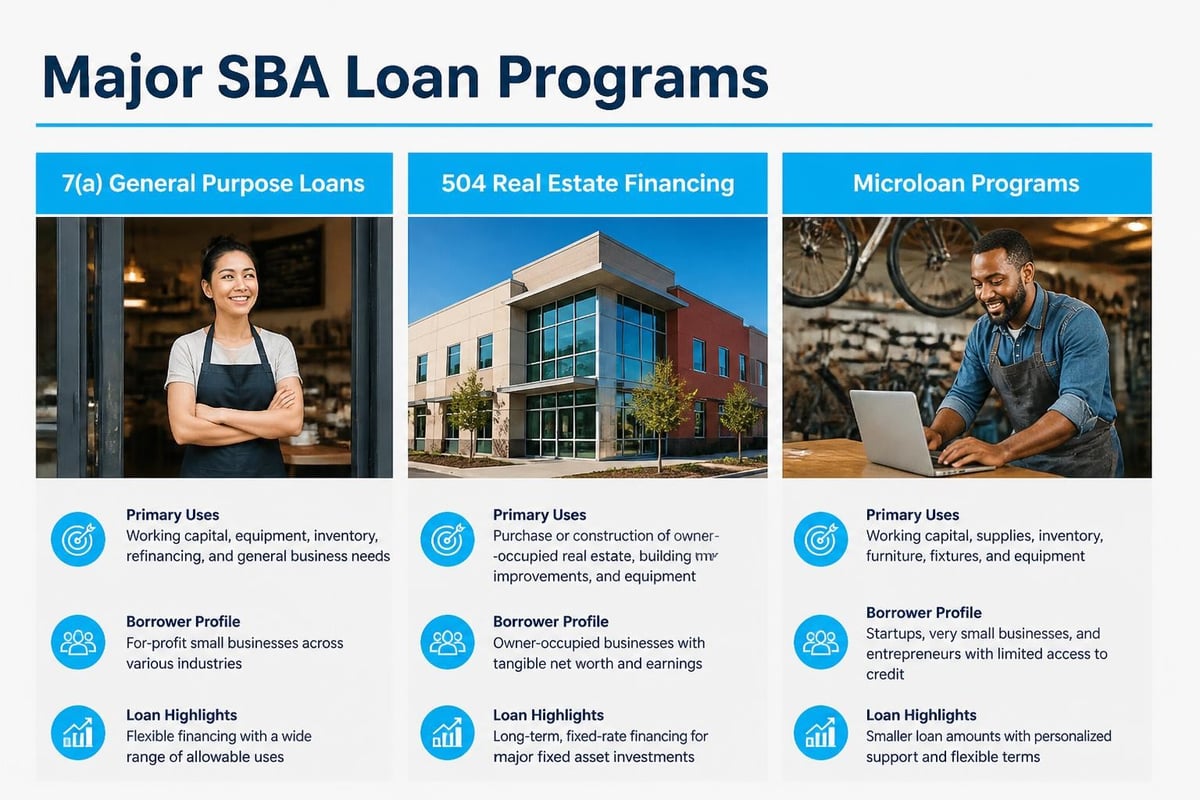
Government small business lending encompasses several distinct program types, each designed for specific business needs and circumstances:
- Term loans for working capital, equipment, real estate, and refinancing
- Revolving credit facilities for ongoing operational expenses
- Microloans for startups and businesses needing smaller amounts
- Disaster loans for recovery from declared disasters
- Export financing for international trade operations
The program structure reflects a fundamental policy goal: ensuring that creditworthy small businesses can access capital even when conventional lending markets fail to serve them adequately. Research from the Federal Reserve on small business credit availability demonstrates that government-guaranteed loans often fill critical gaps in the credit market.
SBA 7(a) Loan Program Details
The SBA 7(a) loan program represents the most versatile and widely used government small business loan option. This flagship program can finance almost any legitimate business purpose, making it the go-to choice for many entrepreneurs seeking gov small business loans.
Maximum loan amounts reach $5 million, though most 7(a) loans fall well below this ceiling. The SBA guarantees up to 85% for loans of $150,000 or less and 75% for larger amounts. Interest rates are negotiated between borrower and lender but are capped based on the prime rate plus an allowable spread.
Eligible Uses of 7(a) Funds
| Use Category | Examples | Typical Loan Size |
|---|---|---|
| Working Capital | Inventory, payroll, accounts payable | $50,000 - $500,000 |
| Equipment Purchase | Machinery, vehicles, technology | $25,000 - $1,000,000 |
| Real Estate | Purchase, construction, renovation | $500,000 - $5,000,000 |
| Debt Refinancing | Consolidating high-interest debt | $100,000 - $2,000,000 |
| Business Acquisition | Buying existing business | $250,000 - $5,000,000 |
Borrowers must meet several fundamental requirements to qualify for 7(a) loans. The business must operate for profit, conduct business in the United States, demonstrate reasonable owner equity investment, and exhaust alternative financing options before seeking SBA assistance. Personal guarantees from owners holding 20% or more equity are mandatory.
The application process involves substantial documentation. Lenders require business and personal tax returns, financial statements, business plan or purpose statement, ownership documentation, and collateral information. Processing times vary considerably, ranging from several weeks to several months depending on loan complexity and lender efficiency.
SBA 504 Loan Program for Fixed Assets
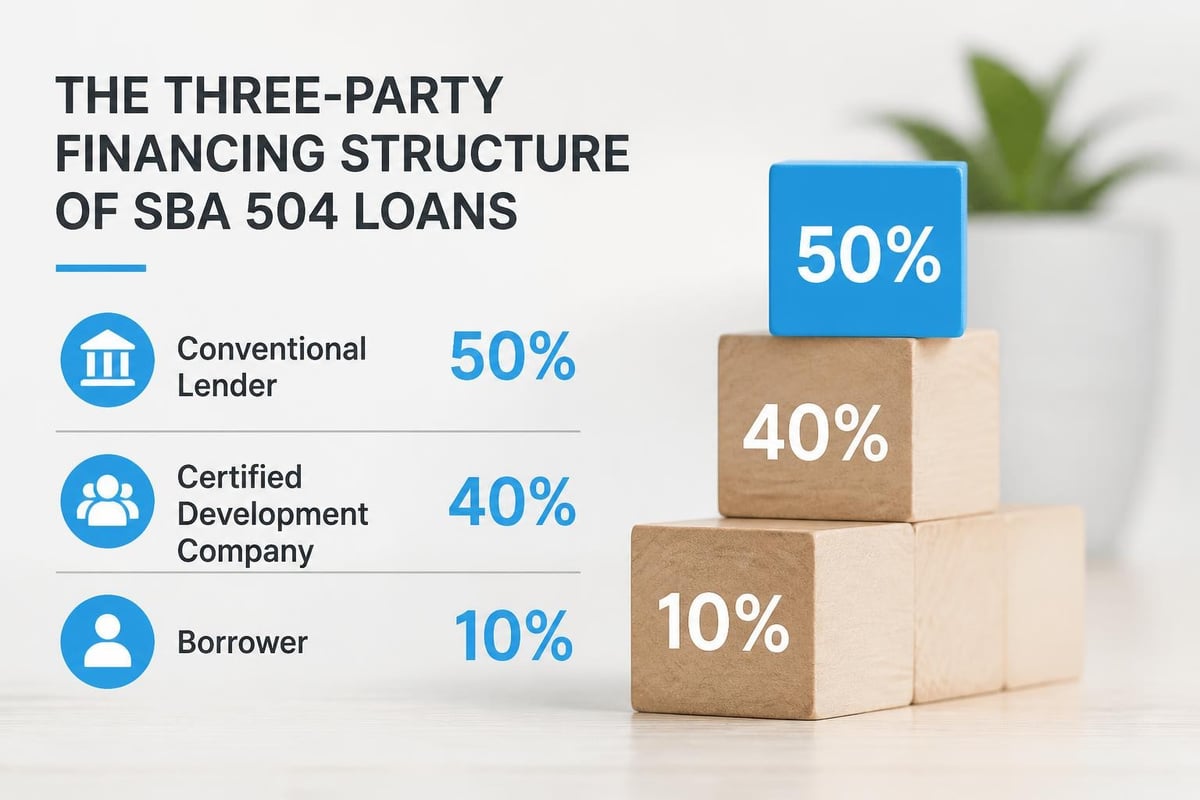
While 7(a) loans offer flexibility, the SBA 504 program specifically targets fixed asset acquisition. This program structures financing through a partnership between a conventional lender, a Certified Development Company (CDC), and the borrower. The typical structure splits the project cost into three parts: 50% from a conventional lender, 40% from the CDC (backed by an SBA-guaranteed debenture), and 10% from the borrower.
Gov small business loans through the 504 program excel for real estate purchases, building construction, long-term equipment purchases, and renovation projects. The program emphasizes job creation and economic development, requiring borrowers to create or retain one job per $65,000 of SBA financing in most cases.
504 Program Advantages
- Lower down payments compared to conventional commercial real estate loans
- Fixed interest rates on the CDC portion for 10, 20, or 25 years
- Longer repayment terms reducing monthly payment burden
- Preservation of working capital through higher loan-to-value ratios
The 504 program serves manufacturers, retailers, service businesses, and other companies needing substantial capital investments. Businesses in certain industries face restrictions, and the company must meet SBA size standards for its sector.
Microloan Program for Smaller Capital Needs
The SBA Microloan program addresses the needs of startups, newly established businesses, and companies requiring smaller amounts of capital. These gov small business loans max out at $50,000, with the average loan around $13,000. Nonprofit community-based intermediary lenders administer the program, providing both capital and technical assistance.
Microloans serve purposes including working capital, inventory, supplies, furniture, fixtures, and machinery. Real estate purchases are not eligible. Interest rates typically range from 8% to 13%, depending on the intermediary lender and borrower qualifications.
The program particularly benefits businesses that struggle to access conventional credit due to limited operating history, modest credit profiles, or small capital requirements that don't meet minimum thresholds for traditional lenders. Many intermediaries offer specialized support for women-owned businesses, minority-owned businesses, veteran entrepreneurs, and businesses in underserved communities.
Alternative Government Loan Options
Beyond SBA programs, several other government-backed financing options support small businesses under specific circumstances.
USDA Business & Industry Loans
The U.S. Department of Agriculture guarantees loans for businesses in rural areas, defined as communities with populations under 50,000. These loans support business acquisition, working capital, equipment, real estate, and debt refinancing. The USDA can guarantee up to 80% of loans, with maximum guarantees reaching $25 million.
Economic Injury Disaster Loans
The SBA's disaster loan program provides direct loans (not guaranteed loans through lenders) to businesses affected by declared disasters. These gov small business loans offer low fixed interest rates and long repayment terms. The program gained prominence during the COVID-19 pandemic, though its traditional role focuses on natural disasters like hurricanes, floods, and wildfires.
Export Working Capital and International Trade Loans
The SBA supports businesses engaged in exporting through specialized loan programs. The Export Working Capital Program provides short-term working capital to exporters, while International Trade Loans support long-term financing for businesses developing or expanding export markets or adversely affected by import competition.
Eligibility Requirements and Qualification Standards
Qualifying for gov small business loans requires meeting both SBA standards and individual lender criteria. The SBA establishes baseline requirements, but approved lenders maintain their own underwriting standards within those parameters.
Size standards vary by industry, based on either employee count or average annual receipts. Most industries have size standards of 500 employees or fewer, though some sectors allow larger companies to qualify. The SBA provides detailed size standard tables for each NAICS industry code.
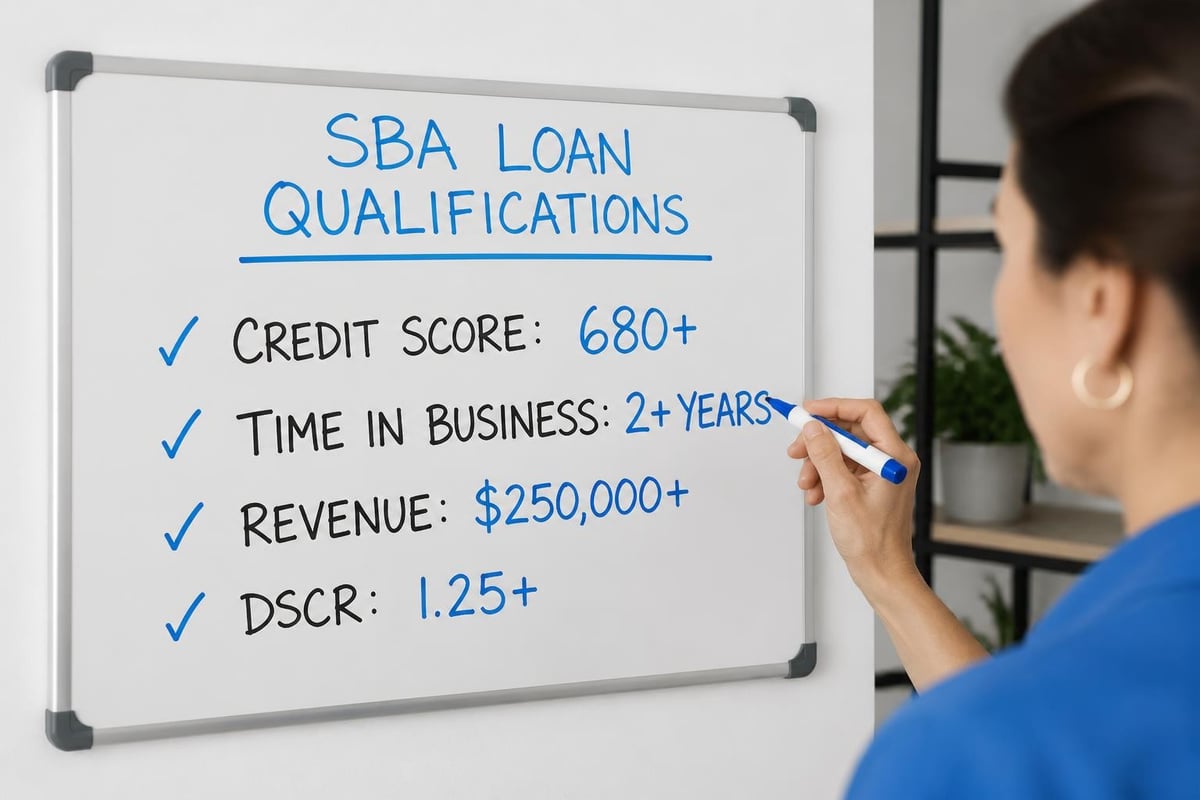
Credit requirements don't mandate a specific minimum credit score, but most lenders prefer scores above 680 for 7(a) loans. Borrowers with lower scores may still qualify with compensating factors like strong cash flow, substantial collateral, or significant owner equity investment.
Common Disqualifications
- Businesses primarily engaged in speculation or investment
- Pyramid sales plans and similar schemes
- Lending institutions and passive investment companies
- Life insurance companies
- Businesses located in foreign countries
- Entities owned by incarcerated individuals
The recent CFPB small business lending rule implements Section 1071 of the Dodd-Frank Act, requiring financial institutions to collect and report data about credit applications from women-owned, minority-owned, and small businesses. This regulation aims to facilitate enforcement of fair lending laws and enable communities, lenders, and policymakers to identify business credit needs.
Application Process and Documentation Requirements
Applying for gov small business loans demands thorough preparation and comprehensive documentation. The process begins with identifying an SBA-approved lender, which can be accomplished through the SBA's Lender Match tool or by contacting lenders directly.
Step-by-Step Application Sequence
- Develop your business plan outlining purpose, market analysis, financial projections
- Gather financial documentation including three years of tax returns, financial statements
- Complete SBA forms such as Form 1919 (borrower information) and Form 912 (personal background)
- Provide ownership documentation showing all owners with 20% or more equity
- Document collateral with appraisals, titles, and lien information
- Submit application through lender's process with all supporting materials
- Respond to lender requests for additional information or clarification
- Review and sign loan documents upon approval
Processing timeframes vary significantly based on loan complexity, amount, and lender efficiency. Simple working capital 7(a) loans through experienced lenders might close in 30-45 days, while complex real estate transactions or 504 loans can take 90-120 days or longer.
The SBA Congressional Research Service report provides detailed analysis of program operations, approval trends, and policy considerations that help contextualize the application landscape.
Interest Rates and Fee Structures
Gov small business loans typically offer more favorable rates than conventional commercial loans or alternative financing. The SBA sets maximum allowable interest rates tied to the prime rate, though actual rates depend on negotiation between borrower and lender.
For 7(a) loans, maximum rates vary based on loan amount and maturity. Loans of $50,000 or more with maturities under seven years can carry rates up to prime plus 2.25% for loans over $50,000, or prime plus 2.75% for loans of $25,000-$50,000. Longer maturities allow slightly higher spreads.
Fee Comparison Table
| Loan Amount | Guarantee Fee | Packaging Fee | Other Fees |
|---|---|---|---|
| Up to $150,000 | 0% - 3% | Allowed | Appraisal, recording |
| $150,001 - $700,000 | 3% | Allowed | Appraisal, recording |
| Over $700,000 | 3% on first $1M, 3.5% excess | Allowed | Appraisal, recording |
The SBA charges guarantee fees on 7(a) loans, typically paid by the borrower. These fees compensate for the guarantee provided and help sustain program operations. Lenders may also charge reasonable fees for services like packaging, closing, and processing.
For 504 loans, fees include CDC processing fees (typically 1.5% to 2.5% of the CDC loan amount), lender fees on the conventional portion, and various closing costs. The all-in cost remains competitive with conventional commercial real estate financing while offering superior terms.
Comparing Government Loans to Alternative Financing
Business owners exploring capital options should understand how gov small business loans compare to alternative financing sources. Each funding type serves different needs and business profiles.
Bank conventional loans require stronger credit, more collateral, and larger down payments than SBA-guaranteed loans. They typically feature faster processing but less flexibility on qualification standards. Businesses with strong financials and substantial assets often find better rates and terms through conventional financing.
Alternative lenders and revenue-based financing provide faster access to capital with less stringent qualification requirements. While companies seeking quick capital for immediate needs might explore working capital financing through alternative channels, these options typically carry higher costs than government-backed loans. They excel for short-term needs or when traditional financing isn't available.
The 2025 Federal Reserve Small Business Credit Survey reveals that small businesses increasingly use multiple financing sources, combining government loans with alternative products to meet diverse capital needs.
Recent Policy Changes and Program Updates
The landscape of gov small business loans continues evolving through legislative changes, regulatory updates, and program modifications. The experience of the Paycheck Protection Program during the pandemic demonstrated both the potential and challenges of rapid-deployment government lending programs.
In 2026, several key trends shape the government small business lending environment:
- Enhanced digital application processes streamlining documentation and approval
- Expanded access for underserved communities through targeted intermediary programs
- Integration of climate and sustainability considerations in certain loan programs
- Strengthened compliance requirements under the CFPB's Section 1071 implementation
The CFPB's small-entity compliance guide details new data collection and reporting obligations affecting how lenders process small business credit applications. These requirements aim to increase transparency and reduce discrimination in small business lending.
Strategic Considerations for Borrowers
Choosing the right financing approach requires careful analysis of business needs, qualification strength, timing requirements, and strategic goals. Gov small business loans offer compelling advantages for many situations but aren't universally optimal.
Best-fit scenarios for SBA and government-backed loans include:
- Purchasing commercial real estate or expensive equipment
- Refinancing high-interest debt to improve cash flow
- Startup financing when founders have limited equity
- Businesses with modest credit profiles but strong business fundamentals
- Long-term growth investments requiring patient capital
Alternative approaches may better serve businesses needing immediate capital, very small amounts below microloan minimums, or facing urgent opportunities where speed outweighs cost considerations.
Business owners should assess their complete financial picture, including existing debt obligations, cash flow patterns, collateral availability, and growth trajectory. Consulting with financial advisors, accountants, and experienced business financing professionals helps identify optimal structures.
Maximizing Approval Chances
Success with gov small business loans correlates strongly with preparation quality and application completeness. Lenders reviewing hundreds of applications gravitate toward well-documented, professionally presented requests.
Application Strength Factors
Financial preparation begins months before applying. Clean up business and personal credit reports, build cash reserves, organize accounting records, and document revenue stability. Lenders scrutinize debt service coverage ratio (typically requiring 1.25x or higher), owner equity investment, and working capital adequacy.
Business plan quality significantly influences approval likelihood. The plan should clearly articulate how loan proceeds will be used, expected return on investment, market opportunity, competitive positioning, and realistic financial projections. Generic templates fail to impress; customized plans demonstrating deep market knowledge succeed.
Lender selection matters more than many borrowers realize. Some lenders specialize in specific industries, loan sizes, or business situations. Banks with extensive SBA lending experience typically process applications more efficiently than institutions with limited government loan portfolios.
Professional guidance from accountants, business consultants, or financing brokers can strengthen applications substantially. These professionals understand lender expectations, documentation requirements, and common pitfalls to avoid.
Government-backed small business loans provide accessible, affordable capital for qualified entrepreneurs across diverse industries and situations. Understanding program options, eligibility requirements, and application processes positions business owners to make informed financing decisions aligned with their strategic objectives. Whether you need long-term growth capital through government programs or faster access through alternative channels, Enterprise Finest Solutions connects business owners with financing solutions matched to their unique circumstances, helping you navigate the full spectrum of funding options available in today's market.
Written by
Enterprise Finest Solutions
Content creator and writer sharing insights and stories.