Business Loans for Women: Access Funding in 2026
Discover financing options, overcome barriers, and access business loans for women. Learn approval strategies, grants, and programs in 2026.

Women entrepreneurs continue to drive economic growth across the United States, yet accessing adequate capital remains a persistent challenge. Despite owning more than 40% of American businesses, women-owned firms receive a disproportionately small share of available business financing. Understanding the landscape of business loans for women, navigating approval requirements, and leveraging specialized programs can make the difference between launching a successful venture and struggling to scale. This comprehensive guide explores financing options, addresses common barriers, and provides actionable strategies for women business owners seeking capital in 2026.
The Current State of Women's Business Financing
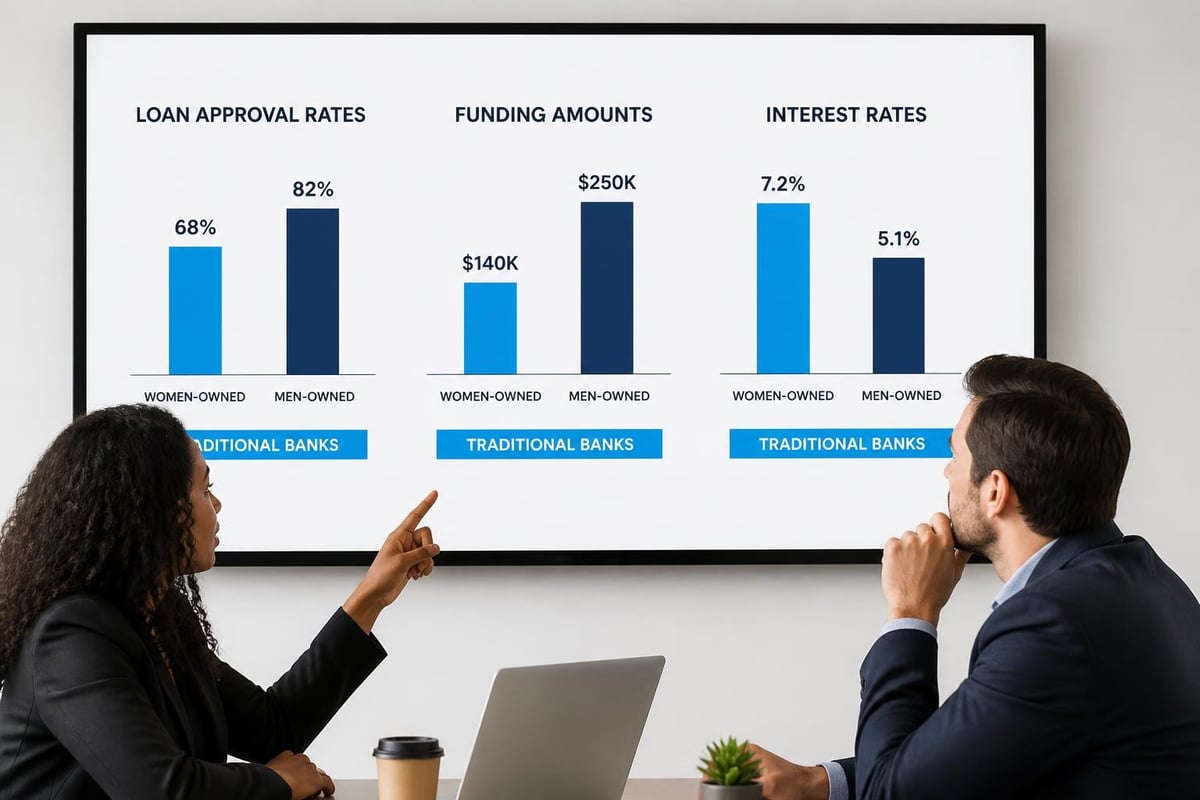
The financing gap for women-owned businesses represents both a challenge and an opportunity. Recent Federal Reserve data reveals that women-owned firms experience lower approval rates and receive smaller loan amounts compared to their male counterparts, even when controlling for revenue and industry factors.
Key Statistics and Trends
Women entrepreneurs face measurable disparities in the capital markets. Research shows women receive approximately 16% of conventional small business loans, despite representing a significantly larger portion of business ownership. The gap extends beyond traditional banking.
Notable 2026 trends include:
- Increased participation from alternative lenders focused on underserved markets
- Growing recognition of women-owned businesses as lower-risk borrowers with strong repayment histories
- Expansion of revenue-based financing models that prioritize business performance over personal credit
- Technology-driven underwriting that reduces human bias in lending decisions
The landscape continues evolving as more institutions recognize the untapped potential of women-led enterprises. Harvard Business Review research highlights systematic biases in traditional financing and demonstrates how data-driven approaches can level the playing field.
Types of Business Loans for Women
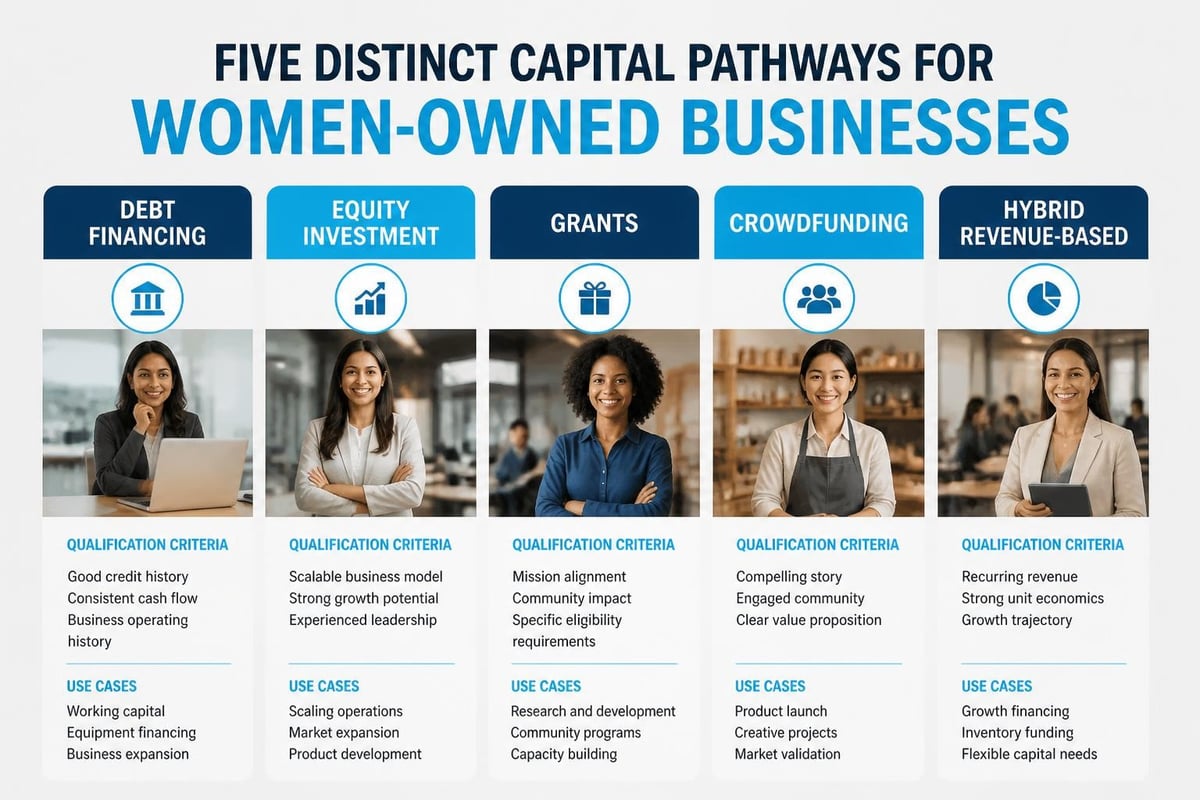
Women business owners can access multiple financing pathways, each suited to different business stages, capital needs, and qualification profiles.
Traditional Bank Loans
Commercial banks remain a primary source of business capital. Term loans provide lump-sum funding with fixed repayment schedules, typically ranging from one to ten years. These products work well for specific investments like equipment purchases, real estate, or major expansions.
Typical bank loan requirements:
- Personal credit score of 680 or higher
- Established business history (often 2+ years)
- Detailed financial documentation including tax returns and bank statements
- Collateral or personal guarantee
- Comprehensive business plan
While traditional banks offer competitive interest rates, approval processes can be lengthy and documentation requirements extensive.
SBA Loan Programs
The U.S. Small Business Administration guarantees loans through approved lenders, reducing lender risk and improving access for businesses that might not qualify for conventional financing. The SBA 7(a) program serves general business purposes, while the SBA 504 program targets real estate and equipment purchases.
SBA loans feature longer repayment terms and lower down payment requirements than many conventional products. However, they require substantial documentation and processing times typically extend several weeks to months.
Alternative and Revenue-Based Financing
Non-bank lenders have expanded options for women-owned businesses, particularly those with strong revenue but limited operating history. These products emphasize business performance metrics over traditional credit scoring.
For businesses with consistent cash flow seeking flexible capital access, exploring options like a business line of credit can provide revolving funding for inventory, payroll, marketing, or unexpected expenses without the constraints of a fixed-term loan.
| Financing Type | Approval Speed | Qualification Focus | Best For |
|---|---|---|---|
| Traditional Bank Loan | 2-8 weeks | Credit, collateral, history | Established businesses, major investments |
| SBA Loan | 4-12 weeks | Credit, business plan, documentation | Lower down payments, favorable terms |
| Revenue-Based Financing | 3-7 days | Monthly revenue, performance | Fast capital, flexible repayment |
| Business Line of Credit | 1-2 weeks | Revenue, credit, business age | Ongoing working capital needs |
Specialized Programs and Resources for Women Entrepreneurs
Beyond conventional lending channels, numerous programs specifically support women business owners seeking capital and technical assistance.
Women's Business Centers
The SBA supports a nationwide network of Women's Business Centers that provide training, counseling, and connections to capital. WBC client outcome evaluations demonstrate measurable improvements in loan approval rates and business growth among participants who receive technical assistance before applying for financing.
These centers offer free or low-cost services including:
- Business plan development and refinement
- Financial statement preparation
- Loan application guidance
- Lender introductions and matchmaking
- Post-funding advisory support
The Association of Women's Business Centers publishes annual impact reports showing how technical assistance translates into improved capital access outcomes.
Grants and Non-Dilutive Funding
While grants don't require repayment, they're highly competitive and often restricted to specific industries, demographics, or business purposes. Federal agencies, corporations, and foundations all offer grant programs targeting women entrepreneurs.
Popular grant categories for women-owned businesses:
- Federal grants through agencies like the SBA, USDA, and Department of Commerce
- Corporate diversity programs from major brands supporting supplier diversity
- Industry-specific awards in technology, manufacturing, healthcare, and social enterprise
- Local and regional programs administered by economic development organizations
Grant applications require substantial effort and success rates remain low, but the non-dilutive nature makes them valuable when available.

Community Development Financial Institutions
CDFIs operate with missions to serve underserved markets, including women and minority entrepreneurs. These lenders often feature more flexible underwriting criteria and provide technical assistance alongside capital. Many CDFI programs focus on businesses in specific geographic areas or industries.
Overcoming Common Barriers to Approval
Women entrepreneurs encounter specific obstacles when seeking business loans for women, but understanding these challenges enables strategic preparation.
Building Strong Business Credit
Personal and business credit profiles significantly influence approval decisions and terms. Many women business owners operate without establishing separate business credit, limiting financing options and potentially exposing personal assets.
Steps to build business credit:
- Register your business as a legal entity separate from personal finances
- Obtain a Federal Employer Identification Number (EIN)
- Open dedicated business banking accounts and credit cards
- Establish trade credit with suppliers and vendors
- Monitor your business credit reports through Dun & Bradstreet, Experian Business, and Equifax Business
Consistent payment histories and gradual credit line increases demonstrate creditworthiness to future lenders.
Documentation and Financial Preparation
Lenders assess risk through documentation. Well-prepared applications receive faster decisions and better terms. Kauffman Foundation research on capital access emphasizes that preparation significantly impacts outcomes for women seeking financing.
| Document Category | Required Items | Purpose |
|---|---|---|
| Business Formation | Articles of incorporation, operating agreement, business licenses | Legal structure verification |
| Financial Statements | Profit and loss, balance sheet, cash flow statement | Financial health assessment |
| Tax Documentation | Business and personal returns (2-3 years) | Income verification |
| Banking History | 3-12 months of business bank statements | Cash flow analysis |
| Projections | Forward-looking financials with assumptions | Growth potential evaluation |
Professional presentation matters. Consider working with an accountant to ensure financial statements follow standard formats and clearly communicate business performance.
Addressing the Confidence Gap
Research consistently shows women entrepreneurs request smaller loan amounts than male counterparts, even when business metrics justify larger capital needs. This self-selection effect compounds existing disparities.
Understanding your true capital requirements involves:
- Calculating actual costs for planned investments or growth initiatives
- Including working capital buffers for unexpected challenges
- Factoring in the cost of undercapitalization (lost opportunities, slower growth)
- Comparing your request to industry benchmarks and similar businesses
Request the amount your business genuinely needs, supported by clear financial projections and planned use of funds.
Alternative Paths: Equity and Hybrid Financing
While debt financing dominates small business capital, equity and hybrid structures offer additional pathways for women entrepreneurs, particularly in high-growth sectors.
Angel Investors and Venture Capital
Angel investors and venture capital firms provide equity funding in exchange for ownership stakes. Global initiatives like the IFC's Banking on Women program demonstrate growing institutional recognition of women-led businesses as investment opportunities.
Despite increased attention, women founders still receive less than 3% of venture capital funding. Specialized funds targeting women entrepreneurs have emerged to address this gap:
- Female-led venture firms with explicit gender diversity mandates
- Angel networks focused on underrepresented founders
- Corporate venture arms with supplier diversity commitments
- Impact investors prioritizing social outcomes alongside returns
Equity financing suits businesses with high growth potential willing to accept external ownership and governance requirements.
Crowdfunding and Community Capital
Crowdfunding platforms enable businesses to raise capital from large numbers of small investors or customers. Reward-based crowdfunding pre-sells products or offers perks, while equity crowdfunding sells ownership stakes to non-accredited investors under specific regulatory frameworks.
Women entrepreneurs often succeed with crowdfunding due to strong community engagement and compelling narratives. These platforms work particularly well for consumer-facing businesses with visual or emotional appeal.
Strategic Application Approach for Business Loans for Women
Maximizing approval odds and securing favorable terms requires strategic planning and professional presentation.
Choosing the Right Financing Product
Not all capital solutions fit every situation. Match financing products to your specific needs, timeline, and qualification profile.
Consider these factors:
- Purpose of funds: Working capital, equipment, real estate, or inventory require different products
- Repayment ability: Match payment structures to revenue cycles and cash flow patterns
- Speed requirements: Emergency needs differ from planned strategic investments
- Cost tolerance: Balance speed and flexibility against total borrowing costs
- Qualification likelihood: Apply for products matching your credit, revenue, and business age profile
Multiple applications to different lenders can be appropriate, but focus efforts on products where your business presents a strong candidate profile.
Crafting a Compelling Narrative
Numbers tell part of the story, but context matters. Lenders invest in businesses and people, not just spreadsheets. Your loan application should communicate:
- Clear business model: How you make money and why customers choose you
- Market opportunity: Addressable market size and competitive positioning
- Management capability: Your background, expertise, and team strengths
- Use of funds: Specific plans and expected return on capital invested
- Risk mitigation: How you've addressed potential challenges
Women business owners sometimes undersell their accomplishments. Present your track record confidently, highlighting concrete achievements, revenue growth, customer retention, and operational excellence.
Leveraging Professional Support
Federal Reserve analysis of small business credit availability shows that businesses working with advisors and technical assistance providers achieve better financing outcomes.
Professional resources to consider:
- Small Business Development Centers (SBDCs): Free consulting and loan packaging assistance
- SCORE mentors: Retired executives providing volunteer guidance
- Accountants and bookkeepers: Financial statement preparation and tax planning
- Business attorneys: Contract review and corporate structure optimization
- Financing brokers: Lender network access and application support
Professional presentation signals seriousness and reduces lender perception of risk.
Industry-Specific Considerations
Different industries present unique financing challenges and opportunities for women seeking business loans for women.
Service-Based Businesses
Service companies often lack hard assets for collateral but may demonstrate strong cash flow and profit margins. Revenue-based financing and lines of credit often suit service businesses better than traditional term loans secured by equipment or inventory.
Emphasize recurring revenue, client retention rates, and scalability in loan applications. Service businesses can grow with relatively modest capital if they maintain healthy margins.
Product and Inventory Businesses
Retail, wholesale, and product-based businesses require working capital for inventory purchases. Seasonal fluctuations create specific cash flow challenges that financing should address.
Inventory financing and purchase order financing enable businesses to fulfill large orders or stock seasonal inventory without depleting operating cash. These specialized products use inventory or receivables as collateral.
Technology and Innovation Ventures
Tech companies and innovative ventures often face "valley of death" scenarios where development costs precede revenue generation. Traditional lenders struggle with businesses lacking operating history or tangible assets.
These businesses may find better fits with:
- SBIR/STTR grants for research and development
- Angel investors and venture capital focused on technology
- Accelerator programs providing capital and mentorship
- Strategic corporate partnerships offering funding and market access
Building Long-Term Lender Relationships
Securing initial financing represents just the beginning. Successful businesses cultivate ongoing lender relationships that provide capital as needs evolve.
Demonstrating Reliability
Lenders value borrowers who communicate proactively, meet obligations consistently, and maintain accurate records. Simple practices build credibility:
- Make payments on time, every time, without exception
- Provide requested documentation promptly and completely
- Communicate challenges early rather than waiting until default looms
- Keep lenders updated on major business developments
- Maintain accurate, timely financial records
Strong relationships make future financing faster and more favorable.
Graduating to Better Terms
As your business matures and demonstrates performance, you can access better financing terms. Many women entrepreneurs start with higher-cost alternative products, then refinance into conventional loans as they build history and creditworthiness.
This graduation path might look like:
- Startup phase: Personal funds, grants, small alternative loans
- Early growth: Revenue-based financing, lines of credit, SBA microloans
- Established business: SBA 7(a) loans, conventional bank products
- Mature enterprise: Larger credit facilities, equipment financing, commercial real estate loans
Each successful financing relationship builds credibility for the next.
Looking Forward: The Future of Business Financing for Women
The landscape for business loans for women continues improving as data, technology, and policy evolve. Algorithmic underwriting reduces human bias, while increased transparency highlights disparities that market and regulatory forces can address.
Emerging trends shaping women's access to capital:
- Alternative data integration: Lenders incorporating cash flow, revenue patterns, and operational metrics beyond traditional credit scores
- Fintech innovation: Digital platforms reducing friction and expanding access through streamlined applications
- ESG investing: Environmental, social, and governance mandates driving capital toward diverse founders
- Policy interventions: Government programs and guarantees targeting underserved entrepreneur populations
- Corporate commitments: Major corporations pledging supplier diversity spending that creates revenue opportunities
These trends create expanding opportunities for qualified women business owners seeking growth capital.
Accessing appropriate capital remains essential for women entrepreneurs building and scaling successful businesses. Understanding available products, preparing strong applications, leveraging specialized programs, and building lender relationships all contribute to financing success. Whether you're seeking working capital, equipment financing, or growth funding, Enterprise Finest Solutions connects business owners with a network of lenders and alternative funding providers to identify financing options aligned with your revenue, performance, industry, and capital needs.
Written by
Enterprise Finest Solutions
Content creator and writer sharing insights and stories.