Business Bank Statements Guide for Business Owners
Business bank statements are essential financial records. Learn what they include, how to read them, and why they matter for funding and taxes.

Business bank statements serve as the financial backbone of every company, recording every transaction, deposit, and withdrawal that flows through your commercial accounts. These documents provide far more than a simple list of numbers-they offer a comprehensive view of your company's cash flow, spending patterns, and financial health. Whether you're applying for financing, preparing tax returns, or simply managing day-to-day operations, understanding how to read and leverage your business bank statements is fundamental to running a successful enterprise.
Understanding What Business Bank Statements Contain
Business bank statements document every financial transaction processed through your commercial checking, savings, or money-market accounts during a specific period, typically monthly. Each statement includes your opening balance, all deposits and credits, every withdrawal and debit, applicable fees, and your closing balance.
The transaction details section forms the core of any statement. Here you'll find:
- Date of transaction – when the activity posted to your account
- Description – vendor name, payment method, or transaction type
- Debit/withdrawal amount – money leaving your account
- Credit/deposit amount – money entering your account
- Running balance – your account total after each transaction
Key Statement Components and Terminology
Modern business bank statements include several standardized sections that help business owners track their finances. The header typically displays your company's legal name, account number (often partially masked), statement period, and bank contact information.
Interest calculations appear on interest-bearing accounts, showing the annual percentage yield, daily balance method, and total interest earned. Fee schedules itemize monthly maintenance charges, transaction fees, wire transfer costs, and any other service charges applied during the period.

Many statements now include enhanced security features such as digital signatures, encryption markers, and unique document identifiers. The FDIC provides guidance on how business deposits are protected and what account documentation banks maintain.
Why Business Bank Statements Matter for Your Company
Your business bank statements function as official financial records that support virtually every aspect of business operations. The IRS requires businesses to maintain bank statements as part of their recordkeeping obligations, using them to verify income, substantiate deductions, and validate reported business expenses.
Documentation for Tax Compliance and Audits
Tax authorities expect businesses to retain bank statements for at least three years, though some circumstances require longer retention periods. These documents prove the legitimacy of business expenses, confirm the timing of income recognition, and demonstrate compliance with tax regulations.
During audits or examinations, bank statements help reconcile your books with actual cash flow. They verify that reported revenue matches deposited funds and that claimed expenses correspond to actual payments. IRS Publication 583 outlines detailed recordkeeping requirements and explains how bank statements support tax filings.
Funding Applications and Creditworthiness
Lenders and financing partners rely heavily on business bank statements when evaluating funding applications. These documents reveal your company's revenue consistency, cash-flow patterns, and financial stability far more accurately than tax returns alone.
Most funding providers request three to twelve months of recent statements to assess:
- Monthly revenue trends and seasonal fluctuations
- Average daily balances and available working capital
- NSF incidents or overdraft patterns
- Recurring revenue sources versus one-time deposits
- Expense management and spending discipline
Alternative financing options such as revenue-based financing and merchant cash advance programs often place greater emphasis on bank statement analysis than traditional credit metrics, making these documents essential for businesses seeking flexible capital solutions.
| Funding Type | Typical Statements Required | Primary Review Focus |
|---|---|---|
| Traditional bank loan | 6-12 months | Average balances, NSFs, stability |
| Revenue-based financing | 3-6 months | Deposit consistency, revenue trends |
| Business line of credit | 3-6 months | Cash flow, seasonality, management |
| Equipment financing | 3-6 months | Down payment capacity, payment history |
Reading and Analyzing Your Business Bank Statements
Effective financial management requires more than passively receiving monthly statements-you must actively review, analyze, and act on the information they contain. Start by verifying that the opening balance matches the previous month's closing balance, ensuring continuity in your records.
Transaction-Level Review Process
Examine each transaction line by line, confirming that you recognize every vendor, payment, and deposit. Flag any unfamiliar entries immediately, as they may indicate fraud, billing errors, or unauthorized access. Compare transaction descriptions against your accounting records, receipts, and invoices.
Look for duplicate charges where the same vendor appears multiple times for identical amounts on the same day. These often result from processing errors and warrant immediate investigation. Similarly, identify any recurring subscriptions or services you no longer use but continue to pay.
Cash-flow pattern analysis helps you understand when money enters and leaves your business. Note the timing of major customer payments, payroll processing dates, and significant vendor payments. This insight allows you to anticipate cash crunches and plan accordingly.
Reconciliation and Error Detection
Monthly bank reconciliation matches your internal accounting records against your bank statement, identifying discrepancies that require investigation. This process catches bank errors, missed transactions, and accounting mistakes before they compound.
The reconciliation workflow includes:
- Gather your bank statement, general ledger, and outstanding check register
- Compare your book balance to the statement's ending balance
- Add deposits in transit (recorded but not yet cleared)
- Subtract outstanding checks (issued but not yet cashed)
- Adjust for bank fees, interest, or errors
- Verify that adjusted balances match
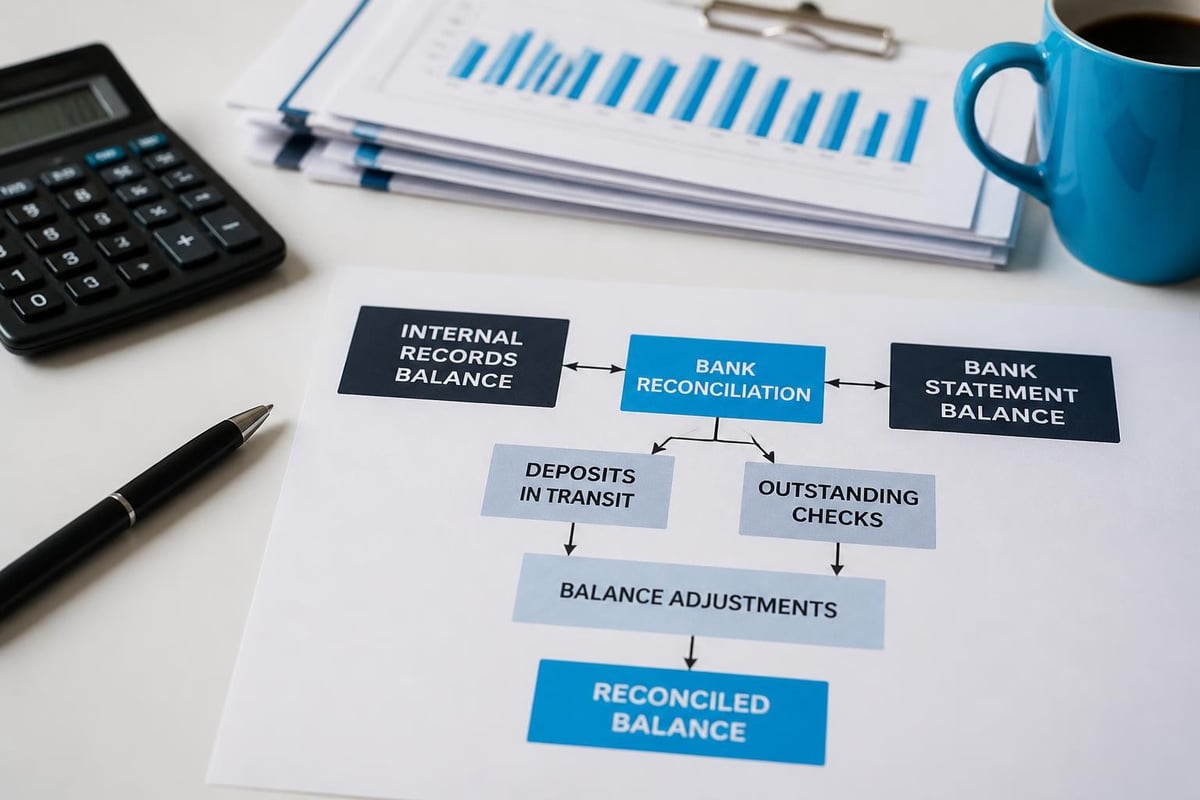
Professional accounting standards emphasize the importance of timely reconciliations and proper documentation of reconciling items. Accountants frequently use bank statements as primary source documents during agreed-upon procedures and attestation engagements.
Managing Digital and Paper Statements
Most financial institutions now offer paperless statements through secure online banking portals, though many businesses still maintain paper copies for specific purposes. Digital statements provide instant access, reduce storage costs, and integrate seamlessly with accounting software.
Digital Statement Best Practices
When managing electronic bank statements, establish a systematic filing and backup protocol. Download statements in PDF format on the first business day they become available, ensuring you capture them before any retention period expires. Store files using consistent naming conventions such as "CompanyName_AccountLast4_YYYY-MM.pdf."
Implement redundant backup systems:
- Cloud storage with encryption and access controls
- Local backup drives stored securely off-site
- Accounting software document attachment features
- Password-protected archive folders organized by year and account
Security considerations are paramount when handling digital financial records. Use strong passwords, enable two-factor authentication on banking portals, and restrict access to authorized personnel only. FinCEN's Customer Due Diligence guidance addresses recordkeeping obligations and security requirements under Bank Secrecy Act regulations.
Integration with Accounting Systems
Modern accounting platforms can import bank statement data directly, automating transaction categorization and reducing manual data entry. This integration streamlines bookkeeping but requires careful review to ensure accurate classification.
Automated bank feeds work by connecting your accounting software to your bank's API or by importing downloaded statement files. Transactions flow into your system daily or weekly, where rules-based logic attempts to categorize them based on historical patterns.
Leveraging Statements for Strategic Business Decisions
Beyond compliance and recordkeeping, business bank statements provide actionable intelligence for strategic planning and operational improvements. Trend analysis reveals whether your business is growing, stagnating, or declining over time.
Revenue and Expense Pattern Recognition
Calculate your average monthly revenue by summing all deposit transactions and dividing by the number of months reviewed. Exclude owner contributions, loan proceeds, and non-revenue transfers to isolate true income. Compare this figure across quarters and years to identify growth trajectories or concerning declines.
Expense category analysis shows where your money goes each month. Group similar transactions-payroll, rent, utilities, supplies, marketing-and calculate each category's percentage of total expenses. This breakdown highlights areas where cost reduction might be possible.
| Expense Category | Monthly Average | % of Total | Action Opportunity |
|---|---|---|---|
| Payroll & benefits | $28,500 | 42% | Optimize scheduling, cross-train |
| Rent & facilities | $12,000 | 18% | Renegotiate lease, downsize |
| Marketing & advertising | $8,200 | 12% | Track ROI, eliminate low performers |
| Supplies & inventory | $7,800 | 11% | Bulk purchasing, vendor negotiation |
| Utilities & services | $5,300 | 8% | Energy audit, service comparison |
| Other operating | $6,200 | 9% | Review subscriptions, consolidate |
Cash-Flow Forecasting and Working Capital Management
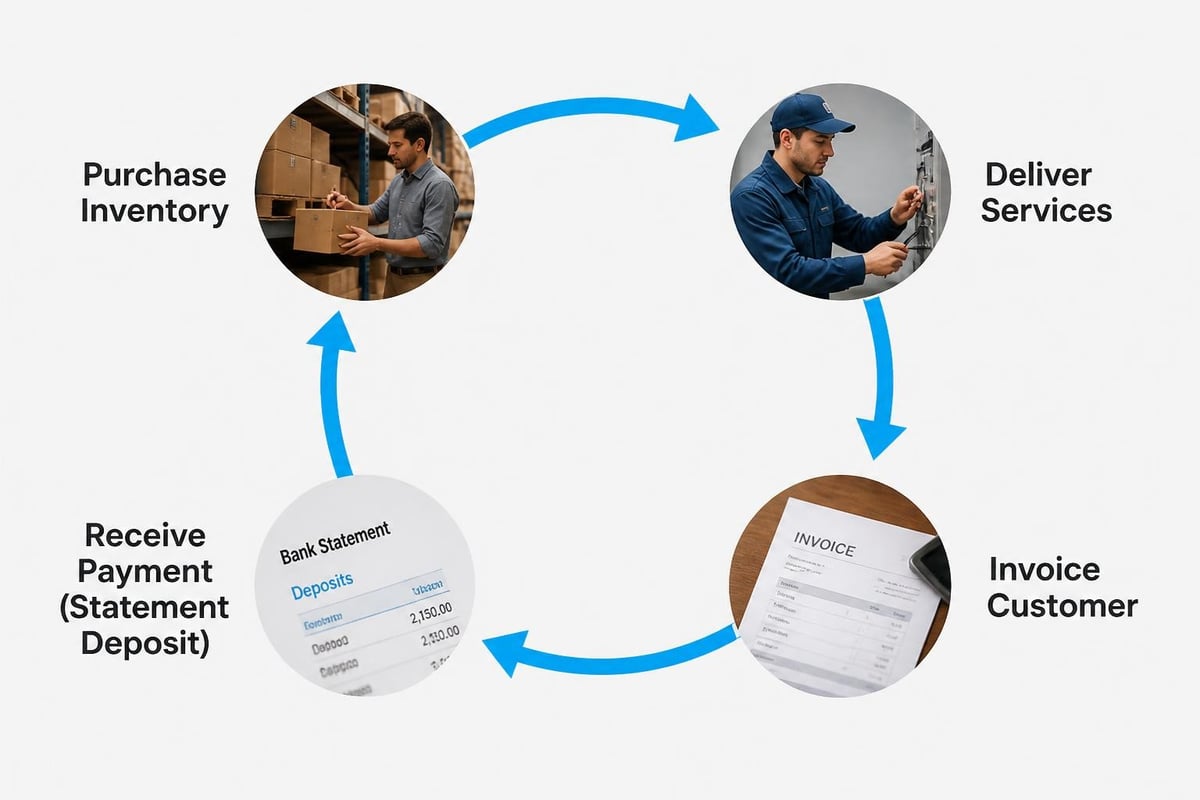
Historical statement data enables accurate cash-flow forecasting. By analyzing past patterns, you can predict future inflows and outflows with reasonable confidence. Identify your typical collection period-how long it takes customer payments to hit your account after invoicing.
Understanding your cash conversion cycle helps you determine working capital needs. If you typically wait 30 days for customer payments but must pay suppliers in 15 days, you face a 15-day funding gap that requires adequate reserves or access to flexible financing.
Payment Processing and Transaction Coding
The way transactions appear on your business bank statements depends on the payment methods you accept and how your bank processes them. Payment system studies from the Federal Reserve document evolving trends in business payments, including increased ACH volumes and same-day settlement adoption.
Understanding ACH and Electronic Payment Entries
Automated Clearing House (ACH) transactions represent a significant portion of business banking activity. These electronic transfers move money between accounts for payroll, vendor payments, tax payments, and customer collections. Nacha's operating rules govern how these transactions are formatted and described on bank statements.
ACH credits show as deposits when customers pay you electronically, while ACH debits appear when you authorize automatic payments to vendors or government agencies. The description field typically includes the originating company name and a transaction identifier.
Wire transfers provide same-day, irreversible payment processing for large or time-sensitive transactions. Incoming wires usually show the sender's name and reference number, while outgoing wires list the beneficiary and purpose code. Wire fees appear as separate debit entries on your statement.
Card Processing and Merchant Services
If your business accepts credit or debit cards, your bank statements reflect net deposits rather than individual sale amounts. Payment processors typically batch transactions daily, subtract processing fees, and deposit the net proceeds into your account. The statement entry shows the processor's name and settlement date, not individual customer transactions.
To reconcile merchant activity, you must compare your bank statement net deposits against your payment processor's detailed settlement reports. This two-step verification ensures all sales were properly funded and fees were calculated correctly.
Compliance and Regulatory Considerations
Business bank statements play a crucial role in meeting various regulatory requirements beyond tax compliance. Small-business lending regulations from the Consumer Financial Protection Bureau increasingly reference bank statements and payment data as part of fair lending oversight and data collection requirements.
Record Retention and Legal Discovery
While the IRS typically requires three to seven years of statement retention depending on circumstances, other legal and contractual obligations may demand longer preservation. Loan covenants, partnership agreements, and corporate bylaws often specify minimum retention periods for financial records.
In litigation or legal discovery, business bank statements serve as primary evidence of financial transactions, proving or disproving claims about payments, timing, and business relationships. Courts generally afford them high evidentiary weight due to their creation in the ordinary course of business.
Separating Business and Personal Finances
Maintaining distinct business and personal bank accounts with corresponding statements is fundamental to proper corporate governance and liability protection. The SBA emphasizes that commingling funds can jeopardize your limited liability protection and complicate tax reporting.
When business and personal expenses mix on the same bank statements, you face:
- Difficulty substantiating business deductions during audits
- Potential piercing of the corporate veil in liability claims
- Complicated forensic accounting during funding applications
- Questionable professional credibility with lenders and partners
Open dedicated business accounts from the day you form your entity, even if transaction volume initially seems minimal. This separation creates clear documentation trails that protect you legally and simplify financial management as your company grows.
Optimizing Statement Data for Funding Success
When preparing to seek business financing, your bank statements become critical components of your funding package. Lenders and alternative funding providers scrutinize these documents to assess risk and determine appropriate terms. Understanding what funders look for allows you to position your business favorably.
Preparing Clean, Professional Statement Packages
Before submitting bank statements to lenders, review them through the underwriter's eyes. They're assessing your business's financial health, management discipline, and repayment capacity. Strong statements show:
- Consistent deposit patterns indicating stable revenue
- Positive ending balances throughout the period
- Professional transaction descriptions (not excessive personal items)
- Minimal or no NSF fees or overdraft charges
- Evidence of expense control and working capital management
Organize your statements chronologically and ensure every page is complete and legible. Missing pages or poor-quality scans raise red flags and slow the approval process. Include all business accounts that receive revenue or process expenses, as incomplete pictures create suspicion.
Annotate unusual items proactively. If a large one-time deposit or withdrawal appears, attach a brief explanation to prevent questions or misinterpretation. This transparency demonstrates professionalism and builds confidence.
Common Red Flags Underwriters Notice
Funding professionals quickly identify concerning patterns on business bank statements that suggest elevated risk:
- Frequent NSF or overdraft incidents signal cash-flow problems and poor planning
- Inconsistent deposit patterns without clear seasonal explanation indicate revenue volatility
- Numerous personal transactions suggest commingling and poor financial discipline
- Large unexplained deposits may indicate unreported income or non-business funds
- Gambling or high-risk merchant codes can trigger automatic declines
- Recent account opening with minimal history limits assessment capability
Address these issues before applying for funding when possible. Build at least three months of clean banking history, eliminate personal transactions, and establish consistent operational patterns.
Fraud Prevention and Security Monitoring
Business bank statements serve as your primary fraud detection tool, revealing unauthorized transactions, identity theft, and account compromise. Regular review-ideally daily through online banking-allows you to catch and report suspicious activity quickly.
Transaction Monitoring Protocols
Establish internal controls that require multiple people to review bank statements independently. This segregation of duties helps catch both external fraud and internal theft. Designate one person to reconcile accounts and another to review the reconciliation, ensuring no single individual controls both transaction execution and verification.
Watch for these fraud indicators:
- Unfamiliar vendor names or unusual merchant categories
- Duplicate transactions on the same day for identical amounts
- Round-number withdrawals that don't match normal business patterns
- Small test transactions that may precede larger fraudulent activity
- Changes to contact information or authorized signers you didn't request
Report suspected fraud to your bank immediately, typically within 24-48 hours to preserve your recovery rights. Most business accounts carry different fraud protections than consumer accounts, often placing greater responsibility on the business owner to detect and report issues promptly.
Digital Security and Access Management
Protect digital access to bank statements and online banking portals through robust cybersecurity practices. Use unique, complex passwords for each financial institution, store them in encrypted password managers, and rotate them quarterly.
Limit statement access to essential personnel only, using role-based permissions where available. Your bank may offer view-only access for staff who need to check balances but shouldn't process transactions. Enable login alerts that notify you of every access attempt, successful or failed.
Business bank statements provide essential insights into your company's financial operations, from daily cash management to strategic planning and funding applications. Understanding how to read, analyze, and leverage these documents strengthens your financial position and supports informed decision-making. Whether you're tracking expenses, preparing for tax season, or seeking growth capital, maintaining clean and comprehensive banking records is fundamental to business success. Enterprise Finest Solutions helps small and medium-sized businesses across Canada access flexible funding solutions aligned with their financial performance and growth objectives, connecting business owners with appropriate financing partners based on their unique needs and qualifications.
Written by
Enterprise Finest Solutions
Content creator and writer sharing insights and stories.