Backd Business Funding: What It Is and How It Works
Discover backd business funding, a flexible financing model for small and medium businesses. Learn how it works, benefits, and alternatives.

Small and medium-sized businesses often face a common challenge: securing capital when traditional bank loans are out of reach. Backd business funding has emerged as an alternative financing model designed to address this gap by leveraging business performance and revenue streams rather than relying exclusively on credit scores or collateral. This approach provides entrepreneurs with practical access to working capital, enabling them to invest in growth, manage cash flow, and respond to unexpected expenses. Understanding how backd business funding works, its advantages, and its place in the broader financing landscape helps business owners make informed decisions about their capital needs.
What Is Backd Business Funding?
Backd business funding refers to a category of financing solutions that emphasize a company's operational performance, revenue history, and future cash flow potential rather than traditional underwriting criteria like credit scores or physical assets. The term "backd" suggests backing or supporting businesses through revenue-based structures, where repayment is often tied to daily or weekly sales.
This model became popular as alternative lenders sought ways to serve businesses that might not qualify for conventional bank loans. Companies with strong revenue but limited credit history, newer businesses without extensive collateral, or those needing fast access to capital have found backd business funding particularly useful.
Key Characteristics of Backd Business Funding
Several features distinguish backd business funding from traditional lending:
- Revenue-based qualification: Approval focuses heavily on monthly or annual revenue
- Flexible repayment: Payments often fluctuate with sales performance
- Speed: Funding decisions and disbursement occur faster than bank loans
- Accessibility: Lower barriers for businesses with imperfect credit
- Short-term focus: Typically designed for working capital rather than long-term investment
The emphasis on revenue performance aligns the lender's risk with the business's actual cash flow, creating a more dynamic relationship than fixed-payment traditional loans.

How Backd Business Funding Works
The mechanics of backd business funding involve a straightforward process that prioritizes speed and simplicity. Business owners submit basic financial documentation, including bank statements, revenue records, and sometimes credit card processing statements. Lenders analyze this data to assess cash flow patterns, consistency, and capacity to repay.
Application and Approval Process
Most backd business funding providers use a streamlined application that requires minimal documentation compared to traditional banks. The typical workflow includes:
- Initial application: Business owner submits revenue data and basic information
- Revenue verification: Lender reviews bank statements and sales records
- Offer generation: Based on monthly revenue, lender proposes funding amount and terms
- Agreement: Business owner reviews factor rate, payment structure, and timeline
- Funding: Capital deposited directly into business account, often within 24-72 hours
The speed of this process makes backd business funding attractive for businesses facing urgent capital needs or time-sensitive opportunities.
Repayment Structures
Repayment in backd business funding typically follows one of several models. The most common is a percentage of daily credit card sales or daily bank account debits. For example, if a business receives $50,000 in funding with a repayment totaling $60,000, the lender might collect 10-15% of daily sales until the full amount is repaid.
| Repayment Model | Description | Best For |
|---|---|---|
| Daily ACH | Fixed percentage withdrawn from bank account daily | Businesses with consistent daily deposits |
| Credit card split | Percentage of credit card sales automatically withheld | Retail, restaurants, service businesses |
| Weekly payment | Fixed weekly amount based on projected revenue | B2B companies with less frequent transactions |
| Hybrid | Combination of fixed and variable components | Seasonal businesses with fluctuating revenue |
This flexibility means businesses pay more during strong sales periods and less during slower times, reducing the strain of fixed monthly payments.
Benefits of Backd Business Funding
Small and medium-sized businesses often turn to backd business funding because of specific advantages it offers over traditional financing. Understanding these benefits helps business owners determine whether this model aligns with their needs.
Fast Access to Capital
Traditional bank loans can take weeks or months to process, involving extensive documentation, multiple rounds of review, and lengthy approval timelines. Backd business funding providers prioritize speed, with many offering decisions within 24-48 hours and funding within a week. This rapid access proves critical when businesses need to seize time-sensitive opportunities, cover unexpected expenses, or bridge cash flow gaps.
Revenue-Based Qualification
Rather than focusing primarily on credit scores or requiring substantial collateral, backd business funding evaluates a business's actual performance. This approach opens doors for businesses that might not qualify for traditional loans due to:
- Limited credit history: Newer businesses without established credit profiles
- Past credit challenges: Companies rebuilding after financial difficulties
- Asset-light operations: Service businesses without physical collateral
- Seasonal fluctuations: Businesses with variable but predictable revenue patterns
By emphasizing revenue over credit, this funding model recognizes that profitable, growing businesses can still carry credit blemishes from economic downturns or startup phases.
Flexible Repayment Terms
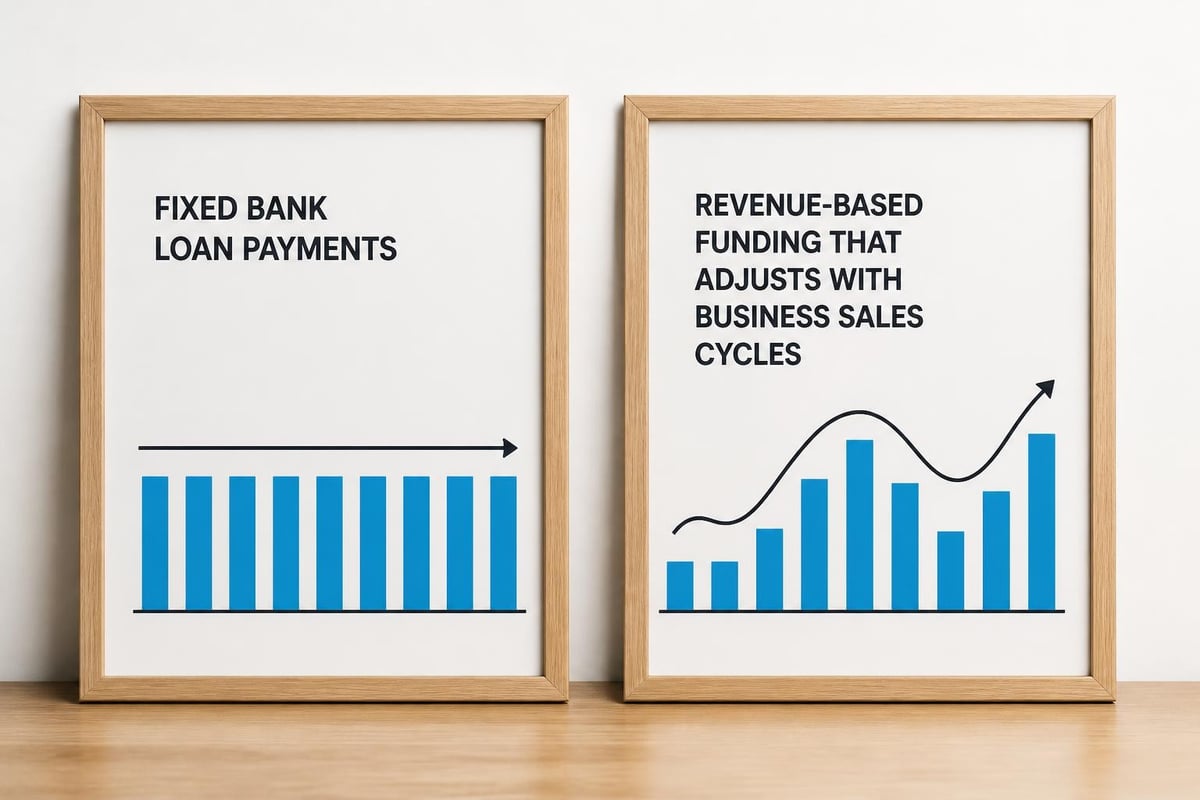
The revenue-aligned repayment structure creates breathing room during slow periods. Unlike fixed monthly loan payments that remain constant regardless of sales, backd business funding adjusts to business performance. When a restaurant experiences a slow month, daily payments decrease proportionally. Conversely, during busy periods, the funding is repaid faster without penalty.
For businesses exploring multiple capital options, a business line of credit can complement backd funding by providing ongoing access to working capital for recurring expenses and seasonal needs.
Considerations and Costs
While backd business funding offers accessibility and speed, business owners must understand the cost structure and carefully evaluate whether this financing makes sense for their specific situation. Transparency about costs enables better decision-making.
Understanding Factor Rates
Instead of annual percentage rates (APR), backd business funding typically uses factor rates ranging from 1.1 to 1.5. A factor rate of 1.3 means a business receiving $50,000 would repay $65,000 total. This fixed cost doesn't change regardless of how quickly repayment occurs.
Factor Rate vs. APR Comparison:
- Factor rate 1.2 on $40,000 = $48,000 total repayment ($8,000 cost)
- If repaid in 6 months, effective APR is approximately 40-50%
- If repaid in 12 months, effective APR is approximately 20-25%
The shorter the repayment period, the higher the effective annual cost. Business owners should calculate the true cost based on their expected repayment timeline.
When Backd Business Funding Makes Sense
This financing model works best in specific scenarios:
- Short-term working capital needs: Inventory purchase, seasonal staffing, marketing campaigns
- Time-sensitive opportunities: Bulk discount on supplies, expansion opportunity with deadline
- Revenue generation: Funding used to drive sales that exceed the cost of capital
- Bridge financing: Covering gaps while waiting for receivables or longer-term financing
Businesses should avoid using backd business funding for long-term investments or expenses that don't generate relatively quick returns, as the cost structure favors short repayment periods.
Potential Drawbacks
Honest assessment requires acknowledging limitations:
- Higher cost: Factor rates translate to APRs higher than traditional bank loans
- Daily payments: Can strain cash flow if revenue projections are overestimated
- Short terms: Typically designed for 3-18 month repayment, requiring quick turnover
- Debt cycle risk: Some businesses become dependent on repeated funding rounds
According to the U.S. Department of the Treasury, small businesses increasingly rely on alternative financing, but awareness of total costs and repayment terms remains a critical concern for regulators and business advocates alike.
Backd Business Funding vs. Alternative Financing
The business financing landscape includes multiple options, each with distinct characteristics. Comparing backd business funding to alternatives helps business owners select the best fit.
Traditional Bank Loans
Bank loans offer lower interest rates but require strong credit, collateral, and extensive documentation. The application process takes weeks, and approval rates for small businesses can be restrictive. Businesses with excellent credit and time to wait benefit most from traditional loans.
SBA Loans
The Small Business Administration backs certain loans, reducing lender risk and improving terms for borrowers. However, SBA loans involve significant paperwork, longer timelines, and strict eligibility requirements. For long-term investments like real estate or major equipment, SBA loans provide unmatched value.
Invoice Factoring
Businesses with outstanding invoices can sell them to factoring companies at a discount for immediate cash. This works well for B2B companies with 30-90 day payment terms but doesn't help businesses without receivables.
Venture Capital and Angel Investment
For high-growth startups, equity financing from venture capital or angel investors provides substantial capital without debt repayment. The NVCA 2026 Yearbook highlights that VC-backed companies raised record amounts in certain sectors, though this path requires giving up ownership and control.
Business Credit Cards
Credit cards offer convenience and revolving credit but carry high interest rates. They work well for small, regular expenses but aren't ideal for large capital needs.
| Financing Type | Speed | Cost | Qualification | Best Use |
|---|---|---|---|---|
| Backd funding | Fast (1-5 days) | High (1.1-1.5 factor) | Revenue-based | Short-term working capital |
| Bank loan | Slow (2-8 weeks) | Low (5-15% APR) | Credit + collateral | Long-term investment |
| SBA loan | Very slow (2-3 months) | Very low (6-10% APR) | Strict requirements | Real estate, equipment |
| Venture capital | Variable | Equity dilution | High growth potential | Scaling technology companies |
| Business credit card | Instant | High (15-25% APR) | Personal/business credit | Small, recurring expenses |
Industries That Commonly Use Backd Business Funding
Certain business types find backd business funding particularly valuable based on their operational characteristics and cash flow patterns.
Retail and E-commerce
Retail businesses often need capital to purchase inventory ahead of peak seasons. Backd business funding enables stores to stock up for holidays, back-to-school, or other high-volume periods without depleting cash reserves. E-commerce businesses use this funding to scale advertising campaigns, knowing increased sales will directly support repayment.
Restaurants and Hospitality
The restaurant industry faces unique challenges with thin margins, equipment needs, and seasonal fluctuations. Backd business funding helps restaurants cover renovations, purchase equipment, hire seasonal staff, or bridge slow periods. The revenue-based repayment aligns well with the industry's daily cash flow from credit card transactions.
Professional Services
Consulting firms, marketing agencies, and other service businesses use backd business funding to cover payroll during growth phases, invest in technology, or fund marketing initiatives. While these businesses may lack physical collateral, their consistent client revenue makes them strong candidates for revenue-based financing.
Construction and Contracting
Contractors often wait 30-90 days for client payments while covering materials, labor, and equipment costs upfront. Backd business funding bridges this gap, allowing contractors to take on new projects without waiting for previous job payments.

Selecting the Right Backd Business Funding Partner
Not all providers operate identically, and choosing the right partner significantly impacts the funding experience and overall cost. Business owners should evaluate several factors before committing.
Transparency and Disclosure
Reputable backd business funding providers clearly explain factor rates, fees, payment structure, and total repayment amount. Businesses should avoid providers who are vague about costs, pressure quick decisions, or use confusing terminology to obscure the true expense.
Reputation and Reviews
Research the provider's track record through online reviews, Better Business Bureau ratings, and industry reputation. Look for patterns in customer experiences, particularly regarding customer service, hidden fees, and collections practices.
Contract Terms and Conditions
Carefully review all contract terms, including:
- Total repayment amount: Exact dollar figure owed
- Payment frequency and method: Daily ACH, credit card split, or other
- Personal guarantees: Whether owners are personally liable
- Prepayment penalties: Some contracts allow early payoff without penalty
- Default conditions: What happens if payments can't be made
Underwriting Standards
Providers with reasonable underwriting standards assess whether businesses can realistically afford the funding. Be cautious of lenders who approve amounts far exceeding a business's capacity to repay based on actual revenue.
Trends Shaping Backd Business Funding in 2026
The alternative lending market continues evolving with technology, regulation, and economic conditions influencing how backd business funding operates.
Technology Integration
Modern backd business funding platforms leverage artificial intelligence and machine learning to assess applications more accurately and quickly. Automated systems analyze bank account data, identify revenue patterns, and detect fraud, reducing approval times and improving risk assessment. Some providers offer online portals where businesses track repayment progress, access additional funding, and manage account details.
Regulatory Scrutiny
As alternative lending grows, regulators increasingly examine disclosure practices and consumer protection. The U.S. Department of the Treasury and other agencies have called for greater transparency in small business lending, potentially leading to standardized disclosure requirements that make comparing options easier.
Corporate Venture Involvement
According to research from Knowledge at Wharton, corporate venturing has expanded beyond traditional equity investments to include revenue-based funding and hybrid structures. Large corporations increasingly partner with or invest in alternative lending platforms, bringing additional capital and credibility to the backd business funding space.
Economic Environment Impact
Interest rate changes, inflation, and economic cycles affect both the demand for and cost of backd business funding. In 2026, businesses continue balancing growth ambitions with economic uncertainty, making flexible financing options particularly attractive. The WilmerHale Venture Capital Report notes that while VC activity fluctuates with market conditions, alternative financing fills gaps when equity markets tighten.
Maximizing Success with Backd Business Funding
Business owners who approach backd business funding strategically achieve better outcomes and avoid common pitfalls.
Calculate True ROI
Before accepting funding, calculate whether the investment will generate returns exceeding the cost. If purchasing $30,000 in inventory with a 1.25 factor rate ($37,500 total repayment), ensure the inventory sale will produce more than the $7,500 cost plus normal profit margins.
Plan Repayment Carefully
Model various revenue scenarios to ensure daily or weekly payments won't strain operations. Conservative projections protect against unexpected downturns. Building a cushion into cash flow planning prevents collection issues and maintains a positive relationship with the lender.
Use for Revenue-Generating Activities
Backd business funding works best when deployed toward activities that directly increase sales: inventory for peak season, marketing campaigns with measurable ROI, equipment that expands production capacity, or hiring that enables taking on additional clients.
Avoid Stacking
"Stacking" refers to taking multiple funding advances from different providers simultaneously. This practice quickly becomes unsustainable as multiple daily payments erode cash flow. Businesses should generally work with one provider at a time and fully repay before seeking additional funding.
Build Toward Traditional Financing
For many businesses, backd business funding serves as a stepping stone. Use the capital to strengthen operations, build credit, and create financial records that eventually qualify for lower-cost traditional financing.
Backd business funding provides small and medium-sized businesses with practical access to capital when traditional options remain out of reach or timelines don't align with urgent needs. By understanding how revenue-based financing works, its true costs, and appropriate use cases, business owners can make informed decisions that support growth without creating unsustainable debt. Whether your business needs working capital for inventory, equipment, payroll, or expansion, Enterprise Finest Solutions connects you with funding partners offering flexible options aligned with your revenue, industry, and specific capital requirements.
Written by
Enterprise Finest Solutions
Content creator and writer sharing insights and stories.