Alternative Small Business Loans: A Complete Guide
Explore alternative small business loans beyond traditional banks. Learn about revenue-based financing, merchant cash advances, and more.

Small business owners face persistent challenges when seeking capital to grow, manage cash flow, or seize new opportunities. While traditional bank loans have long been the standard, they often come with rigid requirements, lengthy approval processes, and strict collateral demands that exclude many otherwise viable businesses. Alternative small business loans have emerged as a powerful solution, offering flexible, fast, and accessible funding options that address the real-world needs of modern enterprises.
Understanding Alternative Small Business Loans
Alternative small business loans encompass any financing product that falls outside the conventional bank lending model. These solutions have grown rapidly over the past decade, driven by technological innovation, changing customer expectations, and gaps in traditional credit markets. Unlike conventional bank loans that prioritize credit scores and extensive documentation, alternative lenders often evaluate businesses based on revenue performance, industry trends, and operational strength.
The rise of alternative financing reflects fundamental shifts in how capital flows to small businesses. According to the Federal Reserve's research on small business credit availability, nonbank lenders now play a significant role in meeting demand that traditional institutions cannot or will not serve. This expansion has created a diverse ecosystem of funding options tailored to specific business situations.
Key Characteristics That Define Alternative Financing
Alternative small business loans share several common features that distinguish them from traditional bank products:
- Speed: Many alternative lenders approve and fund applications within days rather than weeks or months
- Flexible underwriting: Revenue, sales volume, and business performance often matter more than personal credit scores
- Simplified documentation: Streamlined application processes that require fewer financial statements and less paperwork
- Industry specialization: Lenders who understand specific sectors and their unique capital needs
- Technology-driven: Digital platforms that automate evaluation, approval, and funding processes
The shift toward alternative financing is not merely about convenience. Data from the 2024 Federal Reserve Small Business Credit Survey reveals that applicants using online and nonbank lenders report different experiences compared to those using traditional banks, particularly regarding approval rates, speed, and loan amounts. These differences highlight why businesses increasingly consider alternatives when traditional channels prove inadequate.
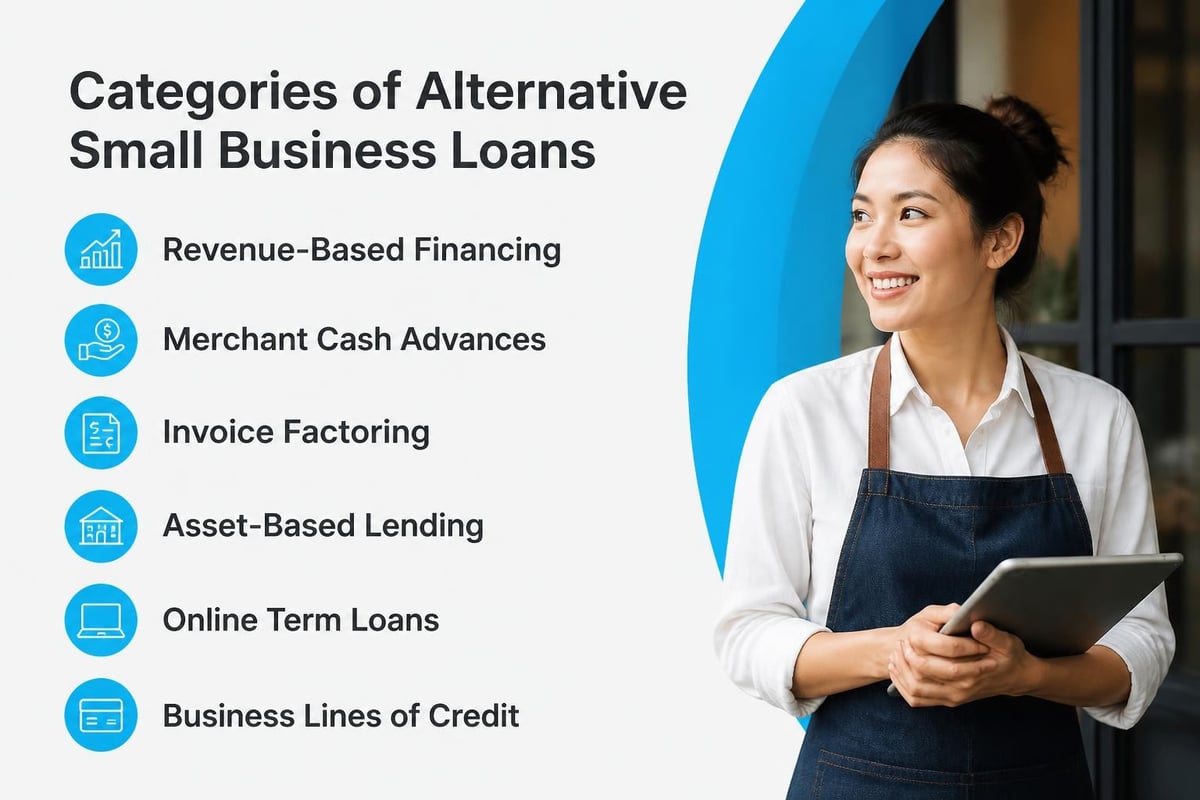
Major Types of Alternative Small Business Loans
The alternative financing landscape offers numerous products designed for different business scenarios, cash-flow patterns, and capital needs.
Revenue-Based Financing and Merchant Cash Advances
Revenue-based financing provides capital in exchange for a percentage of future sales until the advance plus fees is repaid. This model aligns repayment with actual business performance, making it particularly attractive for businesses with seasonal fluctuations or variable monthly revenue. Merchant cash advances operate on similar principles, with repayment typically structured as a percentage of daily credit card receipts.
Primary advantages include:
- Qualification based on sales volume rather than credit score
- Repayment that flexes with revenue (higher sales mean faster repayment, lower sales mean smaller payments)
- Fast approval and funding, often within 24-72 hours
- No fixed monthly payment that strains cash flow during slower periods
Businesses with strong revenue streams but limited collateral or credit history often find merchant cash advance and revenue-based financing particularly well-suited to their needs. These products work best for short-term capital needs like inventory purchases, seasonal hiring, or marketing campaigns that generate quick returns.
Invoice Factoring and Accounts Receivable Financing
Invoice factoring allows businesses to sell outstanding invoices to a lender at a discount, receiving immediate cash rather than waiting 30, 60, or 90 days for customer payment. This transforms accounts receivable into working capital, addressing one of the most common cash-flow challenges for B2B companies.
| Feature | Invoice Factoring | Traditional Bank Loan |
|---|---|---|
| Collateral | The invoices themselves | Business or personal assets |
| Approval speed | 1-3 days | 2-8 weeks |
| Credit focus | Customer creditworthiness | Business owner credit |
| Repayment | When customer pays invoice | Fixed monthly schedule |
| Documentation | Invoice records, customer info | Tax returns, financials, business plan |
This alternative financing method proves especially valuable for businesses experiencing growth but lacking the cash reserves to support expanding operations while waiting for customer payments.
Online Term Loans
Online term loans from alternative lenders function similarly to traditional bank loans but with streamlined processes and different underwriting criteria. These products provide a lump sum that businesses repay over a set term with interest, but approval happens faster and qualification requirements differ significantly from bank standards.
Typical online term loan features:
- Loan amounts ranging from $5,000 to $500,000
- Terms between 3 months and 5 years
- Fixed or variable interest rates
- Weekly or daily repayment schedules (not just monthly)
- Minimal collateral requirements for smaller amounts
The digital nature of these lenders enables rapid underwriting using automated data analysis, bank account integration, and alternative credit scoring models that look beyond traditional FICO scores.
Equipment Financing Through Alternative Channels
Equipment financing from alternative lenders helps businesses acquire machinery, vehicles, technology, and other assets needed for operations. The equipment itself serves as collateral, making approval easier for businesses that might not qualify for unsecured financing.
Alternative equipment lenders typically offer:
- Approval based on equipment value and business revenue rather than extensive financial history
- Faster processing than traditional equipment loans
- Flexible structures including loans, leases, and sale-leasebacks
- Industry-specific programs for restaurants, construction, healthcare, and other sectors
This financing type addresses a critical need, as many businesses require specific equipment to operate but lack the capital to purchase assets outright or the credit profile to secure conventional equipment loans.
Business Lines of Credit as Flexible Alternatives
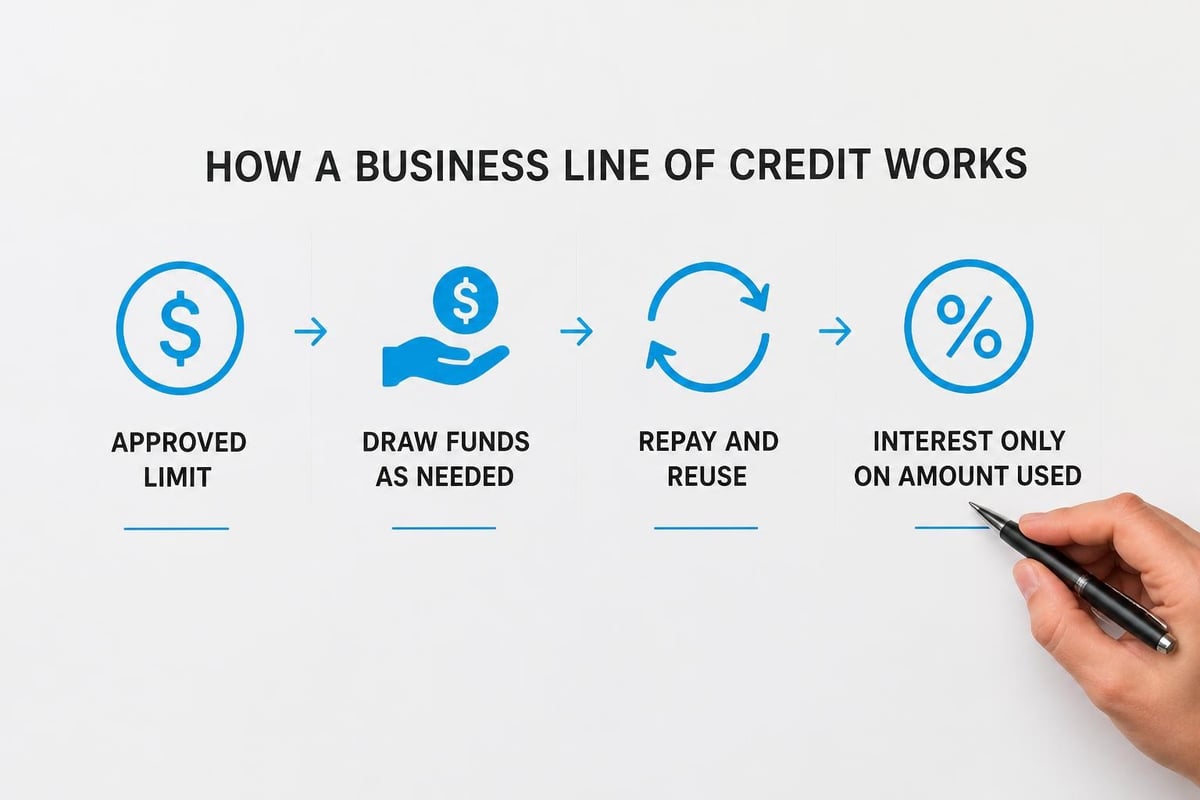
Business lines of credit represent one of the most versatile alternative small business loans. Rather than receiving a lump sum, businesses gain access to a credit limit they can draw from as needed, paying interest only on the outstanding balance.
Revolving Credit Advantages
The revolving nature of business lines of credit provides ongoing access to capital without reapplying for new loans. Once you repay borrowed amounts, that credit becomes available again, creating a renewable source of working capital for ongoing business needs.
This structure works exceptionally well for:
- Managing cash-flow gaps between payables and receivables
- Covering unexpected expenses without disrupting operations
- Seizing time-sensitive opportunities like bulk inventory discounts
- Smoothing seasonal fluctuations in revenue and expenses
Alternative lenders offering business lines of credit often approve businesses that traditional banks decline, using revenue performance and business metrics rather than solely relying on credit scores and collateral.
Secured vs. Unsecured Lines
Alternative small business loans in the line-of-credit category come in both secured and unsecured forms. Secured lines require collateral (inventory, equipment, receivables) and typically offer higher limits and lower rates. Unsecured lines require no collateral but may have lower limits and higher costs, trading security for accessibility.
| Line Type | Credit Limit Range | Collateral Required | Approval Time | Best For |
|---|---|---|---|---|
| Secured | $25,000-$1,000,000+ | Yes (business assets) | 3-10 days | Established businesses with assets |
| Unsecured | $10,000-$100,000 | No | 1-5 days | Newer businesses, service companies |
The choice between secured and unsecured depends on your business assets, credit strength, and how much capital you need access to at any given time.
When Alternative Small Business Loans Make Sense
Not every business situation calls for alternative financing. Understanding when these products offer the best solution helps business owners make strategic capital decisions rather than reactive ones.
Scenarios Where Alternatives Outperform Traditional Loans
Speed-critical situations: When timing matters-a limited-time expansion opportunity, urgent equipment replacement, or seasonal inventory purchase-the days-not-weeks approval process of alternative lenders provides a decisive advantage.
Credit challenges: Businesses with less-than-perfect credit, limited operating history, or previous financial setbacks often find traditional banks unwilling to lend. Alternative small business loans focus on current performance and future potential rather than past difficulties.
Revenue-rich but asset-poor: Service businesses, digital companies, and other enterprises with strong sales but minimal hard assets struggle to meet traditional collateral requirements. Revenue-based products evaluate the income stream itself as the qualification metric.
Flexible repayment needs: Seasonal businesses, companies with variable revenue patterns, or enterprises experiencing rapid growth benefit from repayment structures that adapt to cash flow rather than demanding fixed monthly payments regardless of business conditions.
The Kauffman Foundation's research on access to capital identifies specific barriers that alternative lenders help remove, particularly for minority-owned businesses, women entrepreneurs, and companies in underserved communities where traditional bank presence and lending have declined.
Comparing Costs and Terms Across Options
Alternative small business loans typically carry higher costs than conventional bank loans. This reflects the increased risk lenders assume by using flexible underwriting, requiring less collateral, and funding businesses that banks decline. However, the total cost of capital includes more than just interest rates.
Consider the complete cost picture:
- Interest rates or factor rates (how much you pay for the money)
- Origination fees (upfront costs to establish the financing)
- Processing fees (ongoing administrative charges)
- Prepayment penalties (costs if you repay early)
- Opportunity cost (what delayed funding costs your business)
A traditional bank loan at 6% annual interest that takes two months to approve might cost your business more in lost opportunities than an alternative loan at 15% that funds in three days. Strategic capital decisions weigh access, timing, and total business impact alongside raw interest costs.
Regulatory Landscape and Borrower Protections
The alternative lending industry operates under evolving regulatory frameworks designed to protect small business borrowers while preserving access to flexible capital. Understanding these protections helps business owners make informed decisions and recognize reputable lenders.
Recent Regulatory Developments
The Consumer Financial Protection Bureau has implemented new small business lending rules requiring lenders to collect and report data about small business lending practices. These regulations aim to increase transparency, identify discriminatory practices, and help businesses compare financing options more effectively.
Key provisions business owners should understand:
- Disclosure requirements: Lenders must clearly present APR, total cost of capital, and all fees
- Data collection: Demographic and business information to monitor fair lending practices
- Comparison standards: Standardized terms enabling apples-to-apples comparisons across lenders
These regulations affect both traditional banks and alternative lenders, creating a more level playing field and better information for business borrowers.
State-Level Protections and Requirements
Many states have enacted additional protections governing alternative small business loans. These may include interest rate caps, disclosure mandates, licensing requirements for lenders, and specific protections against predatory practices. Business owners should research regulations in their state, as requirements vary significantly across jurisdictions.

Evaluating Alternative Lenders and Products
The growth of alternative financing has attracted both reputable companies and less scrupulous operators. Business owners must conduct due diligence to identify trustworthy lenders offering appropriate products at fair terms.
Red Flags and Warning Signs
Avoid lenders who:
- Refuse to clearly disclose all costs, fees, and terms in writing
- Pressure you to sign immediately without time to review documents
- Guarantee approval without reviewing your business information
- Request upfront fees before approval or funding
- Lack verifiable business addresses, licenses, or credentials
- Discourage you from seeking legal or financial advice
- Make claims that seem too good to be true
The FDIC's Small Business Lending Survey provides valuable data comparing traditional and alternative lending channels, helping business owners understand typical terms and identify outliers that may signal predatory practices.
Questions to Ask Before Accepting Financing
Informed business owners approach alternative small business loans with specific questions that reveal whether a product truly fits their needs:
- What is the total cost of this financing expressed as an annual percentage rate?
- What are ALL fees, including origination, processing, and any penalties?
- How exactly does repayment work (daily, weekly, monthly, as percentage of sales)?
- What happens if my revenue drops or I need to adjust payment timing?
- Are there prepayment penalties if I want to repay early?
- What collateral or personal guarantees are required?
- How long does the approval process typically take?
- What documentation do you need from my business?
Reputable lenders welcome these questions and provide clear, complete answers. Evasive responses or reluctance to specify terms in writing indicate problems.
Building a Strategic Approach to Alternative Financing
Alternative small business loans work best as part of a comprehensive capital strategy rather than emergency solutions pursued in desperation. Strategic business owners plan their financing approach to support growth while managing risk and cost.
Diversifying Your Funding Sources
Relying on a single financing source creates vulnerability. A diversified capital structure might include:
- Operating cash reserves for routine expenses and minor emergencies
- Business line of credit for predictable short-term needs and cash-flow smoothing
- Term financing for specific investments in equipment, expansion, or major projects
- Revenue-based products for seasonal peaks or growth spurts
- Trade credit from suppliers to extend payment terms
This layered approach ensures you have appropriate capital available for different situations without over-relying on expensive emergency financing.
Timing Your Applications Strategically
Apply for alternative small business loans before you desperately need them. Lenders offer better terms to businesses applying from positions of strength rather than desperation. Establishing relationships with alternative lenders during good times creates options when challenges arise.
Consider these timing principles:
- Apply when revenue trends positive to demonstrate business strength
- Secure lines of credit before you need to draw on them
- Time applications to avoid seasonal low points in your business cycle
- Maintain updated financial records so you can move quickly when opportunities arise
The SBA's overview of alternative funding opportunities includes programs and resources that may complement or serve as alternatives to commercial lending products, providing additional strategic options for business owners.
Industry-Specific Alternative Financing Considerations
Different industries face unique capital needs and challenges that alternative small business loans can address. Understanding how financing applies to your specific sector helps you identify the most appropriate products.
Retail and E-Commerce
Retailers and online sellers often need capital for inventory purchases, particularly before seasonal peaks. Inventory financing, purchase order financing, and revenue-based products aligned with sales cycles work particularly well for this sector. The ability to repay based on actual sales rather than fixed schedules helps businesses manage the inherent variability in retail revenue.
Service-Based Businesses
Professional services, consulting firms, agencies, and other service businesses typically lack significant hard assets to use as collateral. Alternative small business loans based on revenue, receivables, or unsecured lending fill this gap, providing access to capital that traditional asset-based lending would deny.
Restaurants and Hospitality
Restaurants face unique challenges including equipment needs, inventory management, seasonal fluctuations, and tight margins. Equipment financing for kitchen upgrades, revenue-based products for expansion or renovations, and lines of credit for managing cash flow between peak and slow seasons all address industry-specific pain points.
Construction and Contracting
Construction businesses deal with project-based revenue, long payment cycles, and significant equipment needs. Invoice factoring helps convert slow-paying receivables into working capital, while equipment financing enables businesses to acquire machinery without depleting cash reserves needed for project expenses.
Technology and the Future of Alternative Lending
The alternative small business loan sector continues evolving rapidly, driven by technological innovation, changing borrower expectations, and increasing competition among lenders.
Emerging Trends Reshaping Access to Capital
Artificial intelligence and machine learning now power underwriting decisions, analyzing hundreds of data points in seconds to evaluate business creditworthiness more accurately than traditional methods. This enables more precise risk assessment, potentially lowering costs for borrowers while maintaining lender protections.
Open banking and data integration allow lenders to access real-time business financial data with borrower permission, eliminating much of the manual documentation traditional lending requires. This speeds approval while providing lenders with more current, accurate information about business performance.
Embedded financing integrates capital access directly into business software platforms, enabling businesses to access funding within the tools they already use daily. This removes friction from the borrowing process and makes alternative small business loans more accessible exactly when businesses need them.
Balancing Innovation with Responsible Borrowing
While technology makes alternative financing faster and more accessible, business owners must maintain discipline in borrowing decisions. Easy access to capital doesn't mean every opportunity should be pursued or every challenge solved with debt.
Responsible borrowing practices include:
- Calculating return on investment before borrowing for growth initiatives
- Understanding true costs including all fees and effective interest rates
- Planning realistic repayment based on conservative revenue projections
- Avoiding serial refinancing that masks underlying business problems
- Maintaining adequate reserves rather than financing every small expense
Alternative small business loans have fundamentally expanded access to capital, offering speed, flexibility, and opportunity to businesses that traditional banking often overlooks. By understanding the diverse products available, evaluating lenders carefully, and building strategic financing approaches, business owners can leverage alternative funding to grow stronger, more resilient enterprises. Enterprise Finest Solutions connects small and medium-sized businesses with flexible funding options tailored to your revenue, industry, and capital needs, helping you navigate the alternative lending landscape and identify solutions that support your business goals.
Written by
Enterprise Finest Solutions
Content creator and writer sharing insights and stories.